Tuesday, March 26, 2013

In The Shmood

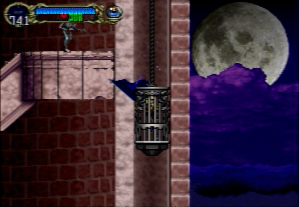
Over the weekend, I decided to sit down and blast through Symphony of the Night for what might be the 10th time. This, even with all of the other work I was doing, is always a refreshing change of pace from everything I might have going on; it's comfort food to me. In fact, you could probably put it in my top 5 (or maybe 10) favorite games of all time if I was forced to make a list.

I'm not going to sit here and gush over it (though it's ludicrous to me that people that like video games haven't played it), but what makes it such a great experience is how densely packed it is. Subtle and explicit throwbacks to the original Castlevania games are what usually make me smile most, but the little things like the white bird sprite in the Outer Wall --something that has no meaning to the game, but it is an animated object that is only onscreen for less than 5 seconds-- show that the development team went through an awful lot to make this the masterpiece that it was.

So packed is SotN that even I, after numerous times through it, don't even pick up on the most obvious allusions. My new favorite? How each enemy found in the Inverted Library is named for a character in the  Wizard of Oz. How I never noticed that the entire place is only populated by Lions, Scare Crows, and Tin Men baffles me. However, the one foe that isn't from the noggin of Frank L. Baum in the IL, and arguably one of the most important mobs in the game for the fact that it drops a weapon that practically breaks it in half, is the Shmoo. A Li'l Abner Shmoo, just redesigned. That goes pretty far back and fairly obscure, even for a group of very
talented game designers in Japan.

Hats off to you guys 16 years later.

Some great stuff is coming in the next few weeks, and we'll talk a little more about Symphony of the Night in the next day or two. I imagine that you're already buckled up for the thrill ride, but you know, just in case...

Friday, March 22, 2013

Goodbye, Milo

Yesterday, a fantastic story of the life and death of Milo, the Xbox Kinect sort-of-a-game-but-not-really tech demo seen at 2009's Microsoft E3 press conference, was published on Polygon. As an artifact of the brief moments when new technology pushed down the walls to show further possibilities, Milo made the world think that Microsoft, through Kinect, was going to give the world something that they never knew they always wanted: a synthetic friend.

But the article, written be 1UP alum and Polygon features ninja Matt Leone, cracked the mirrors and busted the smoke machine to reveal that underneath it all, there was a game to be had with Milo (and his canine buddy Kate), and not simply an imaginary friend whom takes shape on your television. Not that it's entirely Lionhead's fault, after all, since it's a Microsoft-owned games studio that, you know, makes games. It turns out that using the camera and microphone saddled withing Kinect, Milo would turn the mirror back on you as the player represented his imaginary friend that would be taken on a trip (at least, in one iteration of the unreleased curio) through his everyday life and kinship with Kate. A Twilight Zone mystery was afoot, and the on-rails adventure would end as you, Milo, and Kate uncover who or what was killing sheep in the rural home that Milo had just moved to, kick starting his loneliness which ultimately, to him, spawns you. It actually sounds cool. But it's still a game.


I actually read this story with a small sliver or sadness. Milo, from what anybody could infer (because there was so little about it that was factually known) , was a program that one could speak to, and it would remember the conversation. When you walk into a room, Milo would know who you are and say hello to you. Draw him a picture, and he'll know what it is. You could ask him how his day was, and he would give you an answer (however empty that might actually be). Milo was our Commander Data, or as close to it as artificial intelligence could take us.

There was a lot of reflection after I had finished reading it. Do I actually want to have something like this in my life? Do any of us? I really don't now. While those might be larger philosophical fear-of-technology worries that don't actually keep me awake at night, I can say that the potential for something like a Milo to exist was very exciting when I first saw him streaming through the air on an internet that is too magical to to properly grasp if you thought too hard about it four years ago. Did I care about Kinect? Not really; I cared about the fact that technology was poised for a watershed moment in human interaction, and whether that interaction may actually dehumanize us as a whole. I didn't know what to make of it then. Now, I'm let down that it, as an game, was going to take me from the beginning, middle, and ending of a small virtual boy's story about him and his dog.

Maybe I'm just sad that it was going to be safe. Maybe that doesn't make me so afraid of technology, anyway.

Thursday, March 21, 2013

Wait, Back Up

Some last minute freelance work just sort of crept up on me last night, so I won't have the time today that I thought to get more ideas down. Still, I'd like to take a second to tell you (and me, I guess) about some of the things that I want to do here. The first is to talk about games, which should be obvious. I kinda like 'em. Not only more than just tribute to old stuff and awareness of the new, but also to expand upon some other work I see around the internet and to extrapolate further information from the work that I've been doing myself because, well, a lot of that stuff has to be short. 2,000 words on the internet may as well be a Victor Hugo novel.

One of the industries spawned from gaming that I love almost as much as gaming itself is its ever-evolving criticism and journalism. I think there are very unique ways to look at the hows/whys/whens of game development and equally unique people that ask those questions. I think its important to chronicle the history of not only games themselves but also the industries that surround it. While criticism and journalism are certainly not the same thing, neither can they be mutually exclusive. Occasionally there will be criticism on this site, but rarely journalism. That's not what I'm building. But criticizing the journalism isn't the point, either (people have done that). I like seeing how they both tick as much as I love finding out how potentially great projects fall apart. To me, these are worth exploring.

I know that sounds a little vague, but that's kind of the point, too. There are personal projects I want to work on, and turning an eye on the games writers and their work is part of that. But probably not the only part. Let's be honest, I still want to tell you that the world needs to let go of their hate for The Battle of Olympus. But let's not get ahead of ourselves.

Wednesday, March 20, 2013

Fight For The Future

It's time to move on. Simple as that.

For those of you whom have looked at more than one post on this blog over the past few years, you've probably surmised a few key things. Firstly, dorkcollective may have started as such, but in no way has it been a "collective" since maybe its first month as a blog. Nothing against the other writers, but they've moved on to do other things and live separate lives, and that sort of pulls the rug out underneath any collectivity that people go for with this stuff. So the title, at least the title, had to change for this site to make any semblance of sense.

But that was just a jumping off point. The second thing you may have gleaned from this space over time was that it was sort of a dumping ground for other work that I was trying to do around the vast internets, and because of it, was never upheld to any standard of timing or responsibility. When the mood would tickle me, I would write something or, more accurately, migrate other things from other blogs over here. Since it was mainly for writing about games, and still probably is, this worked just fine. But I, like my errant "previous writers" have also moved on. There's a lot more to say and lot more to do these days, even though a lot of what you would find on here is probably going to be games related. But it can't --and won't-- be only that. While it seems pretty obvious from what I've just said that we won't be altering the course too much, the helm's going to turn a little bit more than it used to.

So here we are again at a kind of Post Zero. The old stuff will still be archived, the name might change again (I was thinking of "B Attacks," but I actually think that it would make a better name for a feminist gaming site. That is neither a joke or a dig at feminism), and things will be prettier when I can find time to make it that way. But the blog that we originally tried to create so many years ago about three people posting games, beer, and other whatnot had its impetus in personal growth. That won't change. This site needed more than a shot in the arm, it needed to be absolutely resuscitated. It needed something.

So let's do something, yeah?

Friday, March 15, 2013

The Path of Radiant After Markets

Since having recently finished Fire Emblem: The Sacred Stones in preparation for playing Awakening -- like the good Nintendo Ambassador that I am -- I found myself very taken with the game. It being the first one that I've played to completion because I'm something of a philistine, I finally see how the FE faithful have become such a ravenous audience. If anything, the love/ hate relationship that I formed with Sacred Stones brought me back to the first time I went through Demon's Souls, and by that I mean that when I finally delivered the killing blow to the last boss and watched the credits roll, I felt like I had been through some shit. Since Demon's Souls has seem deep sentimental meaning to me, this is praise (if you can call it that) that I try not to heap on to a game very often.

Naturally, I started doing research into the other localized Fire Emblem games, and was caught by a fair amount of surprise. After taking a quick look on eBay, it seems that Path of Radiance, the series' first and only GameCube release, has catapulted in price over the years. I clearly remember its release when I was working in retail, and I have routinely seen it in used shops and shows as the years have gone on, but it seems as thought I've completely lost track of its status as a collectable over the years. The $75 that this example auction is calling for right now caused me some serious sticker shock. The other entries into the series, the GBA Fire Emblem, Sacred Stones, Shadow Dragon for DS, and the Wii release Radiant Dawn, all command close to full retail price for their respective consoles, too. Clearly, the community around these games hangs on to them for dear life.

Is this hike in price caused.by the recent release of Awakening? I'm going to speculate so, since most of these games are still fairly common. Are they worth investing in to pad out a back log of games I'll probably never get through? I'm sure you all have some thoughts on that, but for close to a c-note it's looking more likely that these games are just going to be curiosities to me rather than actual life experiences. Then again, St. Patrick's Day is on Sunday, and I've made some costly eBay decisions before when I was not so sound of mind.

Thursday, March 14, 2013

This Is Why We Can't Have Nice Things Revisited

Now a few days removed from finishing Lords of Shadow: Mirror of Fate, I can see where some of its criticisms have come from. Mechanically, the game is kind of an uneven mess. I’ve mentioned before that the combo-heavy combat like this doesn’t work so well on a 2D plane. Once you start to rev up your moves, your basically locked in place where other monsters can swarm around you; whereas with a z-axis on a 3-dimensional plane, you have more options in regard to movement in case an enemy digs in a blocks attacks or the plodding of your own swings causes other foes to try to get cheap shots. Here, it’s either roll forward or roll back, and can often times lead to enemy disengagement (which means you have to start all of your fighting processes over, making battles a drag) or you’ve just put yourself in harm’s way because of other monsters that have boxed you in. The addition of rolling in and out of the plane, like in 3D games like God of War or the Devil May Cry series, eliminates those issues by virtue of space. A nice try, but again, Bloodrayne: Betrayal proved that this didn’t work the first time, and it sure is busted here.

That doesn’t hold a candle to the fact that most fights are partitioned off which drags any momentum you might have for exploration (at least the first time you’re in an area. Return trips don’t unnecessarily block you from proceeding) to a halt. I get that MercurySteam really wanted to find a way to blend Lords of Shadow with Metroidvania, but forcing players to stop in their tracks so they can fight a few enemies with their hack battle system is both boring and broken. It also robs players of choice. In exploration-heavy games like this (tries to be), you really don’t have to fight much of anything if you don’t want to, other than bosses. Sure, it makes sense that you would so you can build levels to make these eventual boss-walls easier to conquer, but they’re not necessary. What’s important in the post-Symphony of the Night games is that you mill around the environment to either find the next location to explore, obstacle to overcome, or secret to uncover, not delivering beatdowns to skeletons. In those games, you can decide if you want to grind for levels/gear/souls or to uncover your next destination, and these can be mutually exclusive. Not in Mirror of Fate where it’s enter into hallway, stop and fight, look around, stop and fight, enter next hallway. That got old fast.

The last problem worth pointing out is that this game had no teeth. In the early Castlevania games, which Jeremy Parish took great pains to point out, are designed around Belmont movement flaws. They struck that balance that everyone wants between tough and fair. Part of the reason that it, and most other games, is that difficulty was based on risks and penalties for dying. You only had a set amount of lives, and if you didn’t complete your objective, well, tough cookies. The post-Symphony games updated this to a more RPG stance in that if you died, you’d be placed back at your last save. In Mirror of Fate, the game is auto-saving constantly. Enter a room, find an item, open a chest, hit a cut scene and the little icon at the bottom right of the screen will blink to remind you that your safety net is clearly underneath you, so go ahead and mess up as much as you want. Forget the common complaints about how easy and compartmentalized the boss fights are, the real problem with the balance of this game is that the auto save took risk out of the equation altogether, making for some weak sauce. There’s no reason not to finish this game as long as you keep playing. Earlier Castlevanias? No such luck.

But this game wasn’t the butt smear that certain corners of the intertron are calling it, either. Of the last several games bearing the name, I think that this one has some of the most consistent art direction since the NES era. While I’ll agree that dungeons and caves eventually look a little same-y, I find the tone consistent in lighting and mood, which is something that a lot of the other games just didn’t do. For as much as the audiovisual experience this series gets so much attention, it has always created a sort of cognitive dissonance between levels. Think about going from the Outer Wall in Symphony of the Night to the Library. The muted color tones and string-heavy music jerk into brightly colored décor and a harpsichord. Individually, they’re both brilliant. One right after the next is still jarring to me. It isn’t always like this. The bleak aesthetic of the Abandoned Mine a little later followed by the Catacombs is the perfect example of how everything fits together which is something that I’m guessing MercurySteam wanted to recapture with specific sections of Mirror of Fate, especially since the Catacombs is very platform-heavy.


I didn’t find the plot convoluted, though, which might make me a minority. In fact, I thought that the way MercurySteam reconciled strands of the previous continuity’s lore and brought them together was pretty agreeable. I’m probably going to SPOIL some things for you if you care (though you probably shouldn’t), but making Trevor into Alucard makes a hell of a lot more sense than in the previous continuity. Be with me for a second; Dracula, whom is the corporeal Prince of Darkness, decides to put aside being the World’s Ultimate Evil Satan figure for a brief moment so he could fall in love with a human woman named Lisa and knock her up. Then he goes back to be the World’s Ultimate Evil. This is pretty close to the dumbest origin I’ve ever heard, because brief lapses in defining character traits are about as clever as a fart joke. If you need further proof I have some Red Kryptonite for you. Though probably equally hackneyed, the idea of Gabriel Belmont having a secret son spirited away from him at birth and turned into a vampire later to save his life is a teensy bit more plausible. There certainly was a feeling of anticlimax after Mirror of Fate ended, but it did a fine enough job squeezing Trevor/Alucard and Simon into a continuity that doesn’t really need them to begin with. Which should be good enough, but I know for most people probably isn’t, so I’ll go ahead and drop it.

It’s an ok game, I guess. I’m a little let down that I threw forty clams at it when it only took a couple of sit-downs to finish, but I knew that coming in so shame on me. I still have some hopes for Lords of Shadow 2, but a whole lot less out of Konami if further handheld games in this series follow this same format. Points go to MercurySteam for trying something a little different from all things IGA, but not enough for me to place it among the better games in the franchise.

Freelancer Blues Part 3

Here we are at the third installment of our aesthetically-unappealing-on-purpose look at the highs and lows of trying to write about games for gelt. I hope that you have a six pack handy, because today is all about sadness, horror, and maybe reading a blog while you're drunk (if you read slowly).

MYTH-SQUASHING REALITY OF THE DAY

You need to have a job.

There.

It doesn't have to be a high-paying job, or even a full-time job, really, but a job is a job, and if you're writing for a gaming website or two, then an actual, stable stream of income outside of that is pretty important, especially if this is the only thing keeping your gas turned on. Let's say that you turn out to be a pretty good writer. You've gotten a fair enough amount of experience and have put together a half-decent set of samples that you've parlayed into a relationship at Gaming Site A (because calling it Gaming Site X implies that it should be snowboarding). This means that they are paying you a flat rate for each individual piece that you write. This is just an example, but think they're giving you about $150/ article if you're writing a feature or review, though that might vary depending on the size of the feature, the work involved, and necessary research (there are pretty similar criteria for reviews). Let's do some simple math: if you score one article per week (which is pretty darn good sometimes), that's roughly $600-750 a month depending on the month, what the site needs, and if you're reliable and fast. That's a pretty good chunk of change all things considered, but how much is your rent? You're food? Are you paying for internet, or do you have to live in a coffee shop, and even then, that's a couple bucks here and there for their mediocre dark roast so they don't kick you out. Do you have roommates? Insurance? Other things that your parents are really concerned about and you, maybe not so much?

The consistency of the work you're getting is going to turn out to be monumentally important. HORROR STORY: Remember my friend Brian? Good guy, great writer. He used to be one of the news guys for a larger site when they were relying on freelancers to publish a certain amount of articles a day. It wasn't great cash, but it was consistent, and with the other work that Brian was pulling in, he could make ends meet (Brian also has a wife and newborn, by the way). All of a sudden, the website did some rejiggering with their staff and he wasn't on the news anymore. This severely threw a wrench into Brian's day-to-day affairs and what he was bringing in every month. Brian wound up being ok, he had other freelance clients to fall back on (Bonus ProTip: diversify your clients if you can swing it), but there isn't an umbrella in the world that will cover you when the shit comes down. Editors will come and go, and this might change your relationship with a company. My advice is to at least try to work at this coffee shop you've been playing Phantasy Star II in. You'll be making tips and keeping yourself fed with their day-old bagels, and if anything, they won't kick you out when you've been sitting there for five hours mooching their free wi-fi.

MANAGE YOUR TIME. THIS IS NOT AN OPTION.

This might sound completely contradictory to what I just told you about keeping steady work in- and out of the games writing bidness, but once you start getting down with reviews and features on the regular you will soon struggle with this as I (and many others) have. I'll cut to the chase: You're not going to have a lot of time to turn around an article after it has been offered to you by an editor. The most you might get is about 4 days (more or less) to put together a feature if the place you're writing for is thinking ahead with their content plans (and that's pretty generous in some instances). That's kind of a lot of time, but that can depend on your situation. Let's say you have a 25-page slide show that you need to write 75-100 words apiece for, plus finding all of the art for them, resizing them and/or Photoshopping or GIMPing something for them (plus intro and extro slides), and this assumes that your editors have given the list of games to you and not relied on you to think them up yourself (and then send them prior to writing for approval). If you did this and nothing but this, then it might take you a few hours or even a day to kind of pound something out. The rest of us have a lot of other stuff going on, so they have to compartmentalize and prioritize their time a little differently.

With reviews, sites want to publish their thoughts on something as close as humanly possible to the release of the game that they can pull off. Sure, sometimes this works and other times it doesn't, but getting things finished, and finished correctly, at a deadline is what they're hiring you to do. That means that if you're getting a review, you have to drop everything that you're doing and begin inhaling whatever they sent you. This can be very stressful. Most of the time, it's only about 2-3 days between getting a download code and having the work published, so you have to be not only quick on your feet, but also decisive with your judgments. But a lot of times, that even gets thrown out the window depending on the game. When you are offered a random twin-stick shooter exclusive for XBLA or something like DLC for Skyrim, that potentially pedestrian twin-stick shooter is going to be a hell of a lot easier to soak up and accurately review in the time you'll be allotted. But I know, you really want to review Skyrim DLC. We'll come back to that.

I have a full-time job, and there have been plenty of times that my lunch hour is taken up sitting in front of my laptop either transcribing notes and forming them into complete thoughts or screwing around on Google Images trying to get art together because the ftp password that came with press credentials isn't working and I can't get pictures for an article. There have been times where I do this during the day, play games at night to review, and then repeat the process until it's done. It ain't always like this, but it happens. One more thing: It might be tempting to try to do some of this stuff at work, but try to be disciplined with it. No need to screw it up with the people that might be paying for your insurance, whether you like the gig or not.

This brings up the subject of playing games for enjoyment, which you will want to do. Well, I can't tell you what you should and shouldn't do with your free time, but trying to squeeze all of this stuff together -- writing your articles, playing shitty games for review (we'll come back to this, too), proofing, making more contacts, living an actual life -- it can get a little difficult sometimes to just, well, play games that you want to play. Way back when on an episode of the Oddcast, Chris Plante pretty much came right out and said that it doesn't happen very often if you’re trying to be a good writer. The more you do this, and the more the work comes in, the more you might find that he's right.

To sum up, don't quit your day job. For real. I hope you can get to a point where you're turning down work because you're over cooked with what you have, or that you're just been offered a staff writing gig at your favorite shop. Until then, though, keep this as a really great hobby, and just do good work.

ENOUGH PREACHING

I promised terror, and terror I will bring. Here are some brief anecdotes of things that happened whether they could have been avoided or not.

- Remember when I told you not to pack your bags so you could make it in New York? Well, this might be the most practical advice I can give you because I once met a guy that, yes, packed up his shit because he had a job at Game Site A in a city far from where he was. He got there, unpacked his stuff, and was downsized within three months. Most of the time you can't see this coming, but still. Be careful, man.

- You are hired to write something for someone, and it will almost never be something of profound interest to you, in my experience. Maybe you have a really great article in mind about the state of achievement in games, or how gamers themselves stereotype each other based on what games they're playing. Tough cookies. Give us 10 slides about Lara Croft's chest. Yes, you write for hire, not always for art.

- When you are writing something on the internet, you must prepare for a certain decimation of your ego. Brian has done articles for sites that were very large, had a copious research component, and paid kind of lousy when all things were said and done. His real reward were the 4 people out of around maybe 70 that commented on the article he wrote (that wasn't even his idea) that didn't call him an idiot, a bad writer, or a thousand times worse. The thing with the internet is that everyone has a voice, and they will use it to yell at you no matter how well-intentioned you are. From Brian's own [typed] lips: "internet commenters exist to a) point out every last typo, b) pull up some obscure fact that invalidates yours, or c) generally make you feel that the article you wrote kills puppies." I can site more articles than you have the time or patience to digest as proof. Thicken your skin, son.

- My first routinely-paying work was doing news for a site that expected you to find something online, pitch it to them, and then turn it around to them in less than 30 minutes. It was a great learning experience, and I still keep in touch with the editor. The bad thing is that this guy was fired about 8 months or so after I started. They kept the same schedule for news, but started giving it only to certain freelancers without pitching, and they did this without really telling anybody. This was their call, and while I was a little let down that I wasn't in on the plan, I had to remember that I was still working for hire, so I didn't really need to be. Surprise, doing news was a thing of the past.

- I've visited the home offices of one larger site in the past, and it was creepily silent. These places are not club houses where everyone's playing Halo. This is a business.

- Putting up with shitty assignments will reward you with getting exactly what you want when you want it, but very rarely.

- Editors are really, really busy. As such, they don't have a ton of time to give you feedback or offer you constructive criticism. When they do, sponge it all in.

- On the flip side, other editors will pass your work around the office to give everyone a read and then send you thoughts via Google document or maybe even a .doc file. Chances are, that masterpiece you wrote just got brutalized by someone. Try not to take it personally. If errors are particularly eggregious, you might make a short apology after you do the rewrites, but just do the rewrites quickly and correctly if you have that chance.

- Of the above two examples, the worst thing in the world is when a writing team will take your work and rewrite it to put in their own humor or attempt to "fix" things. I made a large slide show for a site once that was supposed to be funny, but the editors clearly didn't get the jokes that I was making. After sending it back to me for some rewrites, they went ahead and did their own share of rewriting while completely restructuring the slide show. Some jokes fell flat because of their new placement, others made absolutely no sense because of retooling, while others had added text to slides that made them...icky. My name was attached to this, so I was a bit furious, but there really isn't anything I could do. Either I complain and risk loosing them as a client or hope that the article gets burried as soon as possible. Thankfully, the latter happened.

- The games that you will get for review will be, for the most part, small-time. This, in no way, implies that you're writing about bad stuff, but places have in-house staff to review the Final Fantasies, BioShocks, and Mass Effects. When pitching to editors and asking for games to review, keep in mind the smaller and mid-tier games that come out as downloadables or for niche audiences. A lot of times, places don't have enough man power to get to that stuff.

- This was sort of my fault, but one time a game got announced to release on PSN two or three days before it actually dropped. I emailed the reviews editor for a site to see if I could write up the review for it right when the news broke, but he was out of the office. Thinking I was being pro-active, I sent a message to his managing editor explaining the situation and asking for the review. This person saw it my way and sent me a download code a day later (thankfully giving me until the day after the game's release as a deadline). Going over the original editor's head didn't do me any favors, though, as he proceeded to give me the cold shoulder for close to 8 months. I didn't get review work from this place again until he left for another opportunity.

- If you don't calmly remind certain places, you might not get paid for months at a time. I wish this wasn't the case, but always make sure that you send your invoices and your follow-up emails in a timely manner.

I hope this was helpful for, well, someone. I'm sure I'll remember a little tidbit that I left out and will blog about it when it comes to mind.

Thanks for reading the Long Stuff (because people hate the Long Stuff).