Friday, April 19, 2013

Mount Doom and the Ring

Games Journalism has broken the internet this week, no matter how little Sephen Totilo wants to admit its existence. Twitter has gone ape, and blogs from crackpots are hitting critical mass. If you don't know what I'm talking about, this started it, but you should also read this, and this, and this. Please do so now.


Ok. The point of having this blog is to be upfront and honest with people (I think), so here's the situation: I've been in an absolute funk for the past few months since 1UP has shut down. Part of it is that I was very emotionally invested into the site. Even though I came a little late to the party after its supposed heyday, I jumped ship from GameSpot to 1UP because of things they did well: engaging staff, smart writing, and the podcasts and shows. I knew that, even though I wasn't as involved with the community as I probably could have been, that was the place for me, and it was always among the first sites I would visit every morning. But it was more than that for me. 1UP represented an end point, a dream job. I've writing about games for a years now, and even a few years before I got hip to Retronauts, the Oddcast, and the 1UP Show. That was the place I wanted to work, and I wanted to do it with those people creatively starting that kind of content. It was one of the few times in a person's life when they knew exactly what they wanted and where they knew they could get it.

But 1UP was fraught with internal strife, mostly from the management side, and that caused multiple shake-ups, layoffs, restructures, etc. That didn't make it easy, or even practical, to try to move to San Francisco and hope that I score an internship or even start to work freelance for them. After I got sick in 2010, it made it that much harder to pack up and go anywhere. I still wanted to be a games writer, but I had to do it in Cleveland for the time being.

But, man, this week. Pointed criticism of the way the "traditional" model of games journalism is busted is starting to make even the layman and sometimes-contributor take better notice of what's really going on, even though I could clearly see that changes had to happen a couple of years ago. Both Ben Kuchera and Patrick Miller seem to agree that solid, investigative journalism is crumbling under the pressure of the absolute necessity of page clicks, and that the holy trinity of current games writing (news, previews, and reviews) is not a sustainable model for either good writing or even ethical practices when it's all just restructured PR.

For a long time, these were things that I was striving to do well, keeping my head in the sand that even though there are hundreds or even thousands of places on the internet that do the exact same thing, I could find work at one of the larger sites based on skill, experience, and a Bruce Wayne- like force of will. Over the past year or so, I've learned that I need to break free from that and do other kinds of work, but the perfect storm of listening to the final 1UP podcast, reading those articles, and losing out on PAX Prime tickets (which was going to be part fun, part schmoozing for contacts) --along with losing my original goal of working at 1UP in February-- has definitely given me some sobering perspective. I'm 33, married, and my wife and I have both gone through some serious issues with our health even though we're two of the most healthy people you might ever meet. I'll write about games forever, and I have immediate plans to do so, but this hasn't been the best week for Achieving Your Dreams.

I want to contribute to something that I love so much, and the mounting evidence that places on the internet to do so for a living will bottom out sooner than later is depressing. That's one of the reasons I wrote about a renewed perspective a few weeks ago on this blog, because it's time to learn new things and reform my outlook. There is great work on the internet about games, the culture of games, and the creation of games. Previewing them and reviewing them might not go away (and my gut says that I don't want them to), and the odds of so many sites doing it in the next five years still existing is almost ludicrous. But I have to shake out of this funk, even though I know not so deep down that this is a hobby and nothing more.

If anything, I can keep trying to grab freelance work, and I still have the book to write, but it's hard to give up on that down-the-road mentality, that sometime-in-the-future perspective. After Dorritogate a few months ago, I (maybe stubbornly) decided to pull myself up from the bootstraps and try harder, but it's just been one hit after the next lately. Is it time to regroup again, or is it time to get my priorities straight? If great writers like Frank Cifaldi and Bob Mackey have to do the same thing now that they were unceremoniously let go from their jobs, it's going to be ridiculous for me to be on the same boat.

Thursday, April 18, 2013

Two Things of Note


First, and this is old news, but GNC has decided to change the flavors of their standard whey protein powder from "tolerable" to "sewer drainage." This is pretty low on the totem pole of world troubles, but it's still a pain.

Second, PAX Prime tickets sold out last night in roughly five hours, and it seems as though the only way you would have found out they were on sale is by babysitting their Twitter feed everyday. I find this a little bit bullshitty since I've been going to their website on and off for months and the only update about tickets for this year's Seattle-based nerd love fest was a post in mid-January explaining that ticket info will be coming out "soon."

I'm ready to flip a table over right now. I'm lucky that I can thanks to the putrid GNC protein. Still.

Wednesday, April 17, 2013

Assassin's Creed: Recollection: Phone-y Goodness

Here's some old stuff from my 1UP blog that I'm trying to keep track of. YEAH, THAT'S RIGHT.


There are two things that I have found I only have passive interest in: Assassin’s Creed and card games. Maybe not “passive,” I suppose. Half-hearted, maybe.

Fine; I have a half- interest in Assassin’s Creed and card games. On the one hand, running around rooftops and diving into haystacks sounds like a snazzy way to spend a hangover, which, on the other hand, I usually get by playing cards with people. Since hangovers mean queasiness, AC’s parkour-enabled killing sprees generally don’t aid the road to recovery. Plus, they’re monotonous. You can see why I gave up this vicious cycle.

Behold my surprise on how my two half-interests’ coitus birthed Assassin’s Creed: Recollections, and successfully blended them together. Something of a card-based real time strategy game, AC:R turns out to be a very addictive and competitive multiplayer battle, and definitely worth eyeballing now that’s out on the iPhone as of yesterday.

A complex game that basically forces you to study the tutorial and in-game glossary, two players melee over control of two out of three areas of a playing field. Control is given to whomever scores and maintains ten points in a given region, and this is accomplished by either playing Agent cards that can battle other Agents, or by location-type cards that score over time.

Time, though, is the great equalizer here. Everything happens in a real time countdown which lasts roughly 30-45 seconds. All cards take roughly half of this time to be usable after being played from a user’s hand, and about the same amount of time (with a few exceptions) to reconcile when placed into one of the fields. Players draw another card and earn a higher cap for gold (that which allows you to do anything. See: any government in the world, ever) at the beginning of each round. It takes a bit of adjustment before it all clicks, but the clock ticking compared along with cards played certainly lends to some nail-bighting fights.

It will also keep you pretty busy. The game comes pre-loaded with 20 story missions that will teach you the ins and outs of its systems, and has a good variety of AI opponents that use differing tactics to force you to rethink your own maneuvers. It shines with a fairly user friendly competitive multiplayer, though, with plenty of people online ready to play.

The best part is that new cards are easy enough to come by without having to shell out real cash to acquire them. The story mode will pay you a modicum of currency to buy booster packs (which hold random common, uncommon, and rare booty), but playing online bouts will net you up to $500 per day. Depending on your patience, this will either get you up to five packs of low-level swag for a day’s worth of work, or one pack of higher-tier stuff for two. While the option is certainly available to shell out the coin for quick currency, this system never made me feel as though I was forced to do it to be competitive; something I find pretty rare in cases like these.

The game looks great as far as card games go, though iPhone gamers might find the lack of real estate that iPad players have enjoyed for the last couple of months a little cramped. Just a heads-up.
As a package, it’s also got a lot of extra goodies from the full AC: Embers animated short to an art gallery. Plus, I can play it pretty well hungover. It doesn’t make me a better general, but it still helps.

Tuesday, April 16, 2013

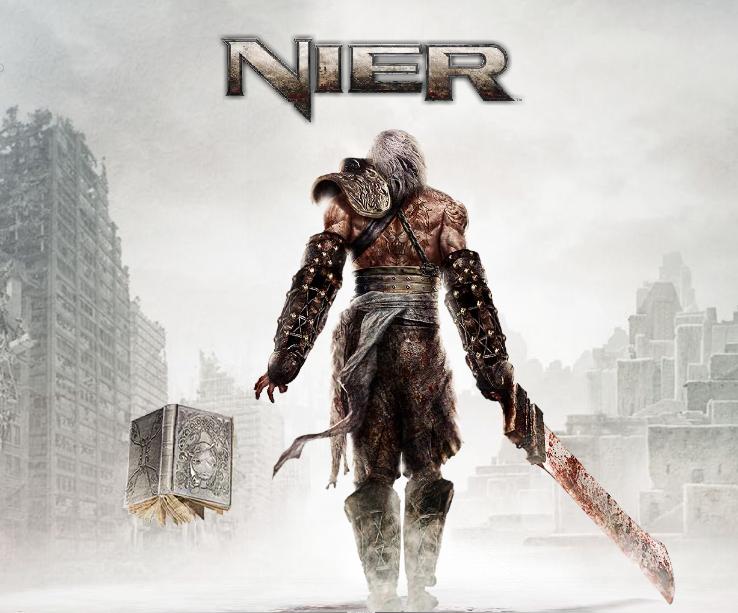
Holy Shit, We Have to Talk About Nier


Let me be clear and say that Nier was a game that I pretty much never wanted to play after reading the reviews. Even though it came out in 2010, years after the JRPG salad days of the PS2, I was still one to read criticism of games on the internet and balk at them expecting much better stuff to happen along sooner or later anyway. Being a lapsed-JRPG fan in the current generation, though, had become awfully hard, and even though Nier wasn't entirely stepping to the beat of a Final Fantasy drum, at some point I decided that, well, there just aren't that many JRPGs coming out, and what is coming out is absolute shit, so I may as well play Nier if it happens to fall in my lap. And fall in my lap it did.

I could be playing BioShock Infinite right now. I should have gone through Tomb Raider. I have Etrian Odyssey IV staring me in the face. Instead, I played through this busted mess of a game three times. Three times. Do I love it? Not even close; all of the trash that reviewers were rightly saddling on the Cavia-developed game were absolutely done with merit. First, it has a lot of great ideas, and it tries to blend a whole lot of genres together (It's an action RPG! It's a bullet hell shooter! It's a text adventure!), none of them work to the point where if we were to make singular games from any of these elements would they be fun to play. The fetch quests are absolutely gawdawful, and it turns out that they really are totally worthless to the game unless you're gunning for two of the four endings. It's also about as attractive to look at as a sewer grate. I'm almost certain that it was developed for the PlayStation 2 and was just left lying around until Cavia could convince Square-Enix to publish it during the particularly dark time that took them 5+ yeas to shit out Final Fantasy XIII.

But it is absolutely fascinating. First, I have never played a game as oppressively bleak as Nier. I don't know what the statute of limitations for spoiling 3 year-old games might be, but here's the gist: In the far future, humanity was dying of a plague (apparently caused by one of the endings of another oppressively bleak Cavia game: Drakengard) so scientists decided to split peoples souls from their bodies to give the earth time to overcome the plague and do away with the villains causing it. Since this took maybe thousands of years (I have no idea), the wandering souls became sentient. Their human forms eventually came to collect in form of shambling yellow Tron throw-aways called Shades. At this point, though, the souls thought that Shades were trying to kill them, so they hire guys like the preposterously ugly Nier to fight, kill, and generally keep them in line. Nier, through a series of wacky slapstick adventures, kills hundreds or thousands of Shades on the way to rescuing his daughter, and ultimately runs into his own Shade, the cleverly named Shadowlord. The thing is, Mr. Shadowlord was the only thing keeping Shades in check, and by killing him, MENSA member Nier sends humanity toward a slow, certain extinction. All in a day's work, I guess.

Yes, I know I'm leaving things out, but what's really interesting about this game isn't the fact that everybody dies (seriously), it's the the way that Nier unfolds its plot. After finishing the game and getting the "good" ending (Nier saves the kid! Aaaaand humanity is doomed...), you unlock further narrative for the second playthrough of the game. That isn't exactly new, but this new story content is specifically for the skanky foul-mouthed sidekick Kaine (filling in the whore roll to Nier's daughter Yonah's Madonna). After brief text introducing you to Kaine's back story as the second game cycle begins (mercifully starting at the second half of the game), which is also pitch black as per Nier's morose standards, you find that Kaine has been possessed by a Shade for at least the entirety of the first game, and now, lucky person you are, are treated to their internal dialog as she massacres her way through the game. Strangely, this doesn't offer insight into her deep interior scars as much as it shows how cruel a symbiotic relationships eventually become. Kaine is always protrayed as a bloodthirsty psychopath, but this doesn't come from Tyrann, the symbiote, he just perpetuates it, and psychologically taunts her way past the breaking point. The dialog that we hear out of it is a little hammy, sure, but still chilling, especially since it comes out of basically nowhere to the player used to only hearing the voices of her, Nier, and Grimoire Weiss and Emil, the two other companions. Worse, subsequent playthroughs of the game offer insight into what the greater shade enemies are up to before you mercilessly slaughter them. Kaine, merged with a Shade, can hear the thoughts of other Shades, and makes a point of disregarding their pleas for mercy while she continues to maul her enemies into pudding. It's as messed up as it sounds.

The coup de grace of Nier, though is Ending D. While the first three endings offered some solace in the fact that just about every character except one doesn't make it out alive and that the world as we know it will drift toward extinction, Ending D, offers you even less of a way out by --brilliantly--DELETING YOUR SAVE FILES. In most games, the heroic decision to sacrifice yourself for the greater good typically gives you either the supremely happy ending or an eventual resurrection to wrong the rights of the trouble world we blah blah blah. Not Nier. When offered a chance to save Kaine and turn her back into a human, you could either mercy kill her, thereby giving her release from a seriously terrible existence (and thereby granting you probably the most satisfying ending), our you can give up Nier's existence so that she might live some sort of normal life. But the cost of doing this is a total Mephisto deal; the game will actively try to talk you out of it by making it plain that all of your save files with this character will be deleted. Gone. Lost in ether. The characters in the game don't even remember you in the ending that you thanklessly chose, other than a quick flash of recognition by a now-human Kaine. It is, more than any other game I've ever played, the ultimate sacrifice.

But that's the twist. I wasn't so affected by this that it kept me awake last night, but it's stuck with me enough that I'm telling you all about it, and that's the idea. Nier as a character might be lost forever until the day comes (it won't) for you to start a completely new game, but as far as I'm concerned, he won't be forgotten. This is a twist that I'll probably tell my friends about, and if they decide to save Kaine one day, they may tell their friends, too. That's how games become cult favorites, much like what Nier is becoming. In his way, then, that butt ugly old man is just going to live. I'm ok with that.

Wednesday, April 3, 2013

Be Here Now

Terraria has me in sort of a headlock lately, and you should take that as a pretentious double entendre. Now a full week after I'm finished with my "required" playtime, I find myself, if even for 15 minutes in the morning before work, taking quick trips to the Underworld in my hellavator or building mud huts for hapless NPCs. Even when I'm wandering around as aimlessly as the Guide character and doing practically nothing to the point of boredom, I just keep getting pulled in to this randomly-generated place Godfather III style.


Naturally, then, it's on my mind quite a bit during the times I'm not playing it, which isn't so uncommon, I suppose. But I rarely ponder about the uses of meteorite or safest ways to kill Archdemons. Strangely enough, I usually sit and think about nothing, the concept of "nothing," and how my character in the game (you may call him Booyachaka, thank you) really has nothing at all to do. This is what makes me so stupid for Terraria. Booyachaka doesn't have to build, kill, farm, dig, explore, or anything else if I don't want him to. He just has to be.

Terraria, much like Minecraft from what I assume (since I've never played it) is different from other "sandbox" games that promote their freedom because they are, in every way, totally free. In Grand Theft Auto, you are still limited to the blockades of buildings and to a lesser extent gravity. While you can choose from just about any perceivable way you can imagine to get from point A to point B on the map, the player still must navigate through the streets of whatever faux-American city it's set in to to arrive there. Do something bad and cops will try to stop you, so enemies are generally always afoot. In Terraria, though, these obstacles can be completely taken away with a little bit of ingenuity and a teensy bit of sweat. No mission structure is there to guide you toward further tasks, and most of those tasks are fairly nebulous without doing a fair bit of external homework on the game. The point of it all is to simply exist in the world, have your way with it, and then maybe do it again in another randomly-generated Terraria. In fact, I'm finding it more of a God Game than what I used to call a sandbox. My whims can obliterate the entire world and reduce it to a pool of lava. Or, I can unlock hardmode and make surgical strikes on its bosses. Hell, I can even stop enemies from spawning with enough work. Or I don't have to do any of it. This is a feeling wholly unique to video games, and not many games really conjure them. It is nothing. It is to be.

Tuesday, April 2, 2013

Kashi Go Lean instant oatmeal with added flax seed will be the cement substitute of the future. Just try cleaning it out of your receptacle of choice the day after you enjoy it. I'm not a small guy, but it was starting to take more elbow grease than I was willing to give it. I can't imagine how it would be after letting it sit and crystallize over the course of a week, but I may have inadvertantly discovered a more humane form of torture. Please stop reading this blog, right-wingers.

I promised last week that I have good stuff lined up for coming posts, and one thing actually did fall into place. I know that's a tease for a post of a blog that nobody reads other than me when I feel like retreading old work (because everyone needs a good cry), but if you're down with the internets and the people that make their living on them, then you'll dig it the most. Stay tuned to this station.


Other than that, I finally settled down with one of my recurring old flames last night, one Street Fighter III: Third Strike. If you were to diagram my weekly games intake, an evening of 3S was uniformly placed somewhere in there to sort of cleanse the palette between games I would play or to give myself a break and regroup when RPGs would start to slow down during their inevitable mundane middle sections (which I have found true for 99 out of 100 of them). Sadly, my Dragon Punching has been curbed since my absurdly huge and expensive joystick started going on the fritz about two months ago. Not unlike speaker wire when it starts to decay, the USB cable of the stick has become finicky, and most of the time decides that, you know, it just isn't feeling it tonight, honey. I'm aware that it's something of an easy fix with a soldering kit and a little know-how, but these are precisely the two things I lack, so it's down to me plugging the thing in and hoping against hope. Then again, there's always a chance I can use the oatmeal to Spackle some loose wire back to the PCB or something. I'll give it some more thought.

Today's required reading comes from Kotaku's excellent roundup of the audacity of GDC 2013's hope, found here.

Wednesday, March 27, 2013

Terraria When You're Near

About an hour ago, my review of PC-to-consoles indie hit Terraria went live on GamesRadar. You should go read it.


All done? Then let's discuss.

Terraria was a very tricky game to review. Most games that I'm given to write about are very straightforward, and generally either downloadable for PSN/ XBLA or the mid- to low-tier releases that staff writers can't get to, meaning most stuff that I get is on the short side. It's actually a pretty good setup, since I don't always have a ton of time to play through 40 hours of something over the span of a week. But I will if I have to, and even large-scale games like Skyrim typically have a critical path that is easy enough to follow through that I can at least see the end of, well, something. None of that describes Terraria.

It was, basically, a directionless game by design where you could alter the entirety of the environment as you see fit. The Guide NPC is usually floating around to offer you tips about summoning and killing bosses if you want them, but they're fairly vague on the outset. Worse, my Guide got killed during the first night in the game because I didn't realize that I needed to build him a house. So there I was, digging holes for the sake of digging holes, hoping against hope that I would just stumble across something that made me want to keep playing. The first several hours, then, were about as exciting as spectating a staring contest. I wasn't exactly baffled, but I didn't know what to make of any of it.

This is when I decided to replay Symphony of the Night.

First, this is something I never, ever do. If someone is paying me to play a video game for them and relay my thoughts, I keep pretty well focused on the task until I'm comfortable enough to make honest judgment calls. For whatever reason, I found that I needed a sort of basis of comparison against which to make those judgements, and SotN was the clearest example of great explorative platform gameplay that I could think of at the time. Plus, I can finish the map at 200%+ in a little less than 5 hours (give or take the rate of the Crissaegrim drop), so after a long evening or day with Terraria I could pop in SotN for an hour or so for both refreshment and cleansing after aimless wandering.

You would think, then, that since I'm replaying one of my all-time favorite games while playing something else that it might taint my view of the new game. At first, it actually did. As I played more and more of Terraria, and did a little research here and there, it actually turned into the other way around. SotN gave me the perspective that I needed to start focusing my thoughts, and keyed me into Terraria's greatest strength.

Be with me here: In true "Metroidvania" style, there is a lot to see and explore, but it will always be walled off to you with breadcrumbs leading the way to your next objective. You'll do everything you possible can (outside of level grinding in SotN's case, but even this gives diminished returns) which will drop your progress to a halt. Eventually, Alucard will come to a point where he can't do anything other than squat and fight enemies or find the next unexplored location. In Terraria, almost every location (other than the sky) is able to be explored right from the start, so the impetus for advancing the game is based on mood and whim and not necessity. In fact, "advancing the game" is sort of a secondary concept, and while I kind of knew to expect that when I started, it took a long time for it to sink in. It was Be Here Now to its fullest.

Eventually, I did find ways for "advancement," and by then, I had put at least 10 hours into it, and over the course of the days that I had left I put in at least another 10 more, more focused and determined but purposely loose. I didn't have to do anything, but once I found it, the path to "conclusion" was there if I wanted walk it. And by all accounts, I didn't even come close to that quasi-end point.

I stand by my score for the review, and the criticisms I've made for its systems and mechanics. But I'm completely smitten with Terraria. I even clocked in a few more hours of it last night, long after write up to GamesRadar was gone from my desktop. Thankfully, I had the Shmoos to give me an extra hand.