USGamer published a feature today that I wrote about a particularly passive aggressive 3rd Strike troll. You should read it, and then tell everyone else to while you're at it. I'm pretty happy with how it turned out. Go there right now.
Book editing is in semi-full swing. So, half swing. Mild swing, maybe. Whatever. The point is that I'm slowly picking away at getting one edit done so we can move this process along and hopefully have it self-published by the Fall, if not sooner. We'll see how that goes.
Monday, February 23, 2015
Friday, February 6, 2015
Dark Souls 2: The Mea Culpa
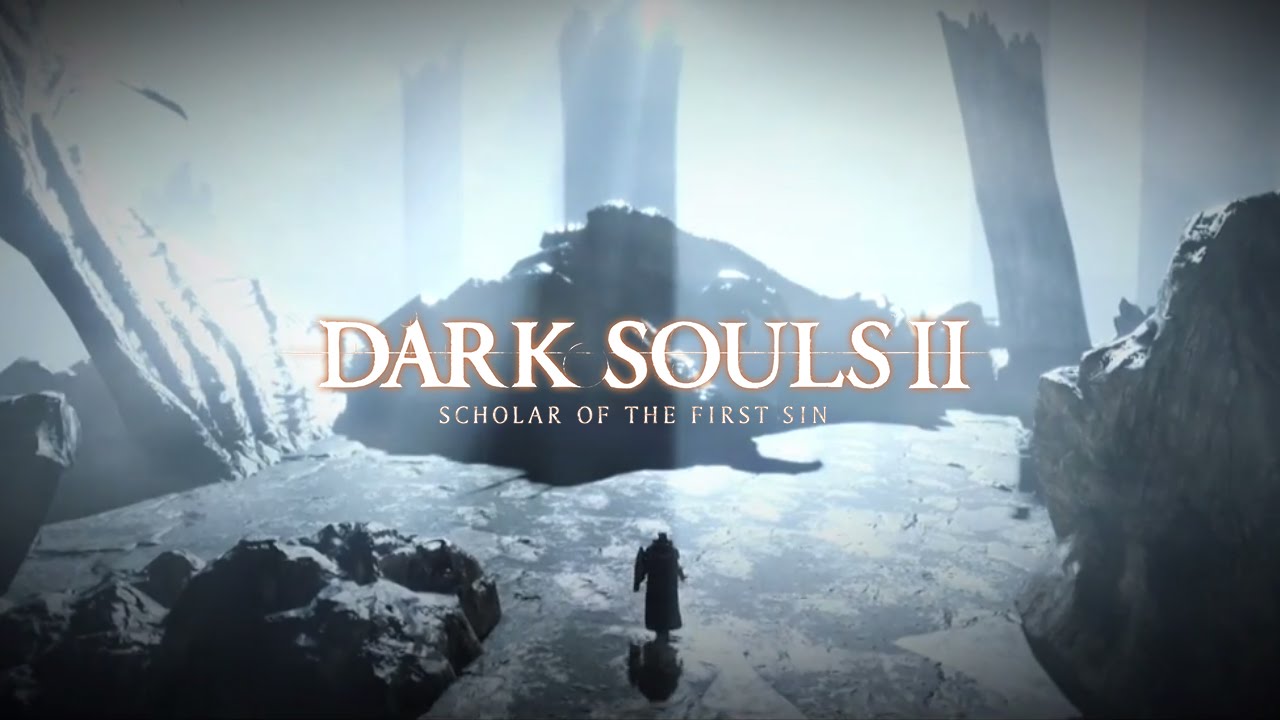
Scholar of the First Sin, the current patch rolled out this week for From Soft's punishing action/ RPG Dark Souls 2, is acting as both a free expansion to the current game and a lead up to a rerelease for current-gen consoles and beefier PCs in April. What the differences will be with what we all downloaded a few days ago versus any additional changes seems to be a little murky, but what we've already gotten seems to be one thing and on the thing only: an apology.
Pack your bags, we're heading into spoiler territory.
Dark Souls 2 was not a perfect game. While still definitely one of the absolute best of last year, the fan reaction From Soft's third Souls game had taken issue with a few of the game's finer points, mainly the lack of compelling NPC characters, a final boss worthy of the death march it takes to get fight it, and a proper ending befitting the nature of the rest of the series. In one fell swoop, From decided to try and rectify all three.
First, as you no doubt have seen, an amorphous blob of a character named only The Scholar was placed in key locations through the game: first in the Black Gulch after fighting The Rotten, next in the entrance to the Undead Crypt, then at the bonfire at in the Dragon Shrine, and finally after defeating Nashandra at the Throne of Want where he becomes the game's final boss. It's a fun scavenger hunt to track him down (unless someone ruins it for you like I just did), but more so compelling for his cryptic dialog. I have to be honest in that I've only just noodled around with the content patch with one character and there is an opportunity for multiple choice in some of his dialog, The Scholar reveals himself to he Aldia, brother to King Vendrick and an enigmatic figure to the game's larger lore.
Smarter people than me will do extensive research into every syllable of Aldia's new dialog, but we can surmise up to the point the patch was released is that Vendrick and Aldia had sniffed out the evil of Queen Nashandra, and that the two of them worked tirelessly to either cure or at least circumvent the curse that was turning humans into insane, zombie-like husks; a process called hollowing. Aldia's presence in the main game had been that of a shadow looming over what's actually going on in that he never appears, but is mentioned in NPC dialog and a few choice item descriptions. Aldia was known for strange experimentation (as evidence in all of the surrounding context clues in the Aldia's Keep area), and many have inferred that he had created Shanalotte The Emerald Herald basically in a test tube as part of his attempt to stem the curse.
After revealing his identity to you at the Dragon Shrine, the new dialog implies that disparities caused by both life and death and, more importantly, light and Dark (capitalization intentional) is a lie and the curse isn't as important as trying to find something else in between, or maybe completely outside of it. A nebulous concept, sure, but compelling enough for Reddit users to fall over themselves trying to decipher. It's still answering questions with questions, as far as the lore is concerned, but this is just the Dark Souls way, and while Aldia himself is compelling enough just for the sake of being there, he still doesn't have much of a character arc that we can puzzle out at this point. So, while his inclusion as an NPC exposition dump is a little suspect for right now, he gets a temporary pass for being nothing but just that.
As a boss, though, he's a little less forgivable. The first Dark Souls and Dark Souls 2 have both come under a little fire for having weak sauce final battles. While still difficult in their own right, compared to other enemies fought along the way (and, especially in Dark Souls 2's case, just beforehand) they're kind of a joke. Not to keep dumping on it, but over the course of its short life, Dark Souls 2 has done nothing but make the final conflict with Nashandra easier with items that can be obtained through the individual DLC expansions, and when all three DLCs are completed, gives you a massive safety net with the Crown of Vendrick item. Aldia as an enemy pops in just after this fight is complete following a brief bit of dialog. But it's a slog; Aldia retains his barely mobile blob-like form, essentially shooting things at you that can easily be avoided. While it takes a degree of patience to finish since he's usually wreathed in a shield of fire that will do more damage to you than you could to him, it's not a very satisfying battle, and when done with other players, is a bit of a joke.
If apologies have high points and crest like waves, though, it's in what happens after Aldia takes a dive. Another brief bit of dialog takes place, and a choice whether to sit on the Throne of Want or to leave it behind is clearly laid out to the player with two glowing beacons of light indicating which choice is which. While I think that how this is presented is a little too on-the-nose, the fact that you have a choice at all and the implications of which are fascinating. Not to sound lazy, but again, smarter folks than me will have much more to say on what these endings possible mean, but for a free patch, having an altered ending that nobody really expected to receive is certainly welcome.
I have my own theories in that some of this stuff may have been on the cutting room floor for the original release, but the fact that these three things are addressed after three DLC expansions (of which are seen as the best, most inventive parts of the game by many) is evidence that they probably weren't. There are still a lot of questions, too. First, I did this with a character that had already completed the game (but didn't start NG+) that had run through all three of the DLCs, so the path to the end with Aldia may be different without doing so. I haven't run into any replaced enemies in new locations, yet, either. I didn't take the Throne of Want at the end of the Aldia fight to see if it's any different than the original release, as well. But all of this stuff will probably be answered by the internet at large by the end of the day. What may be the best part of this patch is the re-written item descriptions, which the community is still parsing through. I noticed a significant change in Nashandra's Soul last night, and I can't wait to see what everybody else finds.
Plus, there's always the physical release for Scholar in April, and who knows what's going to be in that?
Wednesday, January 28, 2015
Tuesday, January 27, 2015
The Many Lives of Final Fantasy
It's common practice to say that the video game industry is in peculiar moment in its life. To recap: Consoles have transitioned to the requisite newer, more powerful boxes while digital distribution and the evolution of the mobile space has forced disruption to pricing models. Old guard publishers, particularly of Japanese origin, have struggled to adapt to the high cost of HD game development, while a guy in his basement can make tens of millions on simple mobile mini games. It's a spectacular upheaval, really.
Part of what makes this particularly interesting time is how the industry looks back as it lumbers forward. With the advent of downloadable content and digital sales, some publishers have been doing an admirable job with keeping their back catalog easily accessible to the curious fan. SNK, for example, is really a company that produces one new video game every few years by way of the King of Fighters franchise. However, the former Neo Geo producer does its best to re-release old games on a variety of other online services like PSN and Steam. Granted, these tend to be no-frills reissues, for their part, which would infer that the former arcade juggernaut needs to make some quick cash to bankroll future development costs. Developers do this all the time. Still, it's nice to know that if I ever have a jones to play, say, Metal Slug without the legal gray area of emulation, companies like SNK still let you sign into your PSN/Steam/XBL/Virtual Console account and have it at home or on the road.
Then there's Square Enix.
For years (decades, almost), Square Enix has seen themselves as something of a unique case in all things. Certainly successful with a stable of recognizable IP in their portfolio, Square was both one of the first companies to regularly reissue their software while also charging higher prices than their peers for the privilege of playing them. This presents a sort of conundrum. On the one hand, and what we'll call the benevolent side of things, Square has kept the first Final Fantasy in circulation in one form or another since as early as the 16-bit generation as if it were the grandfather that still won't shut up about Casablanca. On the other, much more cynical hand, you could say that Square is a company that needs the money, now more than ever. Development of Final Fantasy XIII had certainly caught them with their pants down, so not only will they always find a way to sell the game that originally saved them from extinction as a metaphorical way to keep the ship sailing, they're going to sell it for a premium; a "Square Enix tax," as it's come to be known. While the first FF is definitely the example we're using here, it doesn't take a lot of searching through the IOS and Google stores to find the company trying to sell its games well over and above the cost of its contemporaries.
It's natural at this point to feel conflicted, so why don't I make it harder for you to metabolize. The following is a quick list of all of the releases, ports, and rereleases of the first Final Fantasy limited what what has made its way outside of Japan. Soak them in.
Final Fantasy - 1990
Platform: NES
Original Price: $50 USD
Comparables: NES games generally sold for similar prices give or take a few bucks
Current Price: about $20 loose
The game that either saved the company from bankruptcy or spared series creator Hironobu Sakaguchi from throwing in the towel on game development to go back to school (depending on who you ask) was original release for the Famicom in Japan in 1987 and then moseyed on over to the West with the backing of copious Nintendo Power coverage in 1990. Prices have fluctuated in the aftermarket until relatively recently where it's settled in its current state. It is not exactly a kind game to the player.
Final Fantasy - 2000
Platform: Wonderswan Color
Original Price: less than 4,800 yen (guesstimate) before importing fees
Comparables: Slightly lower. If you were importing a Wonderswan, you were probably doing it for this.
Current Price: roughly $50
This is a bit of a cheat as it never technically left Japan, but the Wonderswan Color (Gunpei Yokoi's successor to the GameBoy published with Bandai) version of the game was heavily imported by curious Western gamers. While the game was rereleased twice already at this point for the MSX computer and again for the Famicom (packaged with Final Fantasy II), this was the first version to drastically overhaul the graphics for the Wonderswan's beefier handheld screens. More of an artifact of a time that Square and Nintendo began their short-lived, but no less seismic feud than anything thanks in part to...
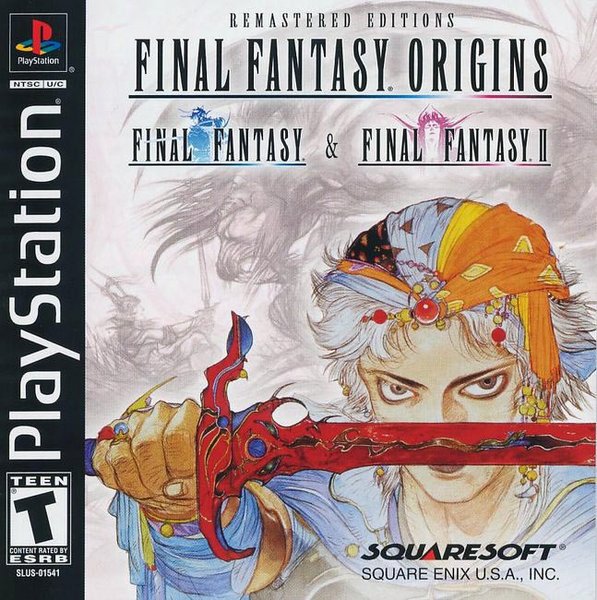
Final Fantasy Origins - 2003
Platform: PlayStation
Original Price: $30
Comparables: Unusually budget priced compared to even contemporary PSOne games of the time
Current Price: $10
A repackaging of both Wonderswan versions of FFI and FFII with additional goodies like a few FMV sequences and further retouched graphics. Still somewhat archaic (and brutal) compared RPG contemporaries of the time, now three years into the PlayStation 2's lifespan. Brilliantly low priced for a package this, even for the time.
Final Fantasy I & II: Dawn of Souls - 2004
Platform: GameBoy Advance
Original Price: $30
Comparables: About the same. Most GBA games ran for the same price in most regions
Current Price: $10
A further rework of the Wonderswan releases with additional dungeons and tweaks. Commonly found if you have the ability to play GBA games (such as the various GBAs in past production as well as the Nintendo DS), but something of a shoddy port.
Final Fantasy - 2007
Platform: PlayStation Portable
Original Price: $40
Comparables: Also close to the same, but perhaps a bit higher
Current Price: $5
Another thoroughly common remake of the first game, though conspicuously absent from PSN, this version further retouched and updated the graphics. The rereleases at this point had been slowly wimping down the difficulty for the past several releases, but even IGN's review of the game took issue with this particular version.
Final Fantasy - 2009
Platform: Wii Virtual Console
Original Price: 500 Wii points (about $5)
Comparables: In line with Nintendo's other VC NES games
Current Price: Same
An emulated reissue of the original North American NES version, warts and all. Also AWOL from the US Nintendo eShop, which, at the time of this writing, includes the 3DS and Wii U stores.
Final Fantasy - 2010
Platform: iOS
Original Price: $8.99
Comparables: Ludicrously overpriced in comparison. Most mobile games are a fraction of this
Current Price: Same
A heavily tweaked revision of the PSP version for the touchscreen interface.
Final Fantasy Origins - 2012
Platform: PlayStation Store
Original Price: $9.99
Comparables: The high end; PSOne games on PSN range from about $5 to $10
Current Price: Same
The PSN rerelease of the PSOne game. Nothing at all is different from the original release, but now you can play it on your various PlayStation platforms. Currently, this is the most reliable way to play the first game on anything but a phone.
Final Fantasy - 2012
Platform: Android
Original Price: $8.99
Comparables: See iOS version above
Current Price: Same
Yet another release of the PSP version basically identical to the iOS release from 2010.
TOTAL:
9 Releases in NA
3 Currently available (Origins, various phone versions)
6 Versions unaccounted for (Japanese/ EU releases)
Decision time. Now that we can see that the game has been readily available since its release for one platform or another, it's time to wonder: is Square Enix using its powers for good? Your comments, if you please.
Thursday, January 22, 2015
Be Here Now
While my last entry wound up being a bit too heavy on the mopey side, it's assuring to find that the bright spot at the end turns out to be even shinier than I realized. By that, I mean the games stacked up in front of me --specifically Shadow of Mordor and Wolfenstein: The New Order-- are pretty darn good so far. Sure, I'm only in the first hour or two of each, but after mentioning them in the last post, I decided to circumvent my usual game playing policies to briefly sample them. But they're back in the cabinet for now, and that's just fine. This is why:
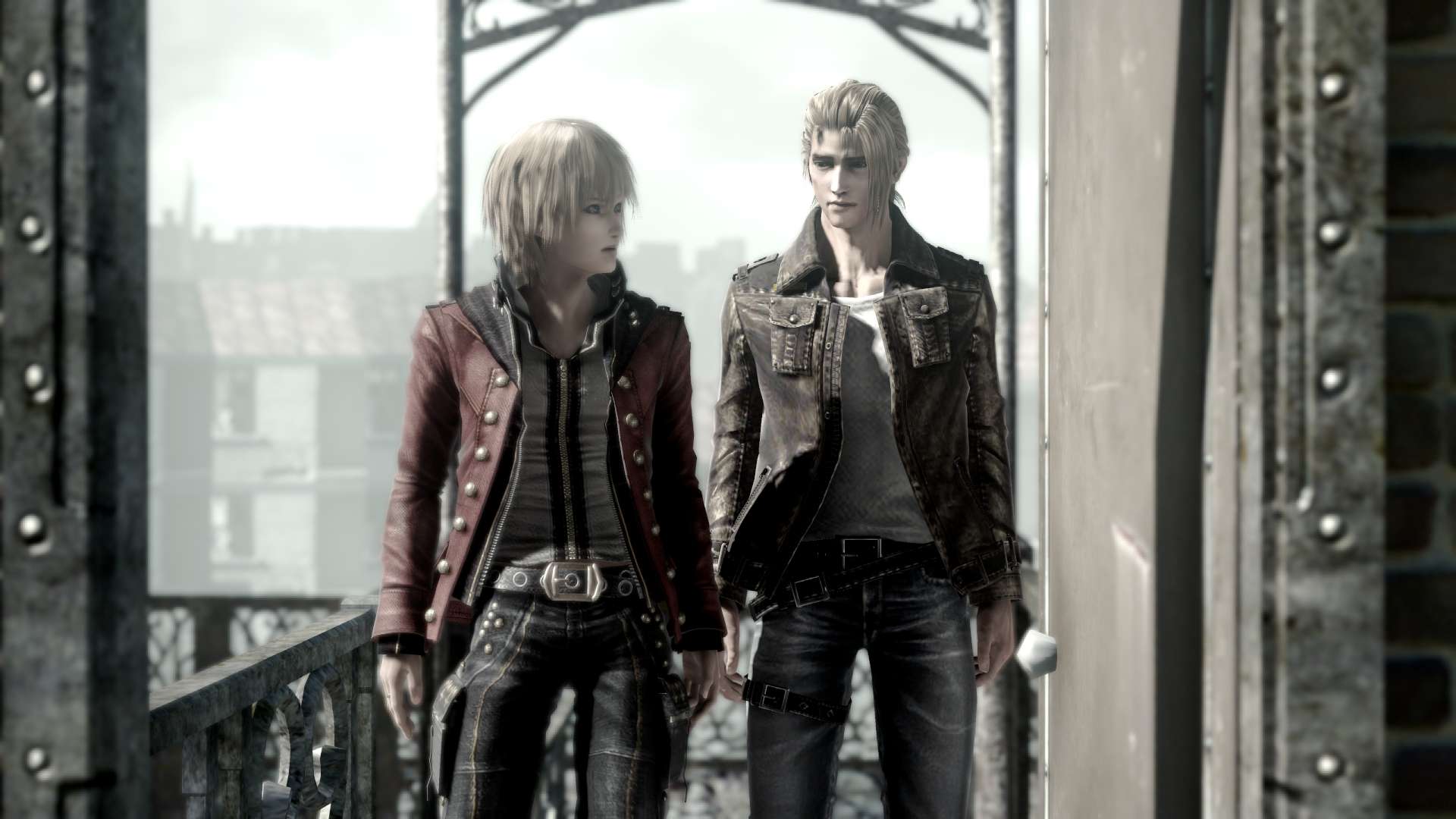
Resonance of Fate, the game I had been slowly picking at for weeks, has recently turned from neat distraction to fascinating case study. As niche as niche games get, it does things with combat and story that are downright nutty, but in ways that take what we think of as common video game tropes and flush them down the toilet. Not all of them work, and some barely make sense (and make even less if you think about them too hard), but after taking a step back and looking at the forest for the trees, it's almost shocking that a game like this received any funding at all.
There isn't too much about the game that's made its way to the mainstream internet as far as I can tell. A few good writers have gushed over it in their way, but the only real notice the game's gotten has had more to do with its stupidly opaque battle system than anything else. I can't blame anybody for that, because it takes the better part of the first third of the game to properly wrap your head around it, and I'm not even going to try to go through the motions of explaining it myself (fun side note: my parents decided to unexpectedly drop in on me last weekend while I was playing it. My father, an intuitive specimen, was fascinated and wanted me to explain what was going on. I barely got through the gist of things in a 10 minute demonstration, and was impressed with myself that I made it in that amount of time. My mother didn't give a shit whatsoever). However, after some careful consideration and experimentation (which the game gives you ample opportunity to try so long as you don't mind being punished for it), Resonance of Fate is basically a giant board game scaffolded on top of a smaller one.
At the top is the combat: a sometimes random occurrence on the map that's set up to be played by two opponents. The player clearly represents one opponent, while the computer AI is obviously the other, as in most video games. However, while a random number generator is present and a certain dice-roll mentality is understood, the rules are essentially the same for you as they are for the AI. There are set turns for both sides of the table, and careful use of those turns decides the winner of each skirmish. Often these turns can be manipulated to make battles lopsided one way or the other, not unlike most strategy games. While there's definitely strategy genre tropes that must be considered like positioning and the employment of proper tools for the job, it's really up to the player to come up with the proper use of them. This is made evident by the player always going first in every encounter. This is counter to almost every other console RPG in that there is always a random chance that the AI will take the first turn, but not so with RoF. With that said, the player is always in a position to win every battle, and almost always without the AI getting a chance to counterattack. Bring the right kinds of weapons to the table, even in a seemingly very underpowered state, and the player will always come out on top with careful consideration of the factors of the game board. The flip side to this, of course, is that the computer is always smarter than the player. Screw up at all, especially in more high stakes situations, and the AI will almost certainly make the player pay for their mistakes, and often to the point that restarting whole battles is often smarter if the first turn is botched. It's a careful risk/ reward scenario made up of various other risk/ reward moments within each fight. I'd encourage anyone interested in complex tabletop battle games to invest in it.
The other, smaller board game is the world map; a series of hexes blocked to the player. The point of the game, ultimately, is to open these hexes to move to various locations, but doing so burns through finite resources. As you may have guessed, these resources can be obtained through battles (random or scripted). However, without the grunt work of grinding through battles, which will ultimately make the characters stronger, you will never have enough hexes to open up the entire game. Not by a long shot. But you can certainly play through a requisite handful of random fights and the inescapable scripted stuff to get exactly what you need to get to the next main objective, provided that you're not just randomly using them. But again, their random use is the nuance of the hex system. Uncovering out-of-the-way hexes will yield rewards (some, honestly, of limited practical use), and careful, well-planned use of colored hexes --rarer than the standard ones-- will boost battle capabilities of your team. In practice, it's actually very simple, and this is why it's considered the "small" board game. You can definitely plow through the story missions and be just fine. But by clever plotting and smart use of resources, you can uncover larger, and often richer rewards. Regardless, mastering the complicated process of battle is the key to doing so. This is not a game that partitions you off simply by the strength of your stat levels, and one can perhaps even game the system provided they're intuitive with their hex use.
But this is all mechanical. Cold, even. What makes this game really unique is how it tells its story. Or, rather, how nothing actually happens. It's not a stretch to say that many, many video game plots are badly edited junior high school essay contests. RoF is definitely no exception. But RPGs have, through the process of their own evolution as a genre, found that they need to have some semblance of a story to contextualize these mechanics, lest the games actually do turn cold. Seriously, digging through menu after menu in battles is nothing if there is no emotional reward; whether that's beating the guy across the table or saving Spira. But, in what I can only assume is a byproduct of knowing its nature, RoF clearly doesn't give a damn. A large amount of the main story missions are useless busy work for the three heroes, and they even know it. The first mission had me deliver a ring to socially awkward shut-in. Another had me delivering a bottle of wine. Yet another found my characters dress up as bears so they can give Christmas presents to young children. Sure, there is some larger conspiracy happening in the background, and a few cutscenes definitely want to try to get you invested in the larger goings-on. Through that lens, everything you're doing seems childish and stupid. But the story beats are presented as small bites. Each mission can be completed in easily less than 20 minutes, and all of them are broken into individual chapters, almost like the whole game is more or less a season of a network television show. Yes, there are bigger things happening in the background, but RoF takes the unusual stance that what is happening in the here and now is equally important, maybe even more so, than saving the theocracy of the world that it takes place in (if that's even the case. I've lost interest in the background noise long ago). The context given for playing these large and small board games feels inconsequential for a reason, because that's pretty much what they are. But RoF lives in the moment, which something a lot of video games don't really do. We know that our princess in another castle. We know we have to stop Liquid and Rex. But in RoF, you wouldn't be alone in wondering what the point of it all really is until just about the end of the game, but by then, who really cares, anyway? Souls games notwithstanding, there aren't a whole lot of examples of other games that do this. Looking at it that way, it's pretty spectacular.
I have a hard time thinking that Resonance of Fate will be considered a sacred video game text over time, and that further, deeper analysis is even all that necessary. Still, it's kind of a fascinating experiment, something the console RPG space gave up on in the previous generations after development costs began to bloat for the medium as a whole. I can't stress enough how none of these individual pieces are flawless: the story missions, weird as they are, still seem dumb, and the combat can feel a little too easily exploited once you really get it. But for it's own sake, it's a big picture sort of game. A fine niche to be in.
Tuesday, January 20, 2015
Ahoy, January
Another year, another year. These things sure happen like clockwork, don't they? Life's been busy these past few months. Bought a house, taught a class, stopped writing, etc. Some of those things were fine. Others, less so. The whole house-buying thing was pretty stressful (like everybody says), but the payoff has been worth it. Sooner or later, I'll have a whole room to stash my stuff instead of pockets of space inside of a tiny apartment. Not being able to write, though? Pretty lousy, but let's not kid ourselves; I had a lot on my plate in the fall (and a lot more in the hopper now) and that can get in the way of writing for personal fulfillment, but I've been a little lazy these past few months.
So, what do you say we clean out some cobwebs? Like last January, here's a brief list of what I played these last few months in order of which I can remember them:
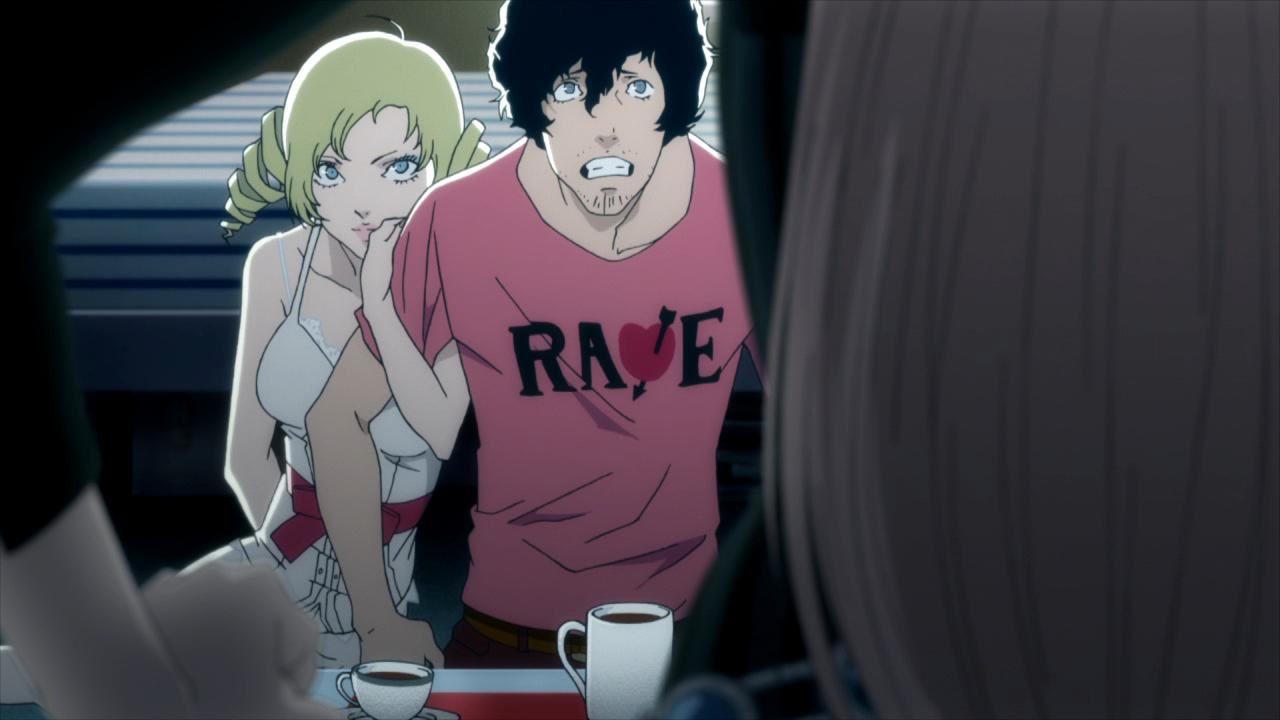
Catherine: See, the funny thing about Catherine is that I really wanted to play it, but I never wanted it in my house. The marketing for the game was a little on the salacious side, mostly having to do with the cover art it's accompanied promo materials. Now, my spicy wife is not a judgmental person and I'm certainly no prude, but even though I knew that the game wasn't that pervy from everything I heard about it, I never jumped that hurdle. Lucky for me, I have friend that will buy any video game if it's cheap enough, and he loaned me a copy of it roughly eight months ago. So, yeah. The irony that I never wanted to buy it because I though it might be sleezy never mattered because it sat firmly in my home for close to a year unplayed is not lost on me.
This same friend loaned me a stack of other games in October, so in an effort to clear the backlog of stuff that I didn't actually own, I bum rushed through all of them between December and last week. Of them, Catherine was the undisputed champ. A great, complex puzzle game and goofball anti-dating sim rolled into one, it was the unholy union of two genres I don't really care about made into something kind of brilliant. Sadly, it was the last of this round of borrowed games that I went through, so I forced myself to ratchet down the difficulty to Easy so I could finish it, but this might also wind up being the rare video game that I end up buying anyway because of how unique the whole thing was. I'm all talk, so we'll see about that, but still. I call that a good recommendation.
Metal Gear Rising: Revengeance: This is Catherine's counterpoint in just about every way. An action game made by Platinum set in the Metal Gear Solid universe, it is both absurdly precise in its combat and stupidly verbose in everything else; a combination that made me want to turn it off for good more than once. Still weirdly satisfying until right at the end of the game which featured a final boss that was close to being another deal-breaker. I get that action games like this, especially ones made by the mad scientists behind Bayonetta and Godhand, want you to have intimate knowledge of their systems and mechanics and be able to prove that with a challenging final encounter. What I don't get is the spike in difficulty from tough-but-fair to do-this-right-the-first-time-or-tough-shit. This was a late night that should have been an early evening. To me, Platinum's games have always been like a glass of wine: I'll drink one if it's in front of me, but I'll never order it myself. Revengeance is a stupid name, but it was an ok game. And I'm Platinum-ed out for a while.
Metal Gear Solid: Ground Zeroes: Is there any way to make Master Miller shut up? This is a serious question.
Tales of Graces F: Holy shit. This game was actually pretty good, and nobody is as shocked as I am. For all of the flak I can throw at JRPGs, this wound up being a good time. FULL DISCLOSURE: I skipped probably 85% of the cutscenes, and during the ones that I did let play I was probably fiddling with Spotify or something, so this might have played a significant factor in my enjoyment, but fun is fun. I didn't wind up completing the post-game epilogue before giving it back to my pal, and I kind of regret it. That's ok, though, because...
Dragon Age: Inquisition: Pretty much the first game to come out for current-gen systems that I couldn't wait to buy, it was my sole purpose for the month after it was released. My first run clocked in at some big dumb number like 85 hours, but being a nutcase, I cranked up the challenge to Nightmare and started over immediately after finishing with a new character so I could get that equally dumb platinum trophy. Truth time: I was a little underwhelmed, even after all of that.
Ok, I loved The Gaslight Anthem's breakout album, The '59 Sound. It was unquestionably the best record I had heard that year, and I eagerly awaited everything that came after it. Of course, nothing will ever come close. Being the first album I had heard from the band, and something of a renewal of my vows with the fickle mistress that is post punk, it was everything that I needed in my musical life without knowing it. Great works of art blindside you that way. Their next album, American Slang, went noticeably mid-tempo. This wasn't a bad choice, but it wasn't exactly what I was expecting, and ultimately wound up being a letdown because it didn't re-bottle that lightning from the previous record. Everything they've released since has been a mixed bag of genius and garbage. Would I feel this way if I had heard Handwritten first? I can't say. Dragon Age: Origins, then, was my '59 Sound. It came out at the tail end of a particularly great year as far as my personal gaming tastes are concerned (Street Figher IV! Borderlands! Demon's Souls, for God's sake!), and was so consuming that I spent hundreds of hours digging through every square inch of content. Dragon Age II has gotten a lot of poop on the internet for being a lesser game, and it definitely was. But, like American Slang, it did its own thing for better or for worse. There are certainly things to hate about it, but there was that much more to love. DA2 is not a terrible video game, but it would never have filled the hole in my heart for more of the exact same thing --which I know that I don't really want anyway-- no matter how astounding it could have been.
Inquisition, then, is actually that kind of astounding. The characters are great, the world is bafflingly big, and the whole things is stunning to look at. But the magic isn't there anymore; at least, not like it was. Still a great game by most means, and I certainly have the hours put into it to prove that I must have enjoyed it somehow.
I took a break from games for a little over a week after it was over and I obtained the platinum trophy to ponder it. I wondered if this was indicative of something larger. Is this it, I would posit. Is the thrill really gone? Of course I went back, but the older I get, the more this gives me pause. It's hard to be as excited for new experiences as I was as a younger man, and I have become more interested in preserving that which gave me pleasure a lot more often than I used to. The fact that I'm still regularly playing Third Strike every week with friends (gentlemen's game that it is) is proof of this all of these years later. For now, it's nice to know that I'll always have interesting things to play, whether they're new games that come down the line or old stuff that will rekindle my interest in the medium. There's comfort in that.
I've been forcing myself to play through Resonance of Fate over the last week or so on the recommendations of the internet as a whole. It is not without its problems, but I think that, now in its final two thirds, I've hit enough of a stride that I get why people like it. It's the kind of RPG I would have been all over about 10 years ago. Now, it's a bit of a chore, but I'm finding myself perversely happy that games like this still exist. This past weekend, my friend and I met and exchanged the usual stack of games that we've finished, and now I have Shadow of Mordor, Wolfenstein: The New Order, and Darksiders II waiting for me when it's finished. I'm not expecting any of them to really blow my hair back, but hey.
It's a new year. You never know.
So, what do you say we clean out some cobwebs? Like last January, here's a brief list of what I played these last few months in order of which I can remember them:
Catherine: See, the funny thing about Catherine is that I really wanted to play it, but I never wanted it in my house. The marketing for the game was a little on the salacious side, mostly having to do with the cover art it's accompanied promo materials. Now, my spicy wife is not a judgmental person and I'm certainly no prude, but even though I knew that the game wasn't that pervy from everything I heard about it, I never jumped that hurdle. Lucky for me, I have friend that will buy any video game if it's cheap enough, and he loaned me a copy of it roughly eight months ago. So, yeah. The irony that I never wanted to buy it because I though it might be sleezy never mattered because it sat firmly in my home for close to a year unplayed is not lost on me.
This same friend loaned me a stack of other games in October, so in an effort to clear the backlog of stuff that I didn't actually own, I bum rushed through all of them between December and last week. Of them, Catherine was the undisputed champ. A great, complex puzzle game and goofball anti-dating sim rolled into one, it was the unholy union of two genres I don't really care about made into something kind of brilliant. Sadly, it was the last of this round of borrowed games that I went through, so I forced myself to ratchet down the difficulty to Easy so I could finish it, but this might also wind up being the rare video game that I end up buying anyway because of how unique the whole thing was. I'm all talk, so we'll see about that, but still. I call that a good recommendation.
Metal Gear Rising: Revengeance: This is Catherine's counterpoint in just about every way. An action game made by Platinum set in the Metal Gear Solid universe, it is both absurdly precise in its combat and stupidly verbose in everything else; a combination that made me want to turn it off for good more than once. Still weirdly satisfying until right at the end of the game which featured a final boss that was close to being another deal-breaker. I get that action games like this, especially ones made by the mad scientists behind Bayonetta and Godhand, want you to have intimate knowledge of their systems and mechanics and be able to prove that with a challenging final encounter. What I don't get is the spike in difficulty from tough-but-fair to do-this-right-the-first-time-or-tough-shit. This was a late night that should have been an early evening. To me, Platinum's games have always been like a glass of wine: I'll drink one if it's in front of me, but I'll never order it myself. Revengeance is a stupid name, but it was an ok game. And I'm Platinum-ed out for a while.
Metal Gear Solid: Ground Zeroes: Is there any way to make Master Miller shut up? This is a serious question.
Tales of Graces F: Holy shit. This game was actually pretty good, and nobody is as shocked as I am. For all of the flak I can throw at JRPGs, this wound up being a good time. FULL DISCLOSURE: I skipped probably 85% of the cutscenes, and during the ones that I did let play I was probably fiddling with Spotify or something, so this might have played a significant factor in my enjoyment, but fun is fun. I didn't wind up completing the post-game epilogue before giving it back to my pal, and I kind of regret it. That's ok, though, because...
Dragon Age: Inquisition: Pretty much the first game to come out for current-gen systems that I couldn't wait to buy, it was my sole purpose for the month after it was released. My first run clocked in at some big dumb number like 85 hours, but being a nutcase, I cranked up the challenge to Nightmare and started over immediately after finishing with a new character so I could get that equally dumb platinum trophy. Truth time: I was a little underwhelmed, even after all of that.
Ok, I loved The Gaslight Anthem's breakout album, The '59 Sound. It was unquestionably the best record I had heard that year, and I eagerly awaited everything that came after it. Of course, nothing will ever come close. Being the first album I had heard from the band, and something of a renewal of my vows with the fickle mistress that is post punk, it was everything that I needed in my musical life without knowing it. Great works of art blindside you that way. Their next album, American Slang, went noticeably mid-tempo. This wasn't a bad choice, but it wasn't exactly what I was expecting, and ultimately wound up being a letdown because it didn't re-bottle that lightning from the previous record. Everything they've released since has been a mixed bag of genius and garbage. Would I feel this way if I had heard Handwritten first? I can't say. Dragon Age: Origins, then, was my '59 Sound. It came out at the tail end of a particularly great year as far as my personal gaming tastes are concerned (Street Figher IV! Borderlands! Demon's Souls, for God's sake!), and was so consuming that I spent hundreds of hours digging through every square inch of content. Dragon Age II has gotten a lot of poop on the internet for being a lesser game, and it definitely was. But, like American Slang, it did its own thing for better or for worse. There are certainly things to hate about it, but there was that much more to love. DA2 is not a terrible video game, but it would never have filled the hole in my heart for more of the exact same thing --which I know that I don't really want anyway-- no matter how astounding it could have been.
Inquisition, then, is actually that kind of astounding. The characters are great, the world is bafflingly big, and the whole things is stunning to look at. But the magic isn't there anymore; at least, not like it was. Still a great game by most means, and I certainly have the hours put into it to prove that I must have enjoyed it somehow.
I took a break from games for a little over a week after it was over and I obtained the platinum trophy to ponder it. I wondered if this was indicative of something larger. Is this it, I would posit. Is the thrill really gone? Of course I went back, but the older I get, the more this gives me pause. It's hard to be as excited for new experiences as I was as a younger man, and I have become more interested in preserving that which gave me pleasure a lot more often than I used to. The fact that I'm still regularly playing Third Strike every week with friends (gentlemen's game that it is) is proof of this all of these years later. For now, it's nice to know that I'll always have interesting things to play, whether they're new games that come down the line or old stuff that will rekindle my interest in the medium. There's comfort in that.
I've been forcing myself to play through Resonance of Fate over the last week or so on the recommendations of the internet as a whole. It is not without its problems, but I think that, now in its final two thirds, I've hit enough of a stride that I get why people like it. It's the kind of RPG I would have been all over about 10 years ago. Now, it's a bit of a chore, but I'm finding myself perversely happy that games like this still exist. This past weekend, my friend and I met and exchanged the usual stack of games that we've finished, and now I have Shadow of Mordor, Wolfenstein: The New Order, and Darksiders II waiting for me when it's finished. I'm not expecting any of them to really blow my hair back, but hey.
It's a new year. You never know.
Labels:
Catherine,
Dragon Age,
Getting Old,
Metal Gear,
Tales of Graces F
Wednesday, October 22, 2014
So This Whole 'Terra Battle' Thing...
On October 9, Terra Battle was released on iOS and Android platforms. Oh, I'm sorry, you haven't heard? That's fine, neither have the rest of us. The gaming press has been strangely (and maybe a little bafflingly) mum on the game now post-release, and only a handful of previews made it out of PAX this year where the game was finally shown off to the Western audience.
As a game built for cell phones and tablets, this isn't that confounding; most video game outlets are either overwhelmed with the ocean of regular releases for games found on Apple's App Store or Google Play Store to have time to sift through them all, or simply shrug their shoulders at the whole idea of iOS/Android gaming because most this ocean is polluted with obvious shovelware. The good stuff out there, your Hearthstones and Ridiculous Fishings, tend to be tiny islands.
But even if it were a numbers game alone, this would make the good stuff seem that much greater. There are a lot of, say, free-to-play card games out there, but games like Rage of Bahamut, Assassin's Creed: Recollections, and Hearthstone stand out among because of their smarter, more tactical design, higher production value, and careful balancing of the format's nearly uncontested free-to-play business model. The fact that AC:R, Hearthstone, and others like Epic/ Chair's Infinity Blade and Capy's Superbrothers: Sword and Sworcery EP have the other major attention grabber at their disposal --a developer's name recognition-- is the other side of the iOS/Android popularity coin. We know that a game made by Blizzard will at least look great and play well and, while that doesn't guarantee a perfect product, they're at least made with some thought behind them.
So why in the world has there been no mainstream press for Terra Battle?
It's certainly holding a distinct pedigree. Chiefly designed by Final Fantasy series creator Hironobu Sakaguchi and a small team at his Mistwalker studio, the game has decades of RPG experience behind it with all of the success and struggle that's come along for the ride. Production value isn't exactly through the roof for such a low-key game, but the art and music (made by the same art directors as Mistwalker's Wii release The Last Story and Final Fantasy series vet Nobuo Uematsu, respectively) is clean and eye-catching. Sakaguchi himself was in the media eye a few weeks ago to drum up some interest before the launch, but since then, a whole lot of nothing.
And, you know, the game is good, too; it's easy to pick up and play but has a fair amount of depth, and the balance of free-to-play mechanics doesn't feel so mercenary. I'll get into more of that with a review in a day or so.
But come on, people. Why aren't you talking about this?
Subscribe to:
Posts (Atom)