So, I made this big statement about this big plan and it's turned into a big, big job. But I saw that coming, so it's ok. Really, though, it's turned into just a little more work than I anticipated, but for the amount of work I thought it would be in the first place, a "little more" really just pushes this from a massive undertaking to a super massive undertaking.
You know what the problem is? Castlevania games, that's what. I thought I'd replay the ones that I know just to get a refresher and capture good footage from them. Then I figured that I'd play some of the ones I skipped to make sure I didn't miss anything that may have been referenced in Symphony. Then I realized that if that's going to be the case, I need to play everything from every platform that came out before 1997 just in case. The point of this whole exercise is to be thorough, so I, you know, need to be thorough.
On the plus side, a very generous friend of mine set me up with legit a copy of Sony Vegas, which is a very easy editing program to use, though it's a fairly old version of the software. After a little tinkering, I'm a lot more confident in my original vision for the videos with as little compromising as possible. But there have still been some hurdles. I'm struggling to use my rudimentary pixel art skill to make a title card for the whole thing based on the actual Symphony title screen (meaning GIMPed into the actual Symphony title screen). I took a good swing at it a week ago and it needs a whole lot more work than I've been able to put in so far, so if anything holds the whole endeavor back, it could be that.
Second, I'm doing all of this --all of the video capture, all of the editing, all of the sound recording, etc.-- on my laptop. It's only about a year old and has a nice amount of muscle to it, but this thing was not built for the task I'm asking it to perform. Do me a quick favor and silently pray for it's endurance over the next few months.
Update's over. Time to finally play Kid Dracula.
Showing posts with label Video Games. Show all posts
Showing posts with label Video Games. Show all posts
Sunday, June 5, 2016



Tuesday, January 26, 2016

I realized not long after I wrote a nice chunk about Street Fighter IV that I implied that the game is bad. I'm not sure I want that to be the case in your head, but there has certainly been a trajectory to my opinion on the game:
- This is new and good!
- This is the fighting game norm
- This has helped me make new friends
- This is slow and plodding
- This isn't what I want
Maybe one of these days I'll write something about all of the good that's come from Street Fighter IV and its many upgrades, but I feel it's more important at this point to qualify yesterday's statements. I'm pretty sure you got that I was using Dhalsim as a metaphor for both fighting game development and the health of the current gaming industry (if only the large developer/ publisher side). But if you didn't, there you go, I guess. Street Fighter IV isn't really that far removed from what we're seeing currently with the new Star Wars movie; it's what you love intimately about the old ones, but with a few new characters and a couple of slight twists. During the previous console generation, things were awfully lean for companies that were swimming in money from the generation before it, and market-tested surefire hits were more the creeping norm than a sense of innovative adventure. Street Fighter IV is a clear product of that, though to its credit, it evolved into something much grander over time.
Comparing that to the Street Fighter III games as I did, which were almost a full reboot from a character and mechanical perspective (though, again, many of those character archetypes still exist), was meant to drive the point home. Maybe it also perpetuated a feeling that SF3 is better than SF4. Well, I guess personal biases creep in sometimes no matter what. Whatever. You're smart people. I think you get it.
Monday, January 25, 2016
Let's Meet Dhalsim
This is Dhalsim.

Meet him. Shake his hand. Study his movements and question his methods. He's sort of new around here, after all.
Ok, of course you know who Dhalsim is. He's a mainstay of the Street Fighter series; a perennial fixture of the roster lineup, and the Patient 0 of what has collectively come to be known as "zoning gameplay." Dhalsim is as new around video games as Sonic the Hedgehog.
But in about three weeks, Dhalsim won't be the yogi you know, and this is both as profound as it is assuring for the direction that both fighting games and maybe gaming as a whole will go.
They say that all successful sequels are the sum of the following equation: 80% old + 20% new. Street Fighter IV, the 2008 sequel that dragged the head-to-head fighting genre into a new found renaissance, practically had this tattooed on its metaphoric neck. Of the 25 playable characters (in the eventual home release in 2009), 19 were from previous games in the vast Street Fighter series, and of those, 15 were lifted straight from Super Street Fighter II Turbo, the final iteration of the seminal 1991 title. Of these 25, 10 were all derivations of the basic "Ryu concept:" that is a character that can throw a projectile to bait an opponent into a jump, and then counter that jump with upward attack (like a Shoryuken or a Somersault/ Flash Kick). Street Fighter IV was a game with new mechanics that was fashioned to play comfortably with old ones, and your nostalgia was the primary selling point. It was a game meant for you to comfortably slip into that old t-shirt, and maybe add another layer on top for fashionable effect. By design, you already knew how to play Street Fighter IV.
By design, then, that will not be Street Fighter V. Sort of. We'll get to that, though.
Comparing sequels to Street Fighter II is like comparing sequels to Ridley Scott's Alien. On the one hand, they are competently-made science fiction films in that they all share the same conceit that whatever is happening, and it is happening to (and around) a woman named Ellen Ripley in some distant future. In practice, it is a horror movie followed by an action movie followed by a suspense movie followed by gobbledygook. Much like Street Fighter II, the first Alien movie was not the first movie of its kind, but it was a masterpiece of synthesizing what inspired it. Sure, there were probably other haunted house movies in outer space, but this was the haunted house movie in outer space, and all sci-fi horror flicks will be measured against it until I am cold and in the ground. 1997's Street Fighter III and the updates that followed it took these elements and altered them in a way that broke how fighting on a 2-dimensional plane is played. The fighting was more tactical and measured, and precise play was rewarded with easy wins. It's not a 1:1 comparison, but like Alien to Aliens, Street Fighter III took the foundation of its predecessor and rejiggered it into a superb video game (at least, by the time they got to Third Strike). Again, like your preferences in sci-fi film franchises, your palate can appreciate the tastes of both of these meals, but whichever you might consider "best" is up to the person whom experiences it.
In that respect, it's good, then, that each fully numbered Street Fighter game is different than the last. Variety's the spice of life, you know. Not so dramatically different as, say Final Fantasy XII to XIII, but comparing Third Strike to Ultra Street Fighter IV is certainly more than apples to apples. However, now that we have a little bit of history behind us and the release of the various "true" sequels, it's important to note these games' problems, especially in regard to our new old friend Dhalsim.
The first is re-acknowledge how fundamentally close Street Fighter IV is compared to Street Fighter II, which we're going to go ahead and cite as a major symptom of a gaming industry problem. Yes, SF4 has it's own complex system that players need to have complete mastery of to play at a tournament strength, and high level matches are littered with attack links that require stupid timing to perform (and absurdly stupid amounts of practice to perform reliably). Yet, at its most base level, it's the same game as Super Turbo with a few added layers to the onion: jump in to attack, hit an opponent with a low normal, and then chain it into a fireball. Not a flashy, high damage combo, but the Old Faithful of fighting game mojo that even a novice can perform rote. But again, this was the plan, and for good reason; fighting games had gone underground in the years between 1999's Third Strike and SF4's release almost ten years later, and the video game world had changed rather dramatically. Development costs for HD consoles had such a well-publicized spike that the middle class, B-tier developers of the world were fading away, and every large publisher of yesteryear were hemorrhaging money from one big budget flop to the next. Even though Street Fighter IV was comparatively modest in its development cost beside other Capcom games of the time like Lost Planet and Dark Void, it needed to be a hit for the publisher so it could be distanced from games like those specifically for their costly thud of a critical and commercial reception. SF4 needed to appeal to the old fan and the new.
Dhalsim, then, fit into this mold like that old t-shirt. His presence was easily recognized by old timers, and his inclusion in the game made him a dramatic shift away from the rest of the cast. He played like always had, though. Fireballs from across the screen used to dope foes into defending while he teleported behind them. Stretchy limbs could keep frustrated opponents at a literal arm's reach at mid-screen. Closer confrontations were handled by a signature Yoga Flame. This is how you could play 'ol Sim in Super Turbo, and once you got used to the movement in SFIV, this is how you could play Sim there, too. It was reliable. It was safe. It was boring. It was the norm of a console generation made manifest.
Street Fighter III was made at a different time with a different staff using different money that was, comparatively, flowing like a river, and our buddy Sim was there, too. Of course, it really wasn't the Dhalsim that we knew and loved, but that's just how SF3 was initially concocted: include Ryu and Ken, and then let's bake this whole thing fresh. But Capcom were already in too deep. They had created the archetypes for this whole fighting game thing, and they did too good of a job. Even if they started completely from scratch without a Ken and Ryu (which, depending on what you believe, was originally in the cards), most characters would hew pretty closely to what had already come before. Sure, Capcom's rivals and contemporaries were making new and interesting characters for their fighting games in terms of play style and mechanics (just look at the mess of characters in the King of Fighters series), but even most of those fall into a few loosely-defined roles that they themselves had created. Just to make it tougher on themselves, they were doing it with a game that fundamentally made "zoning" characters like Sim obsolete: the Street Fighter III series let you swat away attacks, making the risk of jumping over a fireball shot at you from across the screen much lower for an average player and practically non-existent for a pro.
So, while the SF3 games created a handful of players that were wholly unique like Makoto and Oro, it was crowd of reasonable facsimiles of older, better-established characters. Our man Dhalsim, then, was right there in front of you. He just had a new paint job and some reshuffled moves. Oh, and his name was Necro. But that was the beauty of it --Necro was a guy with just about all of Sim's normal attacks (or at least, the majority of the ones you'll recognize) coupled with none of the special moves. No fireballs. No teleports. No goddamn Yoga Flames. All of a sudden, these long limbs don't mean as much as getting inside for spinning punch combos and maybe a Magnetic Story super Hail Mary. Corner juggles were more the norm than distance setups and subterfuge. Necro was Dhalsim, but not Dhalsim. And at this point, not enough people really gave a damn.
Street Fighter III and its updates did fine for Capcom, but they didn't set the world aflame like its predecessors and the various spin offs had. Too little, too late, people cried. The 32-bit era was firmly upon us at home, and we could play our Tekkens and Virtua Fighters without dumping quarters into a "backward thinking" sprite-based 2D game like Street Fighter III. A new generation had looked upon a New Generation and shrugged. Besides, these weren't the characters that we fell in love with, so why bother, right? It was challenging and beautiful and fluid, but even as a Triple-A game of its time, it was just a little too left of center.
So Dhalsim languished. And then he perceived.
On paper (if this is paper), it's reasonable to say on a very base level that Street Fighter V's Dhalsim will be the best Dhalsim of three worlds; or, at least three distinct generations of Street Fighter games. I personally haven't used him in the betas, and we're still a few weeks away from the game's official release, so I can't really tell you for sure. But what a little more navel-gazing can tell us is that this is gross oversimplification. Street Fighter as a series has finally come to terms with its audience, and as a series, come to terms with its market.
This begins and ends with Dhalsim. Yes, he will play roughly similar to his older versions, but subtle adjustments to some of his fundamental attacks evolve him into a different character. Fireballs will now travel in an upward arc toward the opponent, and only by burning precious EX meter will they move horizontally across the screen. This sounds simple, but will be a drastic reeducation for older Sim players. Simple floating options will alter his movement, not unlike Oro from Street Fighter III, throwing off the timing of a defending player or one on the attack as he sails over projectiles beneath him. But he is not Necro. This Sim will still keep his opponents at a distance, and on their toes with misdirection that is classic to the character.
The roster for Street Fighter V small, all things considered. But it is this consideration that makes this new Sim, and every other character present, so measured and well-thought. Gone are the sea of "shoto clones" where now only Ryu and Ken exist. And between the two of them, the gulf between abilities is so much more pronounced that it's highly illogical to play them similarly. Each character, from new to old, fits a specific, purposeful niche, and though each character has their own specific mechanic tied their V-Skill. Most of these are pulled from various Street Fighter games of years past, giving older players something to easily tinker with and new players something to easily learn.
But the characters themselves are what's most telling, and what's most affirming. Though there are only four new characters in the game, each returning character have noticeable changes. Some are less subtle: Cammy isn't as far removed from her life in Street Fighter IV as Ken is. But that's ok. There are more alterations than not, and that suggests a level of trust that Capcom has had in its audience and development staff than it has for a long time. It suggests that, even though you know and love these folks from different games from across the vast Street Fighter-verse, you will be fine with re-learning this new game, character by character. It's a Capcom that learned its lesson from the rebellious Street Fighter III adolescence, but still has significantly retooled characters that a player that may yet recognize.
This is a good sign for fighting games as much as it's a good sign for the larger gaming spectrum. Like the games industry of 2008, the industry of 2016 is evolved and nuanced. It took Sony to bankroll SFV, after all, and this is turning into more of a necessary evil than people seem to be comfortable with. But that's a different discussion. What we're seeing are games that push its audience, like the SFV roster will do. Games that will push technology, content delivery, and DLC options, like SFV will do. Games that welcome community, and player sharing, and competition like SFV will do. All of these are healthy. All of these are necessary.
So. Say hello again to Dhalsim. Learn things from him. Buddy-punch his shoulder like the old friend that he is. He's an important guy.

Meet him. Shake his hand. Study his movements and question his methods. He's sort of new around here, after all.
Ok, of course you know who Dhalsim is. He's a mainstay of the Street Fighter series; a perennial fixture of the roster lineup, and the Patient 0 of what has collectively come to be known as "zoning gameplay." Dhalsim is as new around video games as Sonic the Hedgehog.
But in about three weeks, Dhalsim won't be the yogi you know, and this is both as profound as it is assuring for the direction that both fighting games and maybe gaming as a whole will go.
They say that all successful sequels are the sum of the following equation: 80% old + 20% new. Street Fighter IV, the 2008 sequel that dragged the head-to-head fighting genre into a new found renaissance, practically had this tattooed on its metaphoric neck. Of the 25 playable characters (in the eventual home release in 2009), 19 were from previous games in the vast Street Fighter series, and of those, 15 were lifted straight from Super Street Fighter II Turbo, the final iteration of the seminal 1991 title. Of these 25, 10 were all derivations of the basic "Ryu concept:" that is a character that can throw a projectile to bait an opponent into a jump, and then counter that jump with upward attack (like a Shoryuken or a Somersault/ Flash Kick). Street Fighter IV was a game with new mechanics that was fashioned to play comfortably with old ones, and your nostalgia was the primary selling point. It was a game meant for you to comfortably slip into that old t-shirt, and maybe add another layer on top for fashionable effect. By design, you already knew how to play Street Fighter IV.
By design, then, that will not be Street Fighter V. Sort of. We'll get to that, though.
Comparing sequels to Street Fighter II is like comparing sequels to Ridley Scott's Alien. On the one hand, they are competently-made science fiction films in that they all share the same conceit that whatever is happening, and it is happening to (and around) a woman named Ellen Ripley in some distant future. In practice, it is a horror movie followed by an action movie followed by a suspense movie followed by gobbledygook. Much like Street Fighter II, the first Alien movie was not the first movie of its kind, but it was a masterpiece of synthesizing what inspired it. Sure, there were probably other haunted house movies in outer space, but this was the haunted house movie in outer space, and all sci-fi horror flicks will be measured against it until I am cold and in the ground. 1997's Street Fighter III and the updates that followed it took these elements and altered them in a way that broke how fighting on a 2-dimensional plane is played. The fighting was more tactical and measured, and precise play was rewarded with easy wins. It's not a 1:1 comparison, but like Alien to Aliens, Street Fighter III took the foundation of its predecessor and rejiggered it into a superb video game (at least, by the time they got to Third Strike). Again, like your preferences in sci-fi film franchises, your palate can appreciate the tastes of both of these meals, but whichever you might consider "best" is up to the person whom experiences it.
In that respect, it's good, then, that each fully numbered Street Fighter game is different than the last. Variety's the spice of life, you know. Not so dramatically different as, say Final Fantasy XII to XIII, but comparing Third Strike to Ultra Street Fighter IV is certainly more than apples to apples. However, now that we have a little bit of history behind us and the release of the various "true" sequels, it's important to note these games' problems, especially in regard to our new old friend Dhalsim.
The first is re-acknowledge how fundamentally close Street Fighter IV is compared to Street Fighter II, which we're going to go ahead and cite as a major symptom of a gaming industry problem. Yes, SF4 has it's own complex system that players need to have complete mastery of to play at a tournament strength, and high level matches are littered with attack links that require stupid timing to perform (and absurdly stupid amounts of practice to perform reliably). Yet, at its most base level, it's the same game as Super Turbo with a few added layers to the onion: jump in to attack, hit an opponent with a low normal, and then chain it into a fireball. Not a flashy, high damage combo, but the Old Faithful of fighting game mojo that even a novice can perform rote. But again, this was the plan, and for good reason; fighting games had gone underground in the years between 1999's Third Strike and SF4's release almost ten years later, and the video game world had changed rather dramatically. Development costs for HD consoles had such a well-publicized spike that the middle class, B-tier developers of the world were fading away, and every large publisher of yesteryear were hemorrhaging money from one big budget flop to the next. Even though Street Fighter IV was comparatively modest in its development cost beside other Capcom games of the time like Lost Planet and Dark Void, it needed to be a hit for the publisher so it could be distanced from games like those specifically for their costly thud of a critical and commercial reception. SF4 needed to appeal to the old fan and the new.
Dhalsim, then, fit into this mold like that old t-shirt. His presence was easily recognized by old timers, and his inclusion in the game made him a dramatic shift away from the rest of the cast. He played like always had, though. Fireballs from across the screen used to dope foes into defending while he teleported behind them. Stretchy limbs could keep frustrated opponents at a literal arm's reach at mid-screen. Closer confrontations were handled by a signature Yoga Flame. This is how you could play 'ol Sim in Super Turbo, and once you got used to the movement in SFIV, this is how you could play Sim there, too. It was reliable. It was safe. It was boring. It was the norm of a console generation made manifest.
Street Fighter III was made at a different time with a different staff using different money that was, comparatively, flowing like a river, and our buddy Sim was there, too. Of course, it really wasn't the Dhalsim that we knew and loved, but that's just how SF3 was initially concocted: include Ryu and Ken, and then let's bake this whole thing fresh. But Capcom were already in too deep. They had created the archetypes for this whole fighting game thing, and they did too good of a job. Even if they started completely from scratch without a Ken and Ryu (which, depending on what you believe, was originally in the cards), most characters would hew pretty closely to what had already come before. Sure, Capcom's rivals and contemporaries were making new and interesting characters for their fighting games in terms of play style and mechanics (just look at the mess of characters in the King of Fighters series), but even most of those fall into a few loosely-defined roles that they themselves had created. Just to make it tougher on themselves, they were doing it with a game that fundamentally made "zoning" characters like Sim obsolete: the Street Fighter III series let you swat away attacks, making the risk of jumping over a fireball shot at you from across the screen much lower for an average player and practically non-existent for a pro.
So, while the SF3 games created a handful of players that were wholly unique like Makoto and Oro, it was crowd of reasonable facsimiles of older, better-established characters. Our man Dhalsim, then, was right there in front of you. He just had a new paint job and some reshuffled moves. Oh, and his name was Necro. But that was the beauty of it --Necro was a guy with just about all of Sim's normal attacks (or at least, the majority of the ones you'll recognize) coupled with none of the special moves. No fireballs. No teleports. No goddamn Yoga Flames. All of a sudden, these long limbs don't mean as much as getting inside for spinning punch combos and maybe a Magnetic Story super Hail Mary. Corner juggles were more the norm than distance setups and subterfuge. Necro was Dhalsim, but not Dhalsim. And at this point, not enough people really gave a damn.
Street Fighter III and its updates did fine for Capcom, but they didn't set the world aflame like its predecessors and the various spin offs had. Too little, too late, people cried. The 32-bit era was firmly upon us at home, and we could play our Tekkens and Virtua Fighters without dumping quarters into a "backward thinking" sprite-based 2D game like Street Fighter III. A new generation had looked upon a New Generation and shrugged. Besides, these weren't the characters that we fell in love with, so why bother, right? It was challenging and beautiful and fluid, but even as a Triple-A game of its time, it was just a little too left of center.
So Dhalsim languished. And then he perceived.
On paper (if this is paper), it's reasonable to say on a very base level that Street Fighter V's Dhalsim will be the best Dhalsim of three worlds; or, at least three distinct generations of Street Fighter games. I personally haven't used him in the betas, and we're still a few weeks away from the game's official release, so I can't really tell you for sure. But what a little more navel-gazing can tell us is that this is gross oversimplification. Street Fighter as a series has finally come to terms with its audience, and as a series, come to terms with its market.
This begins and ends with Dhalsim. Yes, he will play roughly similar to his older versions, but subtle adjustments to some of his fundamental attacks evolve him into a different character. Fireballs will now travel in an upward arc toward the opponent, and only by burning precious EX meter will they move horizontally across the screen. This sounds simple, but will be a drastic reeducation for older Sim players. Simple floating options will alter his movement, not unlike Oro from Street Fighter III, throwing off the timing of a defending player or one on the attack as he sails over projectiles beneath him. But he is not Necro. This Sim will still keep his opponents at a distance, and on their toes with misdirection that is classic to the character.
The roster for Street Fighter V small, all things considered. But it is this consideration that makes this new Sim, and every other character present, so measured and well-thought. Gone are the sea of "shoto clones" where now only Ryu and Ken exist. And between the two of them, the gulf between abilities is so much more pronounced that it's highly illogical to play them similarly. Each character, from new to old, fits a specific, purposeful niche, and though each character has their own specific mechanic tied their V-Skill. Most of these are pulled from various Street Fighter games of years past, giving older players something to easily tinker with and new players something to easily learn.
But the characters themselves are what's most telling, and what's most affirming. Though there are only four new characters in the game, each returning character have noticeable changes. Some are less subtle: Cammy isn't as far removed from her life in Street Fighter IV as Ken is. But that's ok. There are more alterations than not, and that suggests a level of trust that Capcom has had in its audience and development staff than it has for a long time. It suggests that, even though you know and love these folks from different games from across the vast Street Fighter-verse, you will be fine with re-learning this new game, character by character. It's a Capcom that learned its lesson from the rebellious Street Fighter III adolescence, but still has significantly retooled characters that a player that may yet recognize.
This is a good sign for fighting games as much as it's a good sign for the larger gaming spectrum. Like the games industry of 2008, the industry of 2016 is evolved and nuanced. It took Sony to bankroll SFV, after all, and this is turning into more of a necessary evil than people seem to be comfortable with. But that's a different discussion. What we're seeing are games that push its audience, like the SFV roster will do. Games that will push technology, content delivery, and DLC options, like SFV will do. Games that welcome community, and player sharing, and competition like SFV will do. All of these are healthy. All of these are necessary.
So. Say hello again to Dhalsim. Learn things from him. Buddy-punch his shoulder like the old friend that he is. He's an important guy.
Thursday, January 22, 2015
Be Here Now

While my last entry wound up being a bit too heavy on the mopey side, it's assuring to find that the bright spot at the end turns out to be even shinier than I realized. By that, I mean the games stacked up in front of me --specifically Shadow of Mordor and Wolfenstein: The New Order-- are pretty darn good so far. Sure, I'm only in the first hour or two of each, but after mentioning them in the last post, I decided to circumvent my usual game playing policies to briefly sample them. But they're back in the cabinet for now, and that's just fine. This is why:
Resonance of Fate, the game I had been slowly picking at for weeks, has recently turned from neat distraction to fascinating case study. As niche as niche games get, it does things with combat and story that are downright nutty, but in ways that take what we think of as common video game tropes and flush them down the toilet. Not all of them work, and some barely make sense (and make even less if you think about them too hard), but after taking a step back and looking at the forest for the trees, it's almost shocking that a game like this received any funding at all.
There isn't too much about the game that's made its way to the mainstream internet as far as I can tell. A few good writers have gushed over it in their way, but the only real notice the game's gotten has had more to do with its stupidly opaque battle system than anything else. I can't blame anybody for that, because it takes the better part of the first third of the game to properly wrap your head around it, and I'm not even going to try to go through the motions of explaining it myself (fun side note: my parents decided to unexpectedly drop in on me last weekend while I was playing it. My father, an intuitive specimen, was fascinated and wanted me to explain what was going on. I barely got through the gist of things in a 10 minute demonstration, and was impressed with myself that I made it in that amount of time. My mother didn't give a shit whatsoever). However, after some careful consideration and experimentation (which the game gives you ample opportunity to try so long as you don't mind being punished for it), Resonance of Fate is basically a giant board game scaffolded on top of a smaller one.

At the top is the combat: a sometimes random occurrence on the map that's set up to be played by two opponents. The player clearly represents one opponent, while the computer AI is obviously the other, as in most video games. However, while a random number generator is present and a certain dice-roll mentality is understood, the rules are essentially the same for you as they are for the AI. There are set turns for both sides of the table, and careful use of those turns decides the winner of each skirmish. Often these turns can be manipulated to make battles lopsided one way or the other, not unlike most strategy games. While there's definitely strategy genre tropes that must be considered like positioning and the employment of proper tools for the job, it's really up to the player to come up with the proper use of them. This is made evident by the player always going first in every encounter. This is counter to almost every other console RPG in that there is always a random chance that the AI will take the first turn, but not so with RoF. With that said, the player is always in a position to win every battle, and almost always without the AI getting a chance to counterattack. Bring the right kinds of weapons to the table, even in a seemingly very underpowered state, and the player will always come out on top with careful consideration of the factors of the game board. The flip side to this, of course, is that the computer is always smarter than the player. Screw up at all, especially in more high stakes situations, and the AI will almost certainly make the player pay for their mistakes, and often to the point that restarting whole battles is often smarter if the first turn is botched. It's a careful risk/ reward scenario made up of various other risk/ reward moments within each fight. I'd encourage anyone interested in complex tabletop battle games to invest in it.
The other, smaller board game is the world map; a series of hexes blocked to the player. The point of the game, ultimately, is to open these hexes to move to various locations, but doing so burns through finite resources. As you may have guessed, these resources can be obtained through battles (random or scripted). However, without the grunt work of grinding through battles, which will ultimately make the characters stronger, you will never have enough hexes to open up the entire game. Not by a long shot. But you can certainly play through a requisite handful of random fights and the inescapable scripted stuff to get exactly what you need to get to the next main objective, provided that you're not just randomly using them. But again, their random use is the nuance of the hex system. Uncovering out-of-the-way hexes will yield rewards (some, honestly, of limited practical use), and careful, well-planned use of colored hexes --rarer than the standard ones-- will boost battle capabilities of your team. In practice, it's actually very simple, and this is why it's considered the "small" board game. You can definitely plow through the story missions and be just fine. But by clever plotting and smart use of resources, you can uncover larger, and often richer rewards. Regardless, mastering the complicated process of battle is the key to doing so. This is not a game that partitions you off simply by the strength of your stat levels, and one can perhaps even game the system provided they're intuitive with their hex use.
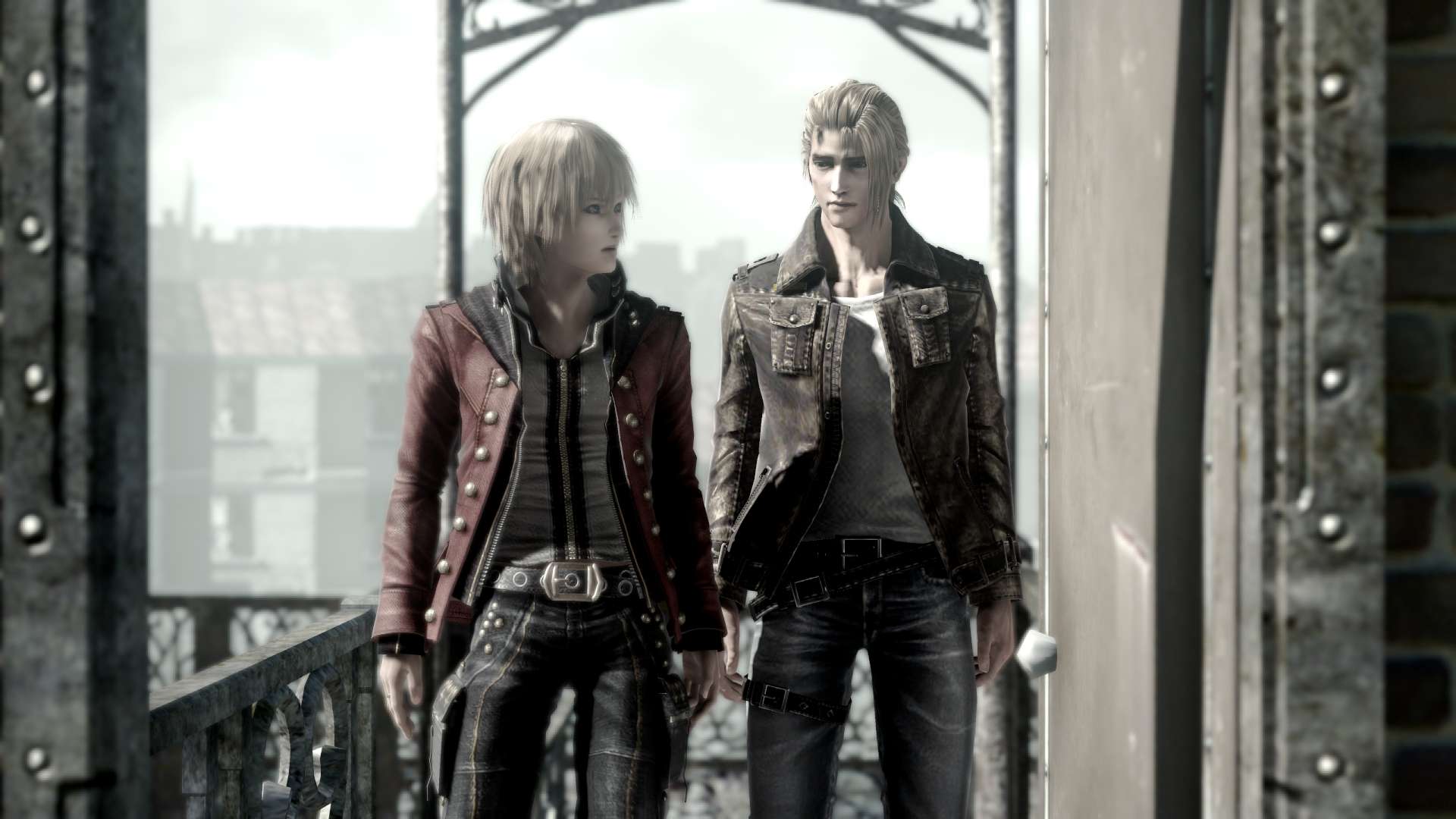
But this is all mechanical. Cold, even. What makes this game really unique is how it tells its story. Or, rather, how nothing actually happens. It's not a stretch to say that many, many video game plots are badly edited junior high school essay contests. RoF is definitely no exception. But RPGs have, through the process of their own evolution as a genre, found that they need to have some semblance of a story to contextualize these mechanics, lest the games actually do turn cold. Seriously, digging through menu after menu in battles is nothing if there is no emotional reward; whether that's beating the guy across the table or saving Spira. But, in what I can only assume is a byproduct of knowing its nature, RoF clearly doesn't give a damn. A large amount of the main story missions are useless busy work for the three heroes, and they even know it. The first mission had me deliver a ring to socially awkward shut-in. Another had me delivering a bottle of wine. Yet another found my characters dress up as bears so they can give Christmas presents to young children. Sure, there is some larger conspiracy happening in the background, and a few cutscenes definitely want to try to get you invested in the larger goings-on. Through that lens, everything you're doing seems childish and stupid. But the story beats are presented as small bites. Each mission can be completed in easily less than 20 minutes, and all of them are broken into individual chapters, almost like the whole game is more or less a season of a network television show. Yes, there are bigger things happening in the background, but RoF takes the unusual stance that what is happening in the here and now is equally important, maybe even more so, than saving the theocracy of the world that it takes place in (if that's even the case. I've lost interest in the background noise long ago). The context given for playing these large and small board games feels inconsequential for a reason, because that's pretty much what they are. But RoF lives in the moment, which something a lot of video games don't really do. We know that our princess in another castle. We know we have to stop Liquid and Rex. But in RoF, you wouldn't be alone in wondering what the point of it all really is until just about the end of the game, but by then, who really cares, anyway? Souls games notwithstanding, there aren't a whole lot of examples of other games that do this. Looking at it that way, it's pretty spectacular.
I have a hard time thinking that Resonance of Fate will be considered a sacred video game text over time, and that further, deeper analysis is even all that necessary. Still, it's kind of a fascinating experiment, something the console RPG space gave up on in the previous generations after development costs began to bloat for the medium as a whole. I can't stress enough how none of these individual pieces are flawless: the story missions, weird as they are, still seem dumb, and the combat can feel a little too easily exploited once you really get it. But for it's own sake, it's a big picture sort of game. A fine niche to be in.
Thursday, September 11, 2014
The Double Down: Destiny and Diablo III
Hello again, everyone and no one.
Last November, you may recall, I got really, really drunk one night and bought myself a PlayStation 4. I played varying degrees of of Resogun and Warframe for a month or two, and then kind of said, alright. Good stuff should be rolling along soon enough. No sense in spending virtual money on free-to-play nonsense and the occasional DLC update. And then a year went by. Still no games bought for my snazzy PS4.
Sure, being a PS+ subscriber has afforded me a steady drip of indie content provided to me every month by Sony, so I guess you could say that the $50 I spend every year to keep the service means that I dropped at least some coin into this thing (if we're being semantic jerks about it), but I passed on InFamous: Second Son (which is still a stupid name to type), the Metal Gear demo, and a few other things. Then, and for some reason I was even surprised by some of this, games were getting delayed left, right, and center. Where's The Witcher 3 (and a bunch of other stuff I can't remember off the top of my head), I would say. Yes, the network capabilities of the PS4 is monumentally better than the PS3, so firing it up and streaming Netflix is a lot easier, but that's not why I bought this thing; I wanted cut up bad guys, shoot monsters, and agonize over stats in new and interesting ways. Where was the cutting and the shooting and the math-ing? My god, WHERE'S THE MATH-ING?
And so, with summer and the fall release calendar looming, I finally decided that enough's enough, and I need to get some return on this investment that's more than a sort-of-free PS+ copy of Don't Starve and a re-release of Pixel Junk: Shooter (though they're both really good). There is one game that I'm legitimately looking forward to in Dragon Age: Inquisition (I'm starting to hate colons, by the way), but that's not going to be here until November. What to do, then? Impulse buy Diablo III: Reaper of Souls, that's what.

I had never played a Diablo game before this, but I've played plenty of its progeny. The two Torchlight games are crazy good, and I spent enough hours with them then this should be a slam dunk, right? Well, yes, right, D3 is really good. But for some reason, I never want to play it. I come home, hang with the wife, fire it up out of duty because I spent $60 on it, and work my way into enjoyment like Cagney forced himself into a rage for White Heat. I knew that I would have a good time with the game, but I needed to push myself into it. After a little bit of thought, I think I've figured out why.
First, I love RPGs. I love getting new equipment and screwing with the stats. Note that I never said that I'm good at them; I'll never get involved in MOBA competitions, loose connection that they have, or play PvP Dark Souls just for the sake of it. But, as a personality quirk, I love killing things efficiently. Higher level weapons and grinding for the experience points to use them means I can stomp on things faster and, by my reckoning, better. If I have to learn some sort of arcane JRPG system with a silly name to do so, fine. Just let me get beefier, and let me make much shorter work of that dragon over there. Yes, that one, with the curry stain on its chest. Diablo lets you do this from jump street. Yes, the first few missions of the game leave you a little weak as far as equipment goes, but you gain levels with such reckless speed that this doesn't seem to be a problem since you're pretty much constantly gaining new special abilities for better enemy swatting.
But it was all a joke. After ignoring the advice of the internet at large, I played through it the first time with the Demon Hunter class on normal difficulty and --literally-- blasted my way through the game. The endgame bosses were bullet sponges, sure, but posed about as much of a threat as the pad of sticky notes right underneath my monitor. Yes, I've been slowly picking at it since on the various Adventure modes with different character builds since then, but have only in the last few days have I found a renewed interest in Diablo III, but I'm leaving it alone for now. That's because I'm a weak-willed idiot.

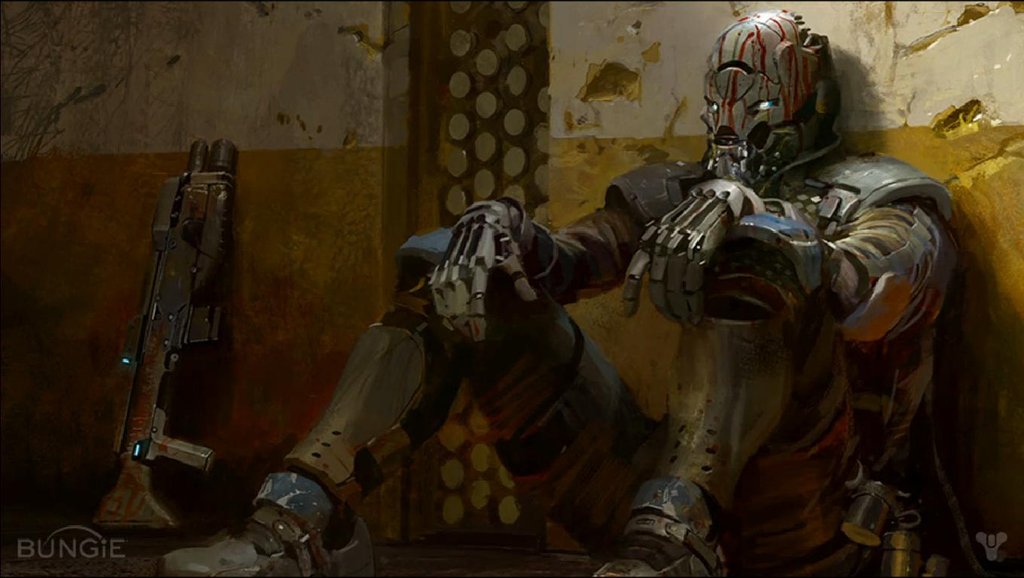
Destiny is an RPG about shooting things. It's unquestionably the biggest release of the year, and it's a game that I already had buyer's remorse for the second I agreed to pre-load it from the PlayStation Network on Monday night. Why did I do this? Again, I'm kind of an idiot. I played the beta build of the game earlier in the Summer and thought, yeah, this is good; the shooting feels smooth and the production value is through the roof, so at least it will run well. But it was joyless. The Borderlands games have taken the concept of the RPG/shooter and placed in its own very distinct wackiness. Bungie, talented and well-funded production studio that it is, has ostensibly remade Halo for a wider audience and with a wider expanse. It's all very self-serious and dramatic. Do all games need to have a sense of humor like Borderlands? No, but the concepts aren't very far off, and you don't need to take too many steps back to see it. Destiny is a beautiful shooting game, but it's a game with guns and enemies and jumping and the occasional grenade when you're not feeling too conservative with your armaments. That shit is everywhere. Full disclosure, then: I didn't plan on buying this, even though I thought it was pretty good from the beta. A friend of mine that lives kind of far away suggested that we get it and play it together. So maybe I have erratic purchasing habits, but at least I'm a good friend.
Let's go back to Diablo for a second. I mentioned a second ago that I had just found the carrot dangling in front of me to keep playing it. Ok, I say "found" when I really mean "started doing." In the Torchlight games, my favorite activity would be to find amazing, low-level equipment, dump it in my shared stash box, and superpower brand new characters. I get sick of it sooner or later, and just move on to another class. That's how this genre of game tends to work: make a character and battle through it the first time, but having something tangible to show for it when you want to try things a different way with a new character. In Diablo, this means forging crazy armor sets and scoring super rare loot. I can't say enough how much I love overpowering characters and steamrolling the idiot monster mooks that get in my way. I'm finally at the point in the game where this is a viable concern now that I've got one maxed out character and another pretty close. Rare loot is coming fast and loose these days, which means that monk I want to roll up later tonight will be a lesser god before it hits level 10.
Destiny doles out the new gear with much less frequency. So far, it's only been an hour here and there over the last few days, so I don't even know for sure if there's crafting yet, but I can't wait until I hit that same threshold. This morning, I scored a sniper rifle that, for whatever reason, has a minimum level requirement much below where I'm currently at. That will be for you, future second character. Maybe the buyer's remorse is starting to fade away.
But that's what it took, I guess: two games that I talked myself into buying to make this nearly year-old gaming console a going concern in my home. Even though it's a little early to tell with Destiny, it looks like got lucky with them. But, man, so I still want some new, brain melting stuff.
Last November, you may recall, I got really, really drunk one night and bought myself a PlayStation 4. I played varying degrees of of Resogun and Warframe for a month or two, and then kind of said, alright. Good stuff should be rolling along soon enough. No sense in spending virtual money on free-to-play nonsense and the occasional DLC update. And then a year went by. Still no games bought for my snazzy PS4.
Sure, being a PS+ subscriber has afforded me a steady drip of indie content provided to me every month by Sony, so I guess you could say that the $50 I spend every year to keep the service means that I dropped at least some coin into this thing (if we're being semantic jerks about it), but I passed on InFamous: Second Son (which is still a stupid name to type), the Metal Gear demo, and a few other things. Then, and for some reason I was even surprised by some of this, games were getting delayed left, right, and center. Where's The Witcher 3 (and a bunch of other stuff I can't remember off the top of my head), I would say. Yes, the network capabilities of the PS4 is monumentally better than the PS3, so firing it up and streaming Netflix is a lot easier, but that's not why I bought this thing; I wanted cut up bad guys, shoot monsters, and agonize over stats in new and interesting ways. Where was the cutting and the shooting and the math-ing? My god, WHERE'S THE MATH-ING?
And so, with summer and the fall release calendar looming, I finally decided that enough's enough, and I need to get some return on this investment that's more than a sort-of-free PS+ copy of Don't Starve and a re-release of Pixel Junk: Shooter (though they're both really good). There is one game that I'm legitimately looking forward to in Dragon Age: Inquisition (I'm starting to hate colons, by the way), but that's not going to be here until November. What to do, then? Impulse buy Diablo III: Reaper of Souls, that's what.

I had never played a Diablo game before this, but I've played plenty of its progeny. The two Torchlight games are crazy good, and I spent enough hours with them then this should be a slam dunk, right? Well, yes, right, D3 is really good. But for some reason, I never want to play it. I come home, hang with the wife, fire it up out of duty because I spent $60 on it, and work my way into enjoyment like Cagney forced himself into a rage for White Heat. I knew that I would have a good time with the game, but I needed to push myself into it. After a little bit of thought, I think I've figured out why.
First, I love RPGs. I love getting new equipment and screwing with the stats. Note that I never said that I'm good at them; I'll never get involved in MOBA competitions, loose connection that they have, or play PvP Dark Souls just for the sake of it. But, as a personality quirk, I love killing things efficiently. Higher level weapons and grinding for the experience points to use them means I can stomp on things faster and, by my reckoning, better. If I have to learn some sort of arcane JRPG system with a silly name to do so, fine. Just let me get beefier, and let me make much shorter work of that dragon over there. Yes, that one, with the curry stain on its chest. Diablo lets you do this from jump street. Yes, the first few missions of the game leave you a little weak as far as equipment goes, but you gain levels with such reckless speed that this doesn't seem to be a problem since you're pretty much constantly gaining new special abilities for better enemy swatting.
But it was all a joke. After ignoring the advice of the internet at large, I played through it the first time with the Demon Hunter class on normal difficulty and --literally-- blasted my way through the game. The endgame bosses were bullet sponges, sure, but posed about as much of a threat as the pad of sticky notes right underneath my monitor. Yes, I've been slowly picking at it since on the various Adventure modes with different character builds since then, but have only in the last few days have I found a renewed interest in Diablo III, but I'm leaving it alone for now. That's because I'm a weak-willed idiot.
Destiny is an RPG about shooting things. It's unquestionably the biggest release of the year, and it's a game that I already had buyer's remorse for the second I agreed to pre-load it from the PlayStation Network on Monday night. Why did I do this? Again, I'm kind of an idiot. I played the beta build of the game earlier in the Summer and thought, yeah, this is good; the shooting feels smooth and the production value is through the roof, so at least it will run well. But it was joyless. The Borderlands games have taken the concept of the RPG/shooter and placed in its own very distinct wackiness. Bungie, talented and well-funded production studio that it is, has ostensibly remade Halo for a wider audience and with a wider expanse. It's all very self-serious and dramatic. Do all games need to have a sense of humor like Borderlands? No, but the concepts aren't very far off, and you don't need to take too many steps back to see it. Destiny is a beautiful shooting game, but it's a game with guns and enemies and jumping and the occasional grenade when you're not feeling too conservative with your armaments. That shit is everywhere. Full disclosure, then: I didn't plan on buying this, even though I thought it was pretty good from the beta. A friend of mine that lives kind of far away suggested that we get it and play it together. So maybe I have erratic purchasing habits, but at least I'm a good friend.
Let's go back to Diablo for a second. I mentioned a second ago that I had just found the carrot dangling in front of me to keep playing it. Ok, I say "found" when I really mean "started doing." In the Torchlight games, my favorite activity would be to find amazing, low-level equipment, dump it in my shared stash box, and superpower brand new characters. I get sick of it sooner or later, and just move on to another class. That's how this genre of game tends to work: make a character and battle through it the first time, but having something tangible to show for it when you want to try things a different way with a new character. In Diablo, this means forging crazy armor sets and scoring super rare loot. I can't say enough how much I love overpowering characters and steamrolling the idiot monster mooks that get in my way. I'm finally at the point in the game where this is a viable concern now that I've got one maxed out character and another pretty close. Rare loot is coming fast and loose these days, which means that monk I want to roll up later tonight will be a lesser god before it hits level 10.
Destiny doles out the new gear with much less frequency. So far, it's only been an hour here and there over the last few days, so I don't even know for sure if there's crafting yet, but I can't wait until I hit that same threshold. This morning, I scored a sniper rifle that, for whatever reason, has a minimum level requirement much below where I'm currently at. That will be for you, future second character. Maybe the buyer's remorse is starting to fade away.
But that's what it took, I guess: two games that I talked myself into buying to make this nearly year-old gaming console a going concern in my home. Even though it's a little early to tell with Destiny, it looks like got lucky with them. But, man, so I still want some new, brain melting stuff.
Wednesday, February 19, 2014
Extinction Agenda

In playing through the dying world of Lightning Returns, you are constantly reminded that the population is on the fast train to doom town. Guards in one of the cities are always telling you how many people have been killed on any particular day, and most of the dialog serves to remind you that A: no new life has been born for half a millennium, and B: you're not going to save everybody, because you ain't got that kind of time. It's like a peak inside Sean Penn's soul; everything is coming from a dark, tortured place of pain and inner torment. The twist? It's also happening to the monsters.
And this is awesome.
In just about every RPG that's RPGed enough to RPG, there is an unlimited supply of bad guys for you to kill. Generally, this happens at random moments when you're not in one of the handful of safe locations of any given game. Sometimes you can turn this mechanic off, as in the still-superb-so-far Bravely Default. Most of the time, though, it's one random battle after the next in a death march from one boss battle to another (and I say that because I care).
Lightning Returns, though, is in a world where death is a real thing, and it's gonna happen soon. How can there be an infinite amount of floating evil flowers when nothing is being born? Answer, there isn't. Creatures can go extinct if you kill enough of them, ending with a climactic battle with a super powered neon pink omega beast that will make you remember its kin upon shedding that mortal coil. Of course it's all very video game-y in that it can all be tied to a late game quest and that killing these last-of-their-name foes yields high rewards, but man, what a cool concept. It's not only a nice touch that ties in this cockeyed world a little better, but it's one of the most elegantly unique game features I've seen in a game like this in a long, long time.
If only the rest of the game was so thoughtful. We'll come back to that, though. For now, I have to endanger some cyclops.
Friday, December 13, 2013
The Two of Us: Part 2: Killers
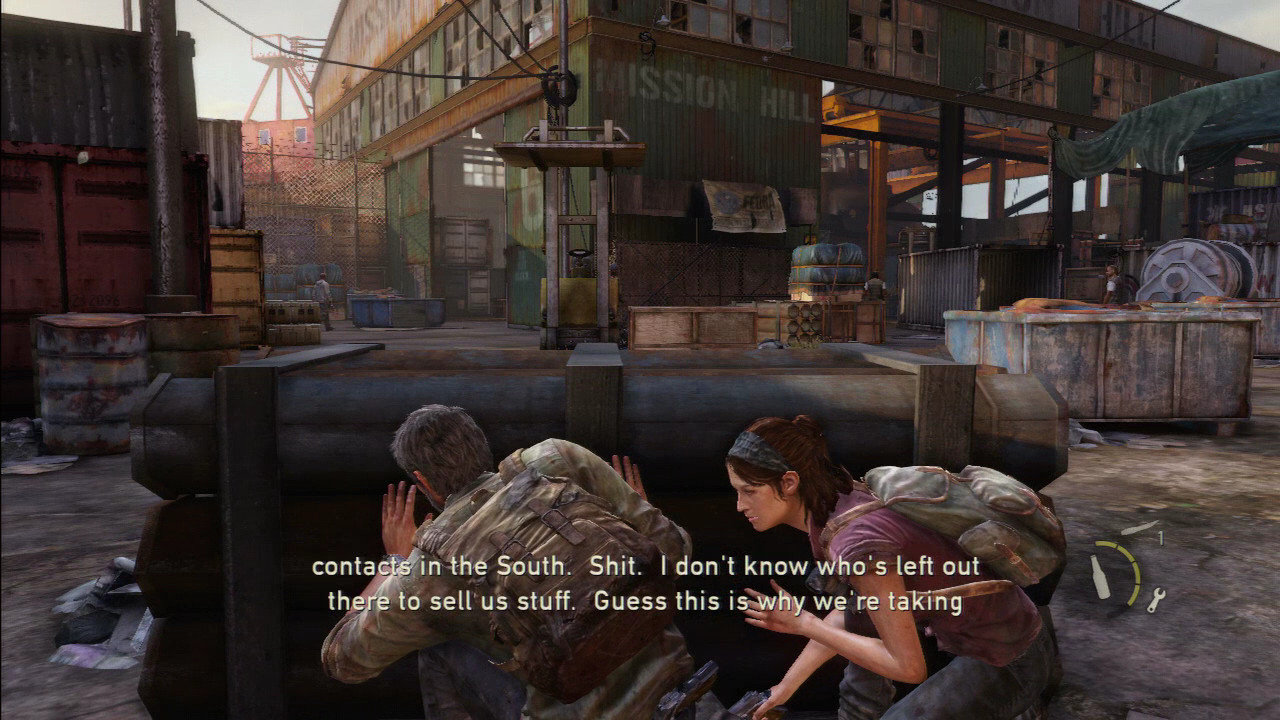
Let's talk about murder for a second.
Video games are well-tread territory for general kicking and screaming over violence in the media, and I'm not going to touch that. But I can see how the accusing side gets up in arms over it, especially as graphics have come to the point of photo realism. In fact, when we were playing Tomb Raider, my wife and I were both physically taken aback when Lara Croft gunned down her first cultist, just as she was onscreen. It looked every bit as brutal as a killing would be, and both our reaction and hers showed the weight of actively choosing to take another person's life. The Last of Us is a different kind of game, and doesn't pussyfoot around that. In Joel's bleak post-disaster future, violence is mandatory for survival, it seems, and the first few hours are making a clear implication that the rest of this story is going to be chock full of it, and it's going to be nasty. A man was killed in cold blood by someone I can only still assume is a NPC protagonist very early on, and Joel didn't flinch as other innocuously nice guys would (the Nathan Drakes and Lara Crofts of the world). I can also only assume that this person's execution is a sign that violence and its horrors are part of the point of this whole experience, especially since it's obvious that Joel doesn't exactly shit rainbows while figure skating. But that's not what's interesting about our first controllable moments after the intro.
There was lots of talking, and obligatory tough guy posturing. Joel and his female companion snuck out of whatever quarantined encampment in the beginning stages, which serves as a useful enough tutorial for the stealth and combat functions. Joel can crouch, aim, punch, switch on his flashlight, and "listen" (which is this game's term for his very video gamey sixth sense that lets the player know what's around the corner) without any sort of context. The triangle button does close to everything else when it pops up on the screen; it's the catch-all button for boosting your friend, sliding open a door, and picking up handily placed med kits to keep him healthy. All of these movements and more were dolled out a steady pace which wasn't overwhelming, but was certainly a lot file away, even for me. Typically when this happens, though, I feel reassured that the game will force me to use all of these tactics as it moves forward, so I don't spend a lot of time trying to practice and re-learn each individual technique. But this doesn't change the fact that The Last of Us is a complex beast, and definitely more convoluted than Tomb Raider's early hours.
At first, I was just fine with it. The Last of Us is a tough teacher; there's a lot to learn and seems cruel to the student if they don't pick up on it fairly quickly. Sort of like violence, there's plenty of talk in gaming circles that modern games over-train the player before setting them free, and I like that Joel was not treating me, the player, like an idiot. On the other side of the couch, though, was someone just a little bit baffled. Previous to this moment, my wife would dispatch her gaming nemeses by jumping on their mushroom-y heads. Eventually, she moved on to pumping them full of cultist-killing arrows. Joel, though, could punch, shoot, throw a brick at a guy, and strangle them if he was clever enough, and he could do all of this from the word "go." To me, it was an embarrassment of riches. To her, it was a tidal wave, and one that washed over her one doubt at at time. Do I shoot that dude? Do I punch him in the mouth? Should I pick up this bottle and break it over his head? Is it worth it to me to try to get around him? It was simply too much too soon. Killing by itself was no longer an issue. "Which way should I kill" had turned into the question.
This lead to the point of today's entry. Joel and his trigger happy friend had enemies, but they weren't stupid. Being outnumbered and out-gunned in this game was the last situation you wanted to find yourself in. Dialog between the two frequently prompted the player into sneaking around adversaries, and if the scarcity of ammunition and medical resources were any indication, then this was the preferred method of dealing with opposition. I found that it made perfect sense (especially since friends of mine had told me that it was more of a stealth game than a shooter), but not for my wife.
As she walked right up to a guard and clubbed his head into gooey mush with a wooden plank, I was nonplussed. We were just told to avoid these guys! What the hell are you doing?! I kept it to myself, but it didn't take long for two things to dawn on me: First, she was just given an arsenal of ways to kill an enemy. While she probably couldn't reliably toss a rock at a guy's head, she can sure as shit shoot him in the chest and finish the job with a baseball bat. I can only assume that this was empowering. Second, and more importantly, is that this is a matter of programming. Certainly not by Naughty Dog, but my wife's gaming vocabulary doesn't include Metal Gear, or Deus Ex, or Dishonored. An enlightened way of pacifism was never a concern before, only to throw the pickaxe, toss the fireball, and knock the bow. You can't blame her for such a binary response; she saw bad guys, and bad guys needed to see the business end of the stick. It was all against her earlier-set conditioning.
Joel was quickly, and unceremoniously, gunned down by these guys. Lesson learned. Even on the Easy difficulty, it's better to avoid than to engage, but that will take a little bit of unlearning for it to completely sink in. My wife, the butcher, received some early comeuppance, like trying to swipe honey from the hive, but I have a feeling it's going to take a little bit more reminding that you know, we should probably leave those dudes up ahead alone. Now that we've gotten a little girl to protect along for Joel's ride, it's probably going to be safer that way.
Thursday, December 12, 2013
The Two of Us: Part 1

Tomb Raider was an experience. Not the emotionally draining, perception-altering Experience that a developer or publisher would want you have with such a large budget major release (those few and far between), but a quiet, sometimes meditative, and often humbling experience shared between two people: myself, the practiced-hand "core gamer," and my wife, the silent observer and rare participant. I never truly understood her motivation for wanting to play the Tomb Raider reboot, really. I guess I never asked, now that I think about it. But what would have been a routine week or two controlling an English woman through a terrible coming-of-age ordeal (but a good one, the game was pretty great) became a study of, in my mind, game mechanics, accessibility, interactive storytelling, and in it's own way, marital politics. It was frustrating -on several levels- to watch my wife, a person unaccustomed to controlling both an onscreen avatar and the camera which dictates how that avatar operates, struggle to come to terms with modern game design.
There was an obvious cycle of development happening right in front of me not unlike a child's own evolution; mechanics were learned in a safe environment, were then tested, and consternation would set in right before abandonment, then followed by a noticeable mustering of drive to relearn and overcome the obstacles. My wife, in her own way not dissimilar to Lara Croft, didn't leave the Island of Misfit Cultists a pro, but there was certainly some self-discovery happening there from campfire to campfire. If there wasn't, she wouldn't have immediately requested to play The Last of Us.
So, it seems like she's into the more cinematic, big budget stuff out there. I'm chalking that up to being a gateway drug (I hope). Months had passed from completing Tomb Raider to now, but she was consistent in her interest in playing the game, which I found a little surprising. I honestly thought that it would be out of sight, out of mind and that if I didn't bring The Last of Us home, her interest would have waned. This wasn't the case, and now that it's close to the end of the year and every video game website on the planet is arbitrarily choosing what "their favorite game" of the last twelve months had been, we've finally started to play what will undoubtedly wind up being one of the contenders. The opening sequence did enough to show us why.
Yes, I suppose that in the spirit of full disclosure, this first entry does reflect our first time playing the game, but we've played it more since. It was a few weeks ago, late at night and ready for bed, when we decided that we would at least go through the intro to the game after I assured her that action games like this never have multi-hour opening sequences (like the dozens of JRPGs stacked around our apartment). We were not quite prepared by how hauntingly affective it was, though, which is something I choose not to spoil for you if you haven't played it yet.
These first 45 minutes or so did little to show us what the rest of the game would be like, though. Protagonist Joel could only mosey slowly through environments and interact with the occasional door or key item. For us, this was a good method for re-introducing my wife into using both thumbs in concert with what's happening in front of her. Occasionally, I could hear an exhale of exasperation until I would offer a gentle reminder that she should adjust the camera (we'll come back to this), but this fell by the wayside quickly enough in this first sequence. It was a fast 45 minutes with everything going on in the game, but it served its purpose, and the stage was set for what our next few weeks would become.
Like Tomb Raider, we're playing the game in short chunks of hour-long increments. Tomb Raider was, basically, a short season of Lost for us, and The Last of Us will probably be no different. It gives us a chance to play a little and regroup afterwords. During the day, we can send each other messages to parse through radical theories about the plots of the games and what the next sequence might be like, and this is a feeling I haven't had since, well, Lost left the air. It can make the wait agonizing for the next time we both have the opportunity and energy to play together, but the act of playing the game is all the more sweet because of it. That is, until you actually get into the game.
But let's talk about that tomorrow since this is getting long. Your homework is to read Playboy's interview with Rockstar co-founder and Grand Theft Auto mastermind Sam Houser. It's safe for work and fun read, if a little less illuminating than the first interview with a total recluse should be. Still worth it, though.
Tuesday, November 26, 2013
I Don't Know Why You Say Goodbye
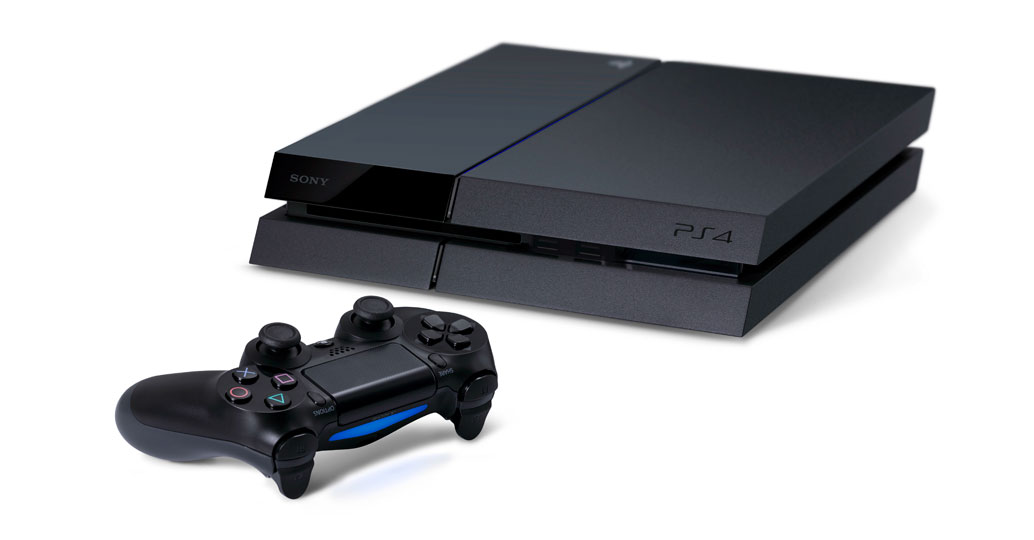
So after more than a week with my shiny new PlayStation 4 (it it certainly is shiny; I almost never want to touch it), I find that I have very little to say about it. Honestly, you can probably hit ever corner of the nerd internet over the last few weeks and find all of the opinions that confirm whatever stance you have about Sony's new console. None of what I could say would be particularly new or shocking, so I suppose we can just leave it at that.
But I pretty much never turn it on.
Weird, right? Not really, and it's mostly of my own volition. It's become common knowledge over the last several cycles that launch games are typically mediocre at best. Usually all of the good stuff can be had for older machines or wind up being elaborate tech demos banking on the promise of future fulfillment. Yes, the first Xbox had Halo, the Wii had Wii Sports, and we didn't even know any better when North America was blessed with Super Mario Bros. when the NES dropped in '85, but I call those singular examples. I have bought all of Sony's home consoles on (or close) to their launch, and every time I do, I find myself waiting about 6 months to buy something worthwhile. Neither the Sony gaming juggernaut nor me personally are alone here (it took me more than a year to buy a game for my 3DS, which I now play just about all the time). It's just the way these things sort of work.
But it's been a particularly long console cycle, and that makes the kick in the pants of so-so launch games more like a shove into traffic. No, I'm not exactly huffy over it, but I still find myself wishing that there was something really dazzling for me to take home and boot up after that midnight launch (which I arrived to drunk. The only way to do it). I'm certainly not looking the gift horse of Contrast, Warframe, DC Universe Online, or -especially- Resogun in the mouth, but none of those games have any real weeks-of-my-life-swallowed-whole meat to them. I finished Contrast, a better game than some of the reviews gave it credit, in less than a day. Warframe is fun, but awfully redundant. Resogun is wacky and beautiful, but it's five brief levels don't exactly make me want to call in sick to work and live on Chinese takeout. Next year certainly has some good stuff on the way, but like the rest of my early adopting brethren, I bought this new machine for the sake of promise, not instant gratification.
Ironically, in the days before the November 15 launch, I spent my free gaming time playing what I considered the high water mark of the previous generations, and completely independent of the fact that I knew I wasn't going to be blown away by the brand new stuff (ok, subconsciously, I probably did). I tore through the HD remake of Clover/ Capcom's Okami, which is still one of the best Zelda knockoffs you can find, if not the absolute king of them. Granted, it was the beautiful up-rezzed rerelease, but it's in my top 10 PlayStation 2 games, and was on sale a few weeks ago for a song. I loved playing it again so much that I even went through the rigamarole of obtaining the platinum trophy, too, which is something I think I've only done a few times, and I think it says something to its staying power.

But not nearly as much as Demon's Souls; unquestionably my favorite game of the last eight years. I'll concede that Dark Souls is a much better constructed game with it's interlocking environments, but DeS spoke to me on so many more levels than all of the other games that I claimed to enjoy over the last console cycle that I've gone through it close to 10 times, if not more (I've lost a few PS3s along the way). It's funny how the game has changed for me within that time. Originally, I slaved over 75+ hours of it, observing every crack in the wall and conversation with an NPC to help me through all of its punishment. It wasn't so much the need to finish as it was the will to win, which are two totally different things. When I finally hit the summit, I retired the game with my head held high, but weary. I've said this before, but going through this game the first time makes you feel like you've gone through some shit and came out the other end of it a different person. Repeat trips are different, though. The second trip became a matter of experimentation: How radical are the differences in play style? Will it make X location more easily traversed under Y conditions? How will I adapt under weaker or stronger scenarios? It was shorter, but I was smarter. Now, after so many runs through the game (with only one small section routinely giving me problems), I can successfully bum rush it in 8 hours or less depending on circumstances and a few very minor variables. It's become less of an exhaustive challenge and more like an elaborate puzzle. Almost Nietzschean, really. Since I know where the real dangers lie, the difficulty and joy is in figuring out the best way to become stronger faster. Last week, I took the grunt-level Royal and turned him into room-clearing warlock in no time flat. In comparison to the Wanderer that struggled through those first hours of my initial time with DeS and evolved into a walking wrecking ball after what felt like years of growth and learning, this new Royal was like third grader that could split atoms. Now that he's successfully helped to lull the Old One back to sleep, any further plays with him would simply exist to push his stats toward the ubermensch that brings that earlier, shakier metaphor home.
But that was over a week ago, and even after requisite weekly time with my old flame Third Strike, I needed something else. Last night, then, I convinced myself that it was time to go back to Skyrim, if only briefly (for now). See, I liked Fallout 3 an awful lot, but in general, I wasn't so much a Bethesda believer until my time with the Elder Scrolls V. Everything in their games seemed just undercooked enough that while the worlds were huge and fun to explore, they just seemed like empty husks populated by talking heads. Skyrim, to be fair, isn't that much different, but enough care went into making it that I'm still in awe of the majesty of its scope. Hundreds of hours drifted away while my High Elf Garbanzo Bean and I explored its frozen tundra, and it's always intimidated me to go back into it knowing how easily the time can slip by while I skin a freshly shot bear or dive into yet another spider-infested mine. But after yet another character build in Demon's Souls, I felt I'd try the same approach with Skyrim, so last night's Wood Elf will, hopefully, become next week's stealthy Robin Hood.

Of course, this could all change. I'm at the mercy of my patience at this point, and with holidays coming and family/ friends willing to give me the gift of interactive entertainment, there's every possibility that I'll be knee deep (or putting up) with Assassin's Creed IV or Need for Speed Rivals. Do I really want to play those games? Not especially, but I sure would like to put this new supercomputer sitting under my television through its paces.
Tuesday, July 2, 2013
Tomb Dater: The Handover

On Thursday, we hit the proverbial wall.
Earlier that morning, a message was sent to my main squeeze while we were at work. It simply read "Tomb Raider tonight." It was not a question, but it wasn't me being forceful, either, just my very direct way of gauging here interest at this point since we'd barely even brought the game up in conversation in roughly a week. She was agreeable to some pre-weekend jungle adventuring, but that alone didn't answer the question.
The telltale sign was when we actually played it. She was content to pass the controller to me to kick things off, which included about ten or fifteen minutes of tooling around so we could become readjusted to the control scheme. I screwed around in the village section for a little bit trying to figure what to do next, and after a brief cut scene that rewarded us with a climbing ax, we raided our first tomb, and were greeted with the first of the game's fun little physics puzzles. Nature, the cruel minx that it is, decided it was time for me to take a quick break, so I relinquished the controller to my lady and promptly hit the can.
When I returned a few minutes later, I was a little saddened by the controller falling back into my lap right away. I played a little while longer, mostly just messing around in the environment before moving Lara further into the story and on toward a bad guy-infested radio compound. After a few fights with the island-dwellers that stood guard there, I tried to hand the reigns back over. "No. I don't like the fighting," she said. And with that, it was clear that The Great Experiment was failing.
So what happened here? My first reaction is that, well, she's not a gamer, and my earlier thoughts about neophyte players having a hard time navigating the complex controls of a 3D action game were right on the money. While I'm sure she'd be better with some practice (she even joked about it a few minutes after turning down another turn), the barrier for entry was found to be a little too high, and she had become discouraged. Part of that may be due to a person's individual personality, I guess, but it's not unreasonable to surmise that the older people get, the less likely they are to put forth that much effort into something that they do with their personal time unless they're immediately good at it. I probably wouldn't want to spend an entire day playing hockey if I was just taught to skate and shoot the puck that morning.
Should I blame Crystal Dynamics, or one of the console manufacturers (we were playing it on 360, incidentally) for this? I'm going to say no, but with some reservations. Tomb Raider is a very well known property, and every entertainment industry from comics to television to film try to use reboots of franchises as assured ways of attracting people unfamiliar with their larger concepts. While I don't necessarily find the game hard (especially, again, because we're playing on the lowest difficulty setting), if Tomb Raider's primary motivation was to attract new people into the larger realm of video games, it could have been much simpler. But it isn't. If anything, this TR is meant to cater to both a casual and hardcore crowd, at least I thought it would. Apparently, this casual crowd is bowing out early.
Of course, the possibility exists that she just doesn't like playing the game, which is pretty feasible. I'm going to politely suggest again that we give it another shot sometime this week, but Lara and me are walking that tightrope.
Your homework --which will be from now through the next 12 months-- is to download and listen to Retronauts Vol. III Ep. I, which is now loose upon the internet. I hope you contributed to its Kickstarter campaign, but even if you didn't, you're still able to reap the benefit.
Friday, June 28, 2013
Fury!
Do you want to know what I thought of Project X Zone? In all honesty, you probably don't. Regardless, GamesRadar has run my review of it, and the unwashed masses are particularly unhappy with what I've written if the comments are a fine sampling of our collective reasoning. My favorites are the ones that think that I don't exist. I guess, for all you know, I might not. Go ahead and collect the pieces of your blown mind. There's some on that chair across from you.
I don't really think I need to defend what I've written. Honestly, what's the point? I found it to be a shallow strategy game that looked pretty when it counted. If that's your thing, well, it's your cash, friend. I do like the fact that people are a little huffy about me wrecking PXZ's Metacritic curve, though. The internet gets pissed about anything, and I am the high priest of ruining your day because of it.

Except when they don't, and by that I mean today's homework: This spectacular write up of Christy Marx. You may not have heard of her, but she had a hand in shaping your childhood one way or another. Polygon has done a darn good job with their feature articles since they launched, most of them being insightful developer interviews or deep dives into the process of games that work and the evolution of projects that may never be released. Like anything you find on the internet, it isn't all riveting stuff. The ones that work, though, really work. Good on them for building such a back catalog of great content so soon into the site's life.
I actually took a pass on weekend work this week, but more will come soon, hopefully. Some Tomb Raider was played last night, and we'll get back to talking about it tomorrow or Monday.
I don't really think I need to defend what I've written. Honestly, what's the point? I found it to be a shallow strategy game that looked pretty when it counted. If that's your thing, well, it's your cash, friend. I do like the fact that people are a little huffy about me wrecking PXZ's Metacritic curve, though. The internet gets pissed about anything, and I am the high priest of ruining your day because of it.

Except when they don't, and by that I mean today's homework: This spectacular write up of Christy Marx. You may not have heard of her, but she had a hand in shaping your childhood one way or another. Polygon has done a darn good job with their feature articles since they launched, most of them being insightful developer interviews or deep dives into the process of games that work and the evolution of projects that may never be released. Like anything you find on the internet, it isn't all riveting stuff. The ones that work, though, really work. Good on them for building such a back catalog of great content so soon into the site's life.
I actually took a pass on weekend work this week, but more will come soon, hopefully. Some Tomb Raider was played last night, and we'll get back to talking about it tomorrow or Monday.
Friday, June 21, 2013
Revolution, Televised
So it seems as if Tomb Dater has stalled for the time being. I'm really not surprised or even disappointed, but I'm still giving my wife a deadline: if there's no jungle hunting cuddle time within the next week, the rights to Lara Croft's origin story fall squarely in my hands.
This morning, I finally got those hands on some beta time with Final Fantasy XIV. I didn't do much other than run around a desert city and talk to NPCs, but what I saw sure looked pretty. And seriously, desert cities in my Final Fantasies have thus far proven to be a recipe for my own personal enjoyment, so at least there's that. Sadly, I have some weekend freelance work lined up so that odds of me getting any more QT with it are looking mighty slim. Oh well, all that kicking and screaming for nothing, I suppose.
So let's talk briefly about Tekken Revolution. Call it a small review of a game that you may be enticed to play until you actually play it.

That is, of course, unless you're a Tekken savant. Revolution is a free-to-play (f2p) fighter exclusively for the PS3. Personally, I'm not a f2p hater; I've logged plenty of hours over the last decade into strange and borderline creepy Korean MMORPGs, and have forked over plenty of work hours in a previous life to whatever Kongregate had broadcasted on its front page that week. The times I've actually dropped money into these games for extra items or whatever have been remarkably scarce considering the chunks of my life that have been broken away in tribute to them. But that's where TR differs from the Runes of Magic and Cityvilles of the world: Like any other fighting game, your enjoyment is based on skill. If you're not good at this game, you're getting your ass handed back to you with a side order of shit talk coleslaw. As a f2p time investment, it makes it kind of hard to recommend.
Think about other f2p games out there. Most of them are are hedging their bets against you by basing all of their potential monetary gains on your patience. Don't want to wait for that Brony village to complete construction in 6 hours? Need some extra inventory space so you can throw down on a looting raid in Angmar? Think you could use some extra leveling because you're on your lunch break? Pay up, son. Under this train of thought, though, one could logically (though probably not enjoyably) stick it out and game the system. You honestly don't need that town built faster or that huge super sword to get a fire affinity, you just need a little bit if willpower to not spend the cash. You'll be fine if you just wander off and do something else.
Tekken, though, is a fairly complex 3D fighting game. The move sets available for each of the characters (8 at the onset, 4 more unlockables. A generous number, really) are sprawling, not to mention the time needed to adjust to the series trademark goofball physics where if you hit the ground ass over feet, you can still continue being pummeled. It takes serious work to become half decent at any fighting game, and that much more if you're unaccustomed to the likes of Tekken (or its rivals Virtua Fighter and, to a lesser extent, Dead or Alive).
In the state that it's in now, Revolution affords the green recruit few opportunities to put in that kind of effort. The game is built specifically for the online competitive ranked and unranked matches, with a modest single player "Arcade" mode. Play an online game and you eat one of your online "coins," which replace themselves every 30 minutes one at a time to a total of 5. Tekken matches, especially those unbalanced in the way of skill from one player to the next, can be over in roughly 30 seconds, though. Meaning that unless you're running into some decent fights, odds are high that you'll burn through your 2.5 hour allotment of online coins in about 10 minutes. Extra "Premium" coins can be bought with real world dough.

There's a way to extend it, but again, only if you've got your black belt in the ways of the Iron Fist. The way the game tries to throw you a bone is in Premium tickets, which each new player is given at the start of their struggles with TR. Burn through your coins and you can choose to use a Premium ticket, which will be replaced if you win an online match. These tickets are also doled out to you at intervals, like winning every ten online matches. This makes them ultimately precious and precarious. You're gambling extra time with the game based on your skill with it. Am I good enough to use this ticket in the hopes that I win and get it back? If you wind up liking what you're playing, it's a serious threat to consider.
Of course, if you like fighting games, and especially if you're an old-timey Tekken player, you will like what you're playing. While lacking some of the depth of the more feature rich and roster heavy recent releases like Tag Tournament 2 or even 2009's Tekken 6, each character is fully realized and balanced. They look great and move well, and the environments are sparse, though varied enough that fights will wind up tactically different depending on if they take place in enclosed or wide open spaces. If anything, it plays like something of a gimped 6 with the move sets and physics of Tag 2, and for the price of admission, it's a pretty nice deal.
But you're still stuck with a high barrier of entry, and no real way to practice. This is a real problem. While a single-player Arcade mode exists, it's full of AI opponents so stupid that they regularly run into your attacks, and it can be finished within 5 minutes. This would be fine, but the player is limited to a coin entry for playing it, and coins for this mode replenish once every hour, which means that after you expire your coin supply --a maximum of 2 for Arcade mode-- you must wait an hour before your next speedy turn through it, which limits any kind of offline training you may want to participate in. While waiting for an online opponent to sync up during a ranked match you're given a brief training mode to pass the time and to bone up on your moves, but this might last you 20 seconds or 5 minutes depending on how the online matchmaking is feeling at the moment (and how many players are online, of course), and this is still at the mercy of using an online coin to play, so it's an unreliable method for learning. A rudimentary offline training mode is in the works as an update at some point, but for now, you're stuck with either getting better on the fly against other opponents. It's basically like being in an arcade with a pocket full of quarters.

Part of me thinks there should be some charm in that, but really, I just feel lucky that I've played a lot of Tekken on and off over the years so I can hang with the online competition. A very basic character growth system exists to potentially alleviate this for beginner players by boosting a few stats, but in practice it only serves to widen the gulf between them and the old hands.
So what you're getting is a free Tekken with a high cost. Sure, it's still Tekken; a very good, fairly pretty, absolutely zany fighting game that you better hope that you're good at right away. Otherwise, cross your fingers that something good's on TV. You'll have some time to think about how much you suck.
This morning, I finally got those hands on some beta time with Final Fantasy XIV. I didn't do much other than run around a desert city and talk to NPCs, but what I saw sure looked pretty. And seriously, desert cities in my Final Fantasies have thus far proven to be a recipe for my own personal enjoyment, so at least there's that. Sadly, I have some weekend freelance work lined up so that odds of me getting any more QT with it are looking mighty slim. Oh well, all that kicking and screaming for nothing, I suppose.
So let's talk briefly about Tekken Revolution. Call it a small review of a game that you may be enticed to play until you actually play it.
That is, of course, unless you're a Tekken savant. Revolution is a free-to-play (f2p) fighter exclusively for the PS3. Personally, I'm not a f2p hater; I've logged plenty of hours over the last decade into strange and borderline creepy Korean MMORPGs, and have forked over plenty of work hours in a previous life to whatever Kongregate had broadcasted on its front page that week. The times I've actually dropped money into these games for extra items or whatever have been remarkably scarce considering the chunks of my life that have been broken away in tribute to them. But that's where TR differs from the Runes of Magic and Cityvilles of the world: Like any other fighting game, your enjoyment is based on skill. If you're not good at this game, you're getting your ass handed back to you with a side order of shit talk coleslaw. As a f2p time investment, it makes it kind of hard to recommend.
Think about other f2p games out there. Most of them are are hedging their bets against you by basing all of their potential monetary gains on your patience. Don't want to wait for that Brony village to complete construction in 6 hours? Need some extra inventory space so you can throw down on a looting raid in Angmar? Think you could use some extra leveling because you're on your lunch break? Pay up, son. Under this train of thought, though, one could logically (though probably not enjoyably) stick it out and game the system. You honestly don't need that town built faster or that huge super sword to get a fire affinity, you just need a little bit if willpower to not spend the cash. You'll be fine if you just wander off and do something else.
Tekken, though, is a fairly complex 3D fighting game. The move sets available for each of the characters (8 at the onset, 4 more unlockables. A generous number, really) are sprawling, not to mention the time needed to adjust to the series trademark goofball physics where if you hit the ground ass over feet, you can still continue being pummeled. It takes serious work to become half decent at any fighting game, and that much more if you're unaccustomed to the likes of Tekken (or its rivals Virtua Fighter and, to a lesser extent, Dead or Alive).
In the state that it's in now, Revolution affords the green recruit few opportunities to put in that kind of effort. The game is built specifically for the online competitive ranked and unranked matches, with a modest single player "Arcade" mode. Play an online game and you eat one of your online "coins," which replace themselves every 30 minutes one at a time to a total of 5. Tekken matches, especially those unbalanced in the way of skill from one player to the next, can be over in roughly 30 seconds, though. Meaning that unless you're running into some decent fights, odds are high that you'll burn through your 2.5 hour allotment of online coins in about 10 minutes. Extra "Premium" coins can be bought with real world dough.
There's a way to extend it, but again, only if you've got your black belt in the ways of the Iron Fist. The way the game tries to throw you a bone is in Premium tickets, which each new player is given at the start of their struggles with TR. Burn through your coins and you can choose to use a Premium ticket, which will be replaced if you win an online match. These tickets are also doled out to you at intervals, like winning every ten online matches. This makes them ultimately precious and precarious. You're gambling extra time with the game based on your skill with it. Am I good enough to use this ticket in the hopes that I win and get it back? If you wind up liking what you're playing, it's a serious threat to consider.
Of course, if you like fighting games, and especially if you're an old-timey Tekken player, you will like what you're playing. While lacking some of the depth of the more feature rich and roster heavy recent releases like Tag Tournament 2 or even 2009's Tekken 6, each character is fully realized and balanced. They look great and move well, and the environments are sparse, though varied enough that fights will wind up tactically different depending on if they take place in enclosed or wide open spaces. If anything, it plays like something of a gimped 6 with the move sets and physics of Tag 2, and for the price of admission, it's a pretty nice deal.
But you're still stuck with a high barrier of entry, and no real way to practice. This is a real problem. While a single-player Arcade mode exists, it's full of AI opponents so stupid that they regularly run into your attacks, and it can be finished within 5 minutes. This would be fine, but the player is limited to a coin entry for playing it, and coins for this mode replenish once every hour, which means that after you expire your coin supply --a maximum of 2 for Arcade mode-- you must wait an hour before your next speedy turn through it, which limits any kind of offline training you may want to participate in. While waiting for an online opponent to sync up during a ranked match you're given a brief training mode to pass the time and to bone up on your moves, but this might last you 20 seconds or 5 minutes depending on how the online matchmaking is feeling at the moment (and how many players are online, of course), and this is still at the mercy of using an online coin to play, so it's an unreliable method for learning. A rudimentary offline training mode is in the works as an update at some point, but for now, you're stuck with either getting better on the fly against other opponents. It's basically like being in an arcade with a pocket full of quarters.

Part of me thinks there should be some charm in that, but really, I just feel lucky that I've played a lot of Tekken on and off over the years so I can hang with the online competition. A very basic character growth system exists to potentially alleviate this for beginner players by boosting a few stats, but in practice it only serves to widen the gulf between them and the old hands.
So what you're getting is a free Tekken with a high cost. Sure, it's still Tekken; a very good, fairly pretty, absolutely zany fighting game that you better hope that you're good at right away. Otherwise, cross your fingers that something good's on TV. You'll have some time to think about how much you suck.
Monday, June 10, 2013
Wait, E3 is Today?

That's not what I'm getting at, though. This year's E3 has an odd feeling of foreboding importance. It has something to prove as an event now that we're seven years removed from the last round of new hardware, and the industry is a completely different place. Mobile and PC gaming has a much stronger foothold now than anyone thought they would back then, and I have a feeling that if the trade show doesn't make a serious splash this year (and, by extension, the new consoles when they come out) then we'll probably see it limp toward an inevitable, unceremonious death sooner rather than later. The last two or three years of the show have been a little on the rough side already, and many games media folks were wondering about its continued relevancy going forward. I'm one of them. I suppose I'd miss it if it didn't exist, but the survival-of-the-fittest nature of technology isn't as sentimental as I am.
After a weekend away, the continued adventures of Tomb Dater will return. Your homework today is to check out USGamer when it finally launches (the new home for games writing hepcats like Jeremy Parish and
Monday, May 20, 2013
You Can Do It...
So mere hours after last week's post I decided to meander over to the gym after my glorious half day of work where I promptly threw my back out. I've been couch-ridden almost since then, today being my first day back to the land of the living. This has afforded me two things: dozens of uninterrupted hours of Dragon's Dogma: Dark Arisen while my loved one is at work, and about as much time for personal reflection because these moments were not what I'd call entirely eventful. As such, here are some stray thoughts from the past few days. Enjoy them with your favorite cola beverage.
It seems as though I'm a minority here, but I hate, hate, Kanye West's appearances on Saturday Night Live. Part of it is probably the sentimentalist in me that demands that nobody mess with such a revered stage (and yes, haters, it is a revered stage), but Yeezy's hijacking of the environment has always come off as the worst kind of pretentious, making him look like more of an asshole than he probably already is. I'm not knocking his music --in fact, I like it a lot-- but, dammit, these performances make Val Kilmer's god complex look the opening to the Mary Tyler Moore Show. Observe last year's desecration:
That new Star Trek flick certainly is the cat's pajamas, no? Fun performances by the whole cast and a twist that just about anybody that's even heard of Trek saw coming made for a pretty relaxed experience, and that's counting some pretty thrilling action sequences. I guess my beef with it is that it relied a little too heavy on old lore to really "get it," and the absence of that is what made the 2009 reboot so darn snappy. But hey, if this is the way things are going, I'll hop on that train.
Dude. House of Cards. I mean, right? That Kevin Spacey sure can deliver fascinatingly cruel dialog. I'm only about five episodes in, but I'm already praying to that Netflix higher power that more's on the way. Now that we're rapping about it, Hemlock Grove wasn't bad, either. But it lacked one crucial ingredient: Verbal Kint telling me that he "loves [his wife] like sharks love blood." Spec. Tacular.
Tomorrow, a new album by The National will explode upon my ear drums. I'm pretty jazzed about this.
Ok, so Dragon's Dogma. I was putting off playing it until the price dropped, and then the announcement last year that a rerelease was coming gave me no more excuses, especially after all of the positive word of mouth that it was something of a flawed gem. Color me surprised, but I was good and smitten with it, and can soundly agree with that praise. Technical mess that it was, I had plenty of opportunity over the last few days to bum rush through the game twice (the second time is pretty short with NG+) and enjoyed the exploring and the boss combat, even though the rest of it was kind of mediocre upon recollection. Some of the larger battles were totally bogus, though. The Ur-Dragon fight (the original game's super-boss), was completely unwinnable in a straight melee throwdown, which is downright crappy design. When you have to bail out of the fight so you can reclass to a long-range character you know that someone didn't think this whole thing through.
The expansion stuff, though, was chock full of what I like to call Total Bullshit. Now, the level designs were great, and even a little inspired until the whole thing started to repeat. The Dark Souls influence was worn proudly on the sleeve here, and that alone is the key to my heart. What's baloney, though, was the arbitrary and asinine spike in difficulty when boss monsters would just randomly appear, forcing you to run like and idiot through the environments so you don't get wiped out. For a location that was obviously built to be explored thoroughly, I found this to be a cheap way to artificial inflate the difficulty of the game for high-level players. I made it through the end of the Dark Arisen stuff this morning, and I was satisfied with it, but in no way does it demand my patience for a second trip through, even though Doc Brown and his sidekick Shaniqua can probably put up with this mess much better than their first go 'round. Since I wound up with a platinum trophy in this game as a silver lining to a weekend of freakish pain, I'm guessing that DD:DA will begin it's long, glorious life as a dust collector starting this very evening. Still, if this is the direction Capcom is taking with the (hopefully) upcoming Deep Down, I'd be a liar if I wasn't down, too.
It seems as though I'm a minority here, but I hate, hate, Kanye West's appearances on Saturday Night Live. Part of it is probably the sentimentalist in me that demands that nobody mess with such a revered stage (and yes, haters, it is a revered stage), but Yeezy's hijacking of the environment has always come off as the worst kind of pretentious, making him look like more of an asshole than he probably already is. I'm not knocking his music --in fact, I like it a lot-- but, dammit, these performances make Val Kilmer's god complex look the opening to the Mary Tyler Moore Show. Observe last year's desecration:
Dude. House of Cards. I mean, right? That Kevin Spacey sure can deliver fascinatingly cruel dialog. I'm only about five episodes in, but I'm already praying to that Netflix higher power that more's on the way. Now that we're rapping about it, Hemlock Grove wasn't bad, either. But it lacked one crucial ingredient: Verbal Kint telling me that he "loves [his wife] like sharks love blood." Spec. Tacular.
Tomorrow, a new album by The National will explode upon my ear drums. I'm pretty jazzed about this.
Ok, so Dragon's Dogma. I was putting off playing it until the price dropped, and then the announcement last year that a rerelease was coming gave me no more excuses, especially after all of the positive word of mouth that it was something of a flawed gem. Color me surprised, but I was good and smitten with it, and can soundly agree with that praise. Technical mess that it was, I had plenty of opportunity over the last few days to bum rush through the game twice (the second time is pretty short with NG+) and enjoyed the exploring and the boss combat, even though the rest of it was kind of mediocre upon recollection. Some of the larger battles were totally bogus, though. The Ur-Dragon fight (the original game's super-boss), was completely unwinnable in a straight melee throwdown, which is downright crappy design. When you have to bail out of the fight so you can reclass to a long-range character you know that someone didn't think this whole thing through.
The expansion stuff, though, was chock full of what I like to call Total Bullshit. Now, the level designs were great, and even a little inspired until the whole thing started to repeat. The Dark Souls influence was worn proudly on the sleeve here, and that alone is the key to my heart. What's baloney, though, was the arbitrary and asinine spike in difficulty when boss monsters would just randomly appear, forcing you to run like and idiot through the environments so you don't get wiped out. For a location that was obviously built to be explored thoroughly, I found this to be a cheap way to artificial inflate the difficulty of the game for high-level players. I made it through the end of the Dark Arisen stuff this morning, and I was satisfied with it, but in no way does it demand my patience for a second trip through, even though Doc Brown and his sidekick Shaniqua can probably put up with this mess much better than their first go 'round. Since I wound up with a platinum trophy in this game as a silver lining to a weekend of freakish pain, I'm guessing that DD:DA will begin it's long, glorious life as a dust collector starting this very evening. Still, if this is the direction Capcom is taking with the (hopefully) upcoming Deep Down, I'd be a liar if I wasn't down, too.
Subscribe to:
Posts (Atom)