Hi!
I'm not at E3, but I play one on my PlayStation. That's the same thing, right?
So anyway, I have a pile of things to say about the things that I'm virtually seeing (THROUGH SCIENCE), but I don't have that kind of time today. Instead, let's make up a bunch of quotes from press and devs alike that don't actually exist. That'll be more fun. You may want to watch some press conferences before reading these, but whatever.
-A vegan, a Crossfit-ter, and a Dark Souls player walk into a bar. I know because they won't shut up about it.
-Developers went from jerking people around to jerking people off. Thanks for the Final Fantasy remake!
-Microsoft has turned into Sony turned into Microsoft. "Backward compatibility" is now platform holder parlance to "sit and spin, dipshits."
-Wait, you all saw that there's going to be a Nier sequel, too? So, I didn't do a boatload of peyote early this morning? Weird.
-Amiibo: brought to you in partnership with Platinum Games
Wednesday, June 17, 2015


Thursday, May 21, 2015
He's Already Gone, Chief
It's time we talked about David Letterman.
On my various feeds over the last few days, half of the internet has written heartfelt (and almost heartbreaking) recollections of the talk show host and what he's meant to their lives. The other half of the internet didn't find time for that --as the internet does-- and simply noted on Facebook and Twitter that between the ages of 12-19, David Letterman was there for them.
I want to dissect that latter sentiment for a second, because it was far and away the only thing I think the internet, and maybe culture as a whole, has pretty much agreed on. By that, I mean, like, ever; as in the history of the planet (if that history has existed for the 33 years that Dave was on TV). From your physically awkward and emotionally angsty fart joke years to your entitled and terrifying post high school well-shit-what-do-I-do-now limbo, David Letterman was there for you. He was there for me. And, like most of us lapsed-Letterman true believers, I had ceased watching his show and basically all of late night comedy for years since then. But these last two weeks have done more than stir my nostalgia with the affixed rose-tinted glasses, it finally gave me a chance that only an adult can have upon reflecting on those formative television years to understand. See, I finally figured it out, this thing that is David Letterman. Let's share that together.
Dave, really, was teaching a master class insecurity, disdain, and cynicism almost every night of his show. I know how that sounds, and I can imagine how it reads, but hear me out. Upon his leaving of NBC in the early 90s, the decision to replace Tonight Show host Johnny Carson with Jay Leno would always follow Dave and even dog him no matter what network he found himself on and what show he decided to do following Late Night. Dave is a smart guy, though. Affable, maybe, but still bruised by the wound of being passed for promotion, he turned the insult into armor, and it galvanized his comedy with it for the next two decades. Remember all of those people that said that the years of 12-19 belonged to Dave? That's because they might speak English, but they understand insecurity, disdain, and cynicism better than anyone. Dave, in his way, was teaching them to laugh at the laughter; to poke holes at the bullshit. Dave left NBC for CBS and took his show with him, but you couldn't really say it was a metaphor for going your own way because he took what worked and ditched what didn't from the old show. But the wounds actually left scars, and he would occasionally show them to the world and then make fun of them. Then he would make fun of where they came from. A 14 year-old up a little too late to maybe catch the musical guest would see that and be enlightened. He was our high priest.
As a kid, I watched more TV than I probably should, and my brothers and I could collectively recall whole seasons of reran shows line for line. It was at this moment in my life that I discovered Letterman, and made a point check in with him every night of the week, saddened as no teen should be at yet another Dave-free Saturday at midnight (high school was weird). When I got to college, some strange switch flipped inside me and I ceased watching television completely. For years, all of that burned-in knowledge of the Simpsons, Seinfeld, GI Joe, and whatever else slowly slipped away from me, drifting out of my memories like evaporating rain. These past two weeks of re-acquainting myself with Dave has filled a hole in my chest that I had simply covered up long ago with other things. I'm fine only remembering "Homer at Bat" and "The Marine Biologist" as my favorite episodes of those specific series and letting everything else slip away. With Dave and the Late Show, though, it's harder to reconcile those memories and favorite moments. There would be no syndicated reruns of all 33 years to remind you of the good times and bad, just a few "greatest hits" moments you can probably find on the internet for the highlights.
That's not what life is, just those highlights. For David Letterman to let the Foo Fighters play Everlong last night and take a final kiss goodbye, he was taking what was years of his life and the entirety of mine thus far for a ride into the sunset. He taught me how grow up all those years ago. Now, with the Late Show's passing, he's finally teaching me how to be an adult. He's teaching me to move on.
I could tell you how much his humor in entrenched in me. I could tell you about the low times in my adolescents where he was the just the right kind of stable security every night at 11:30. I could probably tell you, too, how his influence, strangely, directly led to my parents buying me a double-breasted suit for Christmas (that I loved more than a 15 year-old probably should). But I needed to tell you that I get it, Dave.
And thanks for the lesson.
On my various feeds over the last few days, half of the internet has written heartfelt (and almost heartbreaking) recollections of the talk show host and what he's meant to their lives. The other half of the internet didn't find time for that --as the internet does-- and simply noted on Facebook and Twitter that between the ages of 12-19, David Letterman was there for them.
I want to dissect that latter sentiment for a second, because it was far and away the only thing I think the internet, and maybe culture as a whole, has pretty much agreed on. By that, I mean, like, ever; as in the history of the planet (if that history has existed for the 33 years that Dave was on TV). From your physically awkward and emotionally angsty fart joke years to your entitled and terrifying post high school well-shit-what-do-I-do-now limbo, David Letterman was there for you. He was there for me. And, like most of us lapsed-Letterman true believers, I had ceased watching his show and basically all of late night comedy for years since then. But these last two weeks have done more than stir my nostalgia with the affixed rose-tinted glasses, it finally gave me a chance that only an adult can have upon reflecting on those formative television years to understand. See, I finally figured it out, this thing that is David Letterman. Let's share that together.
Dave, really, was teaching a master class insecurity, disdain, and cynicism almost every night of his show. I know how that sounds, and I can imagine how it reads, but hear me out. Upon his leaving of NBC in the early 90s, the decision to replace Tonight Show host Johnny Carson with Jay Leno would always follow Dave and even dog him no matter what network he found himself on and what show he decided to do following Late Night. Dave is a smart guy, though. Affable, maybe, but still bruised by the wound of being passed for promotion, he turned the insult into armor, and it galvanized his comedy with it for the next two decades. Remember all of those people that said that the years of 12-19 belonged to Dave? That's because they might speak English, but they understand insecurity, disdain, and cynicism better than anyone. Dave, in his way, was teaching them to laugh at the laughter; to poke holes at the bullshit. Dave left NBC for CBS and took his show with him, but you couldn't really say it was a metaphor for going your own way because he took what worked and ditched what didn't from the old show. But the wounds actually left scars, and he would occasionally show them to the world and then make fun of them. Then he would make fun of where they came from. A 14 year-old up a little too late to maybe catch the musical guest would see that and be enlightened. He was our high priest.
As a kid, I watched more TV than I probably should, and my brothers and I could collectively recall whole seasons of reran shows line for line. It was at this moment in my life that I discovered Letterman, and made a point check in with him every night of the week, saddened as no teen should be at yet another Dave-free Saturday at midnight (high school was weird). When I got to college, some strange switch flipped inside me and I ceased watching television completely. For years, all of that burned-in knowledge of the Simpsons, Seinfeld, GI Joe, and whatever else slowly slipped away from me, drifting out of my memories like evaporating rain. These past two weeks of re-acquainting myself with Dave has filled a hole in my chest that I had simply covered up long ago with other things. I'm fine only remembering "Homer at Bat" and "The Marine Biologist" as my favorite episodes of those specific series and letting everything else slip away. With Dave and the Late Show, though, it's harder to reconcile those memories and favorite moments. There would be no syndicated reruns of all 33 years to remind you of the good times and bad, just a few "greatest hits" moments you can probably find on the internet for the highlights.
That's not what life is, just those highlights. For David Letterman to let the Foo Fighters play Everlong last night and take a final kiss goodbye, he was taking what was years of his life and the entirety of mine thus far for a ride into the sunset. He taught me how grow up all those years ago. Now, with the Late Show's passing, he's finally teaching me how to be an adult. He's teaching me to move on.
I could tell you how much his humor in entrenched in me. I could tell you about the low times in my adolescents where he was the just the right kind of stable security every night at 11:30. I could probably tell you, too, how his influence, strangely, directly led to my parents buying me a double-breasted suit for Christmas (that I loved more than a 15 year-old probably should). But I needed to tell you that I get it, Dave.
And thanks for the lesson.
Sunday, May 17, 2015
The Destiny Gestation Period
Let's quickly list off some things that really don't matter that much:
-It's Sunday
-It's comfortably temperate in the Midwest
-I'm in a coffee shop and forgot my headphones
-The music in here is ok, actually.
So, bearing all of that in mind, let's talk about Destiny. Mostly because I've been between games since my second run of Bloodborne (I'm saving myself for a third and that ephemeral, worthless platinum trophy) and this Tuesday's release of The Witcher 3: Wild Hunt. We're closing in on a three week gap between the them, and since Destiny has been resting unplayed on my hard drive for a spell, it seemed like as good idea as any to take another look at the game, now a little more than half a year since it's much ballyhooed release in September.
Destiny is a game you probably heard about: it's the one where you're a guy in space fighting against a random number generator, because there wasn't that much to do outside of running around and repeating mission after mission hoping for newer and better gear so you could redo those missions again in harder modes, if only a bit easier. For a little while, Destiny wasn't so far removed from the pre-World of Warcraft spectrum of MMORPG: you had a fair amount of space and plenty of stuff to kill, but after you hit the ignition there really wasn't that much to do except for grind, grind, grind. Most people, you may be surprised to learn, found this to be a bit of a letdown. Then, behold! A raid! A six-man mission featuring complex puzzles to flex your mental muscle as well as challenging combat to put that finger dexterity you've been building to use. The raid changed the game, as well as some smart, if late, tweaks to the main game's giving of gear and materials to reward players for ultimately doing nothing over and over again.
A few caveats...
I have never played the first raid, the Vault of Glass. I dipped out of Destiny not long after it was released a few months ago for a few reasons, but mostly because I was rapidly losing interest in running the same four or five strike missions every night with the three different character classes, and while I had met plenty of other Destiny players within those first few months of the game (as I played off and on until roughly Christmas), I never wanted to beg five of them to be my momentary BFF for a Vault of Glass run. Destinly, you're a fine-looking woman, but you're about as shallow as it comes.
Neither, too, did I drop the $20 into the game's first expansion, Crota's End. I don't really put too much stock into reviews for DLC, but Destiny was a game released with just too little actual meat on it's bones, so I studied the release window of Crota's End with an academic interest. It turns out that there certainly was a consensus, but not in the game's favor. While the new raid gave it some spice, it seemed, it wasn't as rich of an experience as the Vault of Glass, and the new story missions and strike combined were not enough for most, and definitely wouldn't have been justifiable for that kind of cash.
So here we are again; three weeks totally engrossed into Destiny on the eve of its second expansion, The House of Wolves, also being released on Tuesday, and also for a cool twenty clams. Here's what I found:
First, and most importantly, is that Destiny is, erm, destined to become a free-to-play game. This much was obvious to me after I dim-wittedly spent $60 on a new copy, but as more and more expansions are released, it's about as subtle as a sledgehammer to the face. There are two major forms of FTP games, those with "energy" components that only let you partake in a certain amount of the game at any given time (like Candy Crush, Final Fantasy Record Keeper, or Terra Battle...which may be the only one to do it right), and those that let you play as much as you want so long as you know that you will be grinding constantly for materials and upgrades to take on the higher-level challenges (like Warframe or AirMech Arena). By design, Destiny already falls into the latter category with it's loot and material-heavy game grind when a character hits the maximum experience level (something an able player can hit in a day or so, with a good foot under them). As the only to play the raids --which stand as endgame content for the moment-- is to level up armor to push the level limits, Destiny forces players to partake in a set routine of activities (which we're going to come back to in a second) to farm for one of three upgrade materials to level that gear, and these three materials are randomized upon collection, forcing players to either continue to another point of item-farming/hoping, or log back in with another character class that hasn't farmed those materials for that day.
That last part is important. FTP games make their money in taking part in what we'll call calculated limitation, or CL. In the fenced in housing development of CL, players cannot, say, play the game as much as they want (like the "energy" requirement), forge new weapons or armor, carry as much in their inventory, or take part in certain tasks more than once until a set time limit has passed. These things, again, already take place in Destiny. Once per day, a player can take part in a public event and be awarded high-level crafting materials. They can also enter a high-level story mission for these same materials. But that's it. While this isn't too egregious, the weekly CL is much heavier. From Tuesday to Tuesday, a Guardian in Destiny can only do the following:
-Take part in a weekly "Nightfall" Strike mission for special item currency (what we're considering upper-level crafting materials)
-Take part in a "Heroic" (hard mode) strike mission mission for upper-level crafting materials
-Amass 100 "Vanguard" currency for high level gear
-Amass 100 player vs. player "Crucible" currency, also for high level gear
There are a few things to note about that list: First, a player can grind as much as they want in missions for the Vanguard and Crucible currency, but it caps at a certain amount from week to week. With a well-equipped avatar, this currency can be plateaued in a night or two of playing. The problem here is that if a player is completely dry of this currency, they can only, perhaps, buy one piece of gear per week, depending on wants and needs. The Vanguard characters that sell this stuff prices armor at around 75 credits or more per item, and firearms will run you the low, low cost of roughly 150, which you cannot obtain in a week's time from starting at zero. There's another twist, though; the Vanguard and Crucible currency has a hard cap in your inventory of 200. This means that if you're down to stockpile weapons and armor currency until you spot whole sets of stuff that you want, think again. But while you can cap out at 200 and get two pieces of armor (which you will probably just break down to hope for, you guessed it, upper-level crafting materials), the simple math equates into really only some armor or one weapon after two weeks of work.
This is textbook CL. It stops you from doing exactly what you want when you want so you can look forward to playing again, keeping the carrot dangling in front of you for an amount of time that you (may or may not, I suppose) find reasonable. The alternative to this is to basically roll the dice with missions. As each strike mission grant a random chance for gear rewards, there's always a low chance of coming up with either a super rare piece of gear or upgrade materials, but there's also a chance that this good fortune can be marred by it being gear for a character you're probably not using or not leveled up enough to take advantage of it. In that case, you better keep playing so that you might.
The second thing that's important to note about Destiny's CL methods is a problem that's about to exacerbate on Tuesday: the haves vs. the have-nots. During the routine of Heroic and Nightfall strikes and story activities, the game randomly chooses which missions to use to give you the rewards. This includes missions from the first DLC pack, The Dark Below. Not buying The Dark Below blocks you from the daily story mission or worse, weekly strikes, which means it also slows your character's growth as you can't use the two strikes which are some of the more reliable methods for obtaining upgrade materials and currency. Destiny does not seem to be on a rotation for which of these missions will be one of the weeklies; it hasn't been impossible for The Dark Below stuff to show up more often than not, which is conspicuous. When House of Wolves is released on Tuesday, this problem will not only persist, but grow. This doesn't seem like too much of a crisis from the outside looking in, but a week is a long time, even by CL standards. Not being able to participate in your own growth, and possibly (probably) keeping you away from friends that are already playing these missions is yet another method of preying on your interest to spend the money.That's the way FTP games work.
Having said all of this, then, let's briefly and cynically list how Destiny will crack open its FTP structure once Activision eventually finds that people are no longer spending $60 on a copy of the game. You will:
Pay for a larger Vanguard "purse"
Pay for a larger Crucible "purse"
Pay for larger vault inventory space
Pay for multiple reward opportunities for weekly Nightfall strikes
Pay for multiple reward opportunities for weekly Heroic strikes
Pay for multiple reward opportunities for daily Heroic story missions
Pay for multiple reward opportunities for weekly raids (as rewards for completed raids can only be obtained once per week)
More, and repeatable daily bounty missions
Strange Coins the randomized high-level currency, will be bought with real world cash, meaning:
Strange Coin shops will be available at all times in social hubs (no more waiting once a week for Xur)
Strange Coins will buy you weapons and armor when you want it, no grinding necessary
Players will can purchase more Exotic Gear "slots" (normally, you can only have once piece of Exotic Armor/ Weapons equipped at a time)
This doesn't take into account The Dark Below and House of Wolves story missions, strikes, raids, and other larger wads of the game that come with content updates, something Bungie/ Activision is already charging for.
All of this was baked into the game already. Had Destiny been a total disaster upon release, it would have happened by now, as many, many MMORPGs like DC Universe, Elder Scrolls Online, and pretty much everything else I can think of has already shown us. Since Activision has been especially cagey about detailing exactly what kind of sales the game is pulling in, it's not totally unreasonable to believe that this kind of change is right around the corner depending on how things are faring during its one year anniversary in September. Remember, Bungie and Activision were very keen on reminding the world that this was a $500 million game to produce and market, and no matter how much they want us to believe that they recouped that cost, by not telling people what the exact sales were of the game, you can't really believe that. The FTP business model is turning more and more reliable by the month for the video game industry, while the ultra high budget AAA release is not. Believing that this game will stay with its current revenue model is naive.
Destiny launched with some problems. Problems the game already had. Problems that players found and exploited. Problems with there just not being enough content. Honestly, a lot of games of this scope launch with similar issues. Most MMOs, World of Warcraft included, are not quite in fighting shape on day one, so it's fair in my mind to give Destiny a pass for it's first nine months or so. However, we're about to hit a second batch of content expansion next week. That's two expansions in this same 9 month grace period. That's too much.
The problem is twofold: first, it draws attention to the fact that Destiny, for as vague as Bungie and Activions have been about it being an MMO, is as close enough to an MMO as can be for a game like this, and that means that there just wasn't that much content for a $60 buy-in on day one. DC Universe took a lot of flack for this when it was released, too, and content packs have come fast and loose since then. But the game went FTP very quickly after the first set of content updates came out, which mitigated with problem. Destiny is a somewhat shallow game from a content perspective since most missions are slight variations on kill guys, open a door, kill guys, open a door, kill a boss. The fact that they are asking you to pay for two additional expansions for what could be more of the same is a concern.
The second eyebrow-raiser is that this is an expensive proposition for a game's first year. A new copy of the game will run you roughly $40 right now, and with the full amount of content from both expansions, you're paying about $75-80 at the moment depending on if you bundle both The Dark Below and House of Wolves together (which is a gamble on your enjoyment of one or both). Now, weighing on person's worth of a penny vs. another is really subjective, but from a total content perspective, the same amount of cash for Destiny compared to Final Fantasy XIV: A Realm Reborn will buy you a lopsided amount of content, even if that $80 is only buying you about four months of an MMORPG subscription. Not a 1:1 comparison, sure, but still appropriate. It took a few years for the WoW to have The Burning Crusade, and it will have been well over a year for FFXIV to have it's first official expansion with Heavensward, and both of these are after substantial, free content updates for their games. Destiny isn't interested in this; the free content that the game slowly doles out is in occasional weekend PvP arenas and specialty missions that, like usual daily bounties, are used to grind for reputation, not instant rewards. It is playing the long game, and that long game will eventually cost you.
Weezer is now playing overhead. I retract one of my above statements.
-It's Sunday
-It's comfortably temperate in the Midwest
-I'm in a coffee shop and forgot my headphones
-The music in here is ok, actually.
So, bearing all of that in mind, let's talk about Destiny. Mostly because I've been between games since my second run of Bloodborne (I'm saving myself for a third and that ephemeral, worthless platinum trophy) and this Tuesday's release of The Witcher 3: Wild Hunt. We're closing in on a three week gap between the them, and since Destiny has been resting unplayed on my hard drive for a spell, it seemed like as good idea as any to take another look at the game, now a little more than half a year since it's much ballyhooed release in September.
Destiny is a game you probably heard about: it's the one where you're a guy in space fighting against a random number generator, because there wasn't that much to do outside of running around and repeating mission after mission hoping for newer and better gear so you could redo those missions again in harder modes, if only a bit easier. For a little while, Destiny wasn't so far removed from the pre-World of Warcraft spectrum of MMORPG: you had a fair amount of space and plenty of stuff to kill, but after you hit the ignition there really wasn't that much to do except for grind, grind, grind. Most people, you may be surprised to learn, found this to be a bit of a letdown. Then, behold! A raid! A six-man mission featuring complex puzzles to flex your mental muscle as well as challenging combat to put that finger dexterity you've been building to use. The raid changed the game, as well as some smart, if late, tweaks to the main game's giving of gear and materials to reward players for ultimately doing nothing over and over again.
A few caveats...
I have never played the first raid, the Vault of Glass. I dipped out of Destiny not long after it was released a few months ago for a few reasons, but mostly because I was rapidly losing interest in running the same four or five strike missions every night with the three different character classes, and while I had met plenty of other Destiny players within those first few months of the game (as I played off and on until roughly Christmas), I never wanted to beg five of them to be my momentary BFF for a Vault of Glass run. Destinly, you're a fine-looking woman, but you're about as shallow as it comes.
Neither, too, did I drop the $20 into the game's first expansion, Crota's End. I don't really put too much stock into reviews for DLC, but Destiny was a game released with just too little actual meat on it's bones, so I studied the release window of Crota's End with an academic interest. It turns out that there certainly was a consensus, but not in the game's favor. While the new raid gave it some spice, it seemed, it wasn't as rich of an experience as the Vault of Glass, and the new story missions and strike combined were not enough for most, and definitely wouldn't have been justifiable for that kind of cash.
So here we are again; three weeks totally engrossed into Destiny on the eve of its second expansion, The House of Wolves, also being released on Tuesday, and also for a cool twenty clams. Here's what I found:
First, and most importantly, is that Destiny is, erm, destined to become a free-to-play game. This much was obvious to me after I dim-wittedly spent $60 on a new copy, but as more and more expansions are released, it's about as subtle as a sledgehammer to the face. There are two major forms of FTP games, those with "energy" components that only let you partake in a certain amount of the game at any given time (like Candy Crush, Final Fantasy Record Keeper, or Terra Battle...which may be the only one to do it right), and those that let you play as much as you want so long as you know that you will be grinding constantly for materials and upgrades to take on the higher-level challenges (like Warframe or AirMech Arena). By design, Destiny already falls into the latter category with it's loot and material-heavy game grind when a character hits the maximum experience level (something an able player can hit in a day or so, with a good foot under them). As the only to play the raids --which stand as endgame content for the moment-- is to level up armor to push the level limits, Destiny forces players to partake in a set routine of activities (which we're going to come back to in a second) to farm for one of three upgrade materials to level that gear, and these three materials are randomized upon collection, forcing players to either continue to another point of item-farming/hoping, or log back in with another character class that hasn't farmed those materials for that day.
That last part is important. FTP games make their money in taking part in what we'll call calculated limitation, or CL. In the fenced in housing development of CL, players cannot, say, play the game as much as they want (like the "energy" requirement), forge new weapons or armor, carry as much in their inventory, or take part in certain tasks more than once until a set time limit has passed. These things, again, already take place in Destiny. Once per day, a player can take part in a public event and be awarded high-level crafting materials. They can also enter a high-level story mission for these same materials. But that's it. While this isn't too egregious, the weekly CL is much heavier. From Tuesday to Tuesday, a Guardian in Destiny can only do the following:
-Take part in a weekly "Nightfall" Strike mission for special item currency (what we're considering upper-level crafting materials)
-Take part in a "Heroic" (hard mode) strike mission mission for upper-level crafting materials
-Amass 100 "Vanguard" currency for high level gear
-Amass 100 player vs. player "Crucible" currency, also for high level gear
There are a few things to note about that list: First, a player can grind as much as they want in missions for the Vanguard and Crucible currency, but it caps at a certain amount from week to week. With a well-equipped avatar, this currency can be plateaued in a night or two of playing. The problem here is that if a player is completely dry of this currency, they can only, perhaps, buy one piece of gear per week, depending on wants and needs. The Vanguard characters that sell this stuff prices armor at around 75 credits or more per item, and firearms will run you the low, low cost of roughly 150, which you cannot obtain in a week's time from starting at zero. There's another twist, though; the Vanguard and Crucible currency has a hard cap in your inventory of 200. This means that if you're down to stockpile weapons and armor currency until you spot whole sets of stuff that you want, think again. But while you can cap out at 200 and get two pieces of armor (which you will probably just break down to hope for, you guessed it, upper-level crafting materials), the simple math equates into really only some armor or one weapon after two weeks of work.
This is textbook CL. It stops you from doing exactly what you want when you want so you can look forward to playing again, keeping the carrot dangling in front of you for an amount of time that you (may or may not, I suppose) find reasonable. The alternative to this is to basically roll the dice with missions. As each strike mission grant a random chance for gear rewards, there's always a low chance of coming up with either a super rare piece of gear or upgrade materials, but there's also a chance that this good fortune can be marred by it being gear for a character you're probably not using or not leveled up enough to take advantage of it. In that case, you better keep playing so that you might.
The second thing that's important to note about Destiny's CL methods is a problem that's about to exacerbate on Tuesday: the haves vs. the have-nots. During the routine of Heroic and Nightfall strikes and story activities, the game randomly chooses which missions to use to give you the rewards. This includes missions from the first DLC pack, The Dark Below. Not buying The Dark Below blocks you from the daily story mission or worse, weekly strikes, which means it also slows your character's growth as you can't use the two strikes which are some of the more reliable methods for obtaining upgrade materials and currency. Destiny does not seem to be on a rotation for which of these missions will be one of the weeklies; it hasn't been impossible for The Dark Below stuff to show up more often than not, which is conspicuous. When House of Wolves is released on Tuesday, this problem will not only persist, but grow. This doesn't seem like too much of a crisis from the outside looking in, but a week is a long time, even by CL standards. Not being able to participate in your own growth, and possibly (probably) keeping you away from friends that are already playing these missions is yet another method of preying on your interest to spend the money.That's the way FTP games work.
Having said all of this, then, let's briefly and cynically list how Destiny will crack open its FTP structure once Activision eventually finds that people are no longer spending $60 on a copy of the game. You will:
Pay for a larger Vanguard "purse"
Pay for a larger Crucible "purse"
Pay for larger vault inventory space
Pay for multiple reward opportunities for weekly Nightfall strikes
Pay for multiple reward opportunities for weekly Heroic strikes
Pay for multiple reward opportunities for daily Heroic story missions
Pay for multiple reward opportunities for weekly raids (as rewards for completed raids can only be obtained once per week)
More, and repeatable daily bounty missions
Strange Coins the randomized high-level currency, will be bought with real world cash, meaning:
Strange Coin shops will be available at all times in social hubs (no more waiting once a week for Xur)
Strange Coins will buy you weapons and armor when you want it, no grinding necessary
Players will can purchase more Exotic Gear "slots" (normally, you can only have once piece of Exotic Armor/ Weapons equipped at a time)
This doesn't take into account The Dark Below and House of Wolves story missions, strikes, raids, and other larger wads of the game that come with content updates, something Bungie/ Activision is already charging for.
All of this was baked into the game already. Had Destiny been a total disaster upon release, it would have happened by now, as many, many MMORPGs like DC Universe, Elder Scrolls Online, and pretty much everything else I can think of has already shown us. Since Activision has been especially cagey about detailing exactly what kind of sales the game is pulling in, it's not totally unreasonable to believe that this kind of change is right around the corner depending on how things are faring during its one year anniversary in September. Remember, Bungie and Activision were very keen on reminding the world that this was a $500 million game to produce and market, and no matter how much they want us to believe that they recouped that cost, by not telling people what the exact sales were of the game, you can't really believe that. The FTP business model is turning more and more reliable by the month for the video game industry, while the ultra high budget AAA release is not. Believing that this game will stay with its current revenue model is naive.
Destiny launched with some problems. Problems the game already had. Problems that players found and exploited. Problems with there just not being enough content. Honestly, a lot of games of this scope launch with similar issues. Most MMOs, World of Warcraft included, are not quite in fighting shape on day one, so it's fair in my mind to give Destiny a pass for it's first nine months or so. However, we're about to hit a second batch of content expansion next week. That's two expansions in this same 9 month grace period. That's too much.
The problem is twofold: first, it draws attention to the fact that Destiny, for as vague as Bungie and Activions have been about it being an MMO, is as close enough to an MMO as can be for a game like this, and that means that there just wasn't that much content for a $60 buy-in on day one. DC Universe took a lot of flack for this when it was released, too, and content packs have come fast and loose since then. But the game went FTP very quickly after the first set of content updates came out, which mitigated with problem. Destiny is a somewhat shallow game from a content perspective since most missions are slight variations on kill guys, open a door, kill guys, open a door, kill a boss. The fact that they are asking you to pay for two additional expansions for what could be more of the same is a concern.
The second eyebrow-raiser is that this is an expensive proposition for a game's first year. A new copy of the game will run you roughly $40 right now, and with the full amount of content from both expansions, you're paying about $75-80 at the moment depending on if you bundle both The Dark Below and House of Wolves together (which is a gamble on your enjoyment of one or both). Now, weighing on person's worth of a penny vs. another is really subjective, but from a total content perspective, the same amount of cash for Destiny compared to Final Fantasy XIV: A Realm Reborn will buy you a lopsided amount of content, even if that $80 is only buying you about four months of an MMORPG subscription. Not a 1:1 comparison, sure, but still appropriate. It took a few years for the WoW to have The Burning Crusade, and it will have been well over a year for FFXIV to have it's first official expansion with Heavensward, and both of these are after substantial, free content updates for their games. Destiny isn't interested in this; the free content that the game slowly doles out is in occasional weekend PvP arenas and specialty missions that, like usual daily bounties, are used to grind for reputation, not instant rewards. It is playing the long game, and that long game will eventually cost you.
Weezer is now playing overhead. I retract one of my above statements.
Thursday, March 5, 2015
The Long Goodbye
This is going to be very long, a little personal, and super spoiler-y for a 14 year-old video game.
Nostalgia is really a terrifying thing. When it boils down to it,
people desperately want to feel exactly the same way about one thing or another
as the first time they experienced it, even if these relapses are only brief
and fleeting. I hear an old song, or catch a random scent when I walk down the
hallway, and I can't help but think of an ex-girlfriend. Maybe we're eating
breakfast. Maybe that breakfast was made by me, too. Waffles, butter, coffee,
and of course, like the memory, I suppose, syrup. It is sweet.
But this is dangerous, this whole nostalgia thing. I'll remember
that the relationship went up in flames, and more than once. I'll recall how
those good times sure were good, but the bad times counterbalance it, and
they’re the reason that I don't keep in touch with this person. For a second,
after the ephemera of an early morning meal with someone I've once been
intimate with fades away into nothing, I'm almost glad that I had the inverse
reaction, this almost involuntary recoil. If I didn't, then the recollection
would have caught me in its trap; I don't want to think that everything was
great back then. It couldn't have been, really. If it were, then the good that
I have now, and whatever positive I want to look forward to would be
meaningless. Almost nothing about what you remember is perfect. Sorry,
nostalgia, but I win this time.

I just finished the HD remaster of Final Fantasy X, a very formative game for me. Yes, I've been
playing video games since I was knee-high, and FFX was released in 2001 in the US, but it has deeply attached
itself to my sunniest, most sentimental recesses. Given as a gift by, wouldn't
you know it, my college girlfriend at a time when I wasn't often playing RPGs,
it reminded me of why I loved being lost inside of a video game when I was a
kid, so large and deep was the game under its almost stiflingly linear outer
layer of skin. Already a nostalgic experience for me at the tender, wizened age
of 22. It would go on to be possibly one of the best video games I'd ever play.
But this realization came with much kicking and screaming. Let's
analyze, briefly, the mindset of the early 20s college male: working hard to
procure a degree in Secondary English education and film theory, it's fair to
say that I actually majored in pretense with a very prevalent minor in
faux-intellectualism. Oh, I've seen Through
a Glass Darkly, but we all know that Bergman’s opus is The Seventh Seal. Yes, Iron & Wine is, of course, stark and
beautiful; yet not so much as Neutral Milk Hotel. These current Guided By
Voices albums? Fecal matter, I say! Only buffoons would challenge my
unnecessarily obtuse bullshit theories and opinions, and the other undergrad
intelligentsia and I would spew only the most baseless vitriol at that which we
deemed, simply, less-than. Final Fantasy
X, then, could only fall into this malleable and conveniently undefined
column. I distinctly recall telling people during its opening hours that this
straight line of a game must have been written by a fifth grader.
Time has actually been a little kinder to FFX and my own cold, black heart had melted by the final act of the
game, which very nearly had me shed what would have been my first tear over a
goddamn video game. Honestly, there's a lot of dumb dialog, and a few of the
plot twists are outright nonsensical, but at the risk of carrying a continued
pretentiousness in my old age, these are not problems exclusive to it or any
one specific video game given the proclivity of bad dialog and absurd plot
twists. But Final Fantasy X has a
problem that other later games in the franchise have also struggled with, that
of its simple-minded, point A to point B linearity. Having played my fair share
of RPGs up to this point, this is something that maddened me to almost no end.
Gone were the usual tenants of guys with broadswords and girls shooting magic
wandering about an open countryside to uncover the next location to drive the
plot. Evaporated, too, was the menial task of engaging with the right NPC to
open up the specific line of dialog that would open up the current roadblock. Final Fantasy X, at least for me, was
the first game that dared call itself an RPG while curbing the holy trinity of
town-grind-dungeon that had been blueprinted so many years before by the likes
of Dragon Quest and, well, Final Fantasy. All I had to do was make
it to the next location down the line, listen to a bunch of conversations, and
then keep on keepin' on. There was little deviation or distraction. Was this a
game at all?

To understand this, I had to take a more significant step back to
look at Final Fantasy X, and what it
was at the time of its release, to really give that linear narrative a fair
shake. Square Enix, nee Squaresoft at the time of the game's release, was the undisputed
king of audiovisual dynamite at this particular moment in the gaming sphere.
Routinely pushing the limits of the hardware they were working with since the
first Final Fantasy on the aged
Famicom, FFX would continue the
tradition by not only representing many firsts for the series --voice acting,
specifically-- but would try its damndest to make a beautiful first impression
on the PlayStation 2, released only about a year and a half earlier. This meant
that producer Yoshinori Kitase and his team had to come to grips with the new
hardware of the PS2 somewhat quickly having started development on the project
in 1999. Such a brief development period to familiarize themselves with new
hardware while altering the course of their storytelling now that voice acting
was a viable concern is astounding in retrospect, and would be downright
miraculous by today’s modern console standards. But this was a different epoch
in game development, and certainly the Squaresoft way, and one need only to
look at the evolutionary leaps in technology that they afforded themselves
between Final Fantasies VII, VIII, and IX to see that they were up to the challenge.
But a fully voiced cast also presented many, many more challenges
than people seemed to realize at the time. First, that much voice acting takes
up a significant amount of data space. For a game like a Final Fantasy to look like a Final
Fantasy, this meant that certain compromises must be made with how much the
team could build and show the player from a visual standpoint. DVDs, of course,
held an ocean of additional bits compared to its compact disk brethren, but
there were still limits to disk space that must be considered. For a game
full of audible conversations, there had to be a tradeoff.
Another of these limits was structuring a narrative around people
having spoken conversations. Now firmly divorced from the pixels of yesteryear,
and taking as much advantage as Square possibly could given the graphical trade offs I just described, facial expressions were now a of mounting
importance with their characters rendered in real-time, and not simply in
pre-rendered cut scenes that were, at that point, typically used as a reward to
the player for crossing a specific threshold of a game. This is a major turning
point in console game narrative that few give Final Fantasy X the credit it's
due: we no longer needed the bouncing and spinning of pixel sprites or large
pantomimed gestures of crudely rendered early polygons to suggest emotion. We
could see Tidus' concern for Yuna after the mid-game realization of her
ultimate fate by the look on his face and the sound in the actor's voice. This
made writing a scrip for these events to be a much harder balancing act than
previous games, which often turned from grave to jocular at the drop of a hat.
Given the complexity of some of the character’s relationships in the game, knowing
that the more dramatic moments had to be sold as more realistic while also
bearing a certain sense of levity, was a challenge. So basically, much of Final Fantasy X, then, had to be written as one very long movie, and
was one of the first console role playing games to do so for better or worse.
But we know that it isn't a movie, and has to have a gameplay
structure baked into the casserole. Having said all of this, then, it would
also be fair to say that in my estimation, no game marries game structure and
narrative quite as well as Final Fantasy
X. The team knew that they probably could not offer as many vast open areas
as previous games in the franchise quite yet with the additional hurdles of new
hardware to master and a readjustment to their writing process to clear, so
they wrote a story to compensate for it. Basically, and brilliantly, they wrote
a road movie, and with all of the trappings of that genre that had been laid
down since It Happened One Night.
Here we are. We have to get way over there. Once we get there, we'll figure out
what to do next. Along the way, we'll see and meet strange and wondrous new
people and places. There will be detours. There's going to be a change of heart
(probably). But one thing is always going to be perfectly clear: we still got
to get over there. I guess we better start walking.

This, even now, sounds like a severe limitation. It's a box,
really. A big box, sure, Square still had plenty of cash to throw around to
make it the best road movie they could, but still a confined space. From this
box, and this simple narrative direction, came one of the more coherent games
to ever bear the name Final Fantasy. FFX took a bit of a turn away from the
usual European high fantasy of the 8- and 16-bit games and the more steampunk
and sci-fi PlayStation-era successes (other than, of course, Final Fantasy IX). X, though, went for more of a cultural touchstone. Inspired by
Okinawan and other southeastern Asian cultures, FFX's setting is highly unusual by basically any role playing
game's standard. Given Squaresoft’s insistence that the only constant in Final Fantasy development would the
evolution of the story and setting from game to game, even this was something
of a left turn for the property. Perhaps knowing that only a small population
of its audience would be familiar with these inspirations, Square's writers
took a chance on using Tidus, the main character, as a clear audience proxy,
serving as both the player's eyes and ears but also their curiosity as a
classic fish out of water. If something looked strange and fantastic to us,
they would absolutely seem that way to Tidus, whom would often either
quizzically ponder his surroundings or be told outright what was going on by
the other cast members before he even had a chance to ask.
No other Final Fantasy
game before or since has used this most common narrative hook to such a degree.
The early heroes of the series relied on either the blank slate nature (of the
first game) or personality (4-6) to fit into the very, very common middle age European
setting for most games within the RPG genre. As the series jumped into
polygons, the player would often play catch up to characters and positions that
needed to be explained as the course of the narrative went on. Even Squall, the
high school student, knew what was up in Final Fantasy VIII, the player had to
be "reminded" how things worked by his teachers and peers. Simply,
most characters in Final Fantasy games had already lived and established
themselves in their respective world. Any sense of discovery was generally
grounded within a world that they already knew. Tidus, on the other hand,
wasn't from the Spira he found himself in, similar though it may have been, and
that's precisely how his story and how he fits into it works, even on the
meta-level: the world is familiar enough because it's a Final Fantasy, but it's not the one we know. Someone needs to take
him, and us, by the hand.
Of course, this someone turned out to be Yuna --at least, in her
way since she barely utters a whole sentence through 50% of the story-- which
is maybe one of the best subtle bait and switch moves in video game writing.
Yuna and Tidus clearly and neatly reflect each other's stories, and are set up
to be each other’s counterpart throughout the game. Often these differences are
seen as opposites, but that would suggest they would be at odds with each
other, maybe like Batman vs. Superman through the eyes of Frank Miller, which
is never the case within the game. Rather, I see their differences more as
inverses. Their names roughly translate into “moon” and “sun” in Okinawan.
Tidus wears bright, somewhat warm colors while Yuna's are cool and subdued.
Tidus’ personality, chipper, impulsive and optimistic to an actual fault, is
divergent from Yuna’s calm, though morose level-headedness. Most important to
the story, though, is their significant shared Oedipal issues, mostly having to
due with their own self-imposed expectations But Yuna's individual narrative is
the driving force of the plot in that it's her job to kill the super monster
that devastates her world time and again. Tidus, though certainly woven into
the tapestry of these events, is merely bystander and outside observer until
the game's largest, and perhaps most absurd twist hits near the end of the
game. But even still, in the grand scheme of a world building, dying, and
rebuilding, the spiral of death that is Spira (which is a line even used in the
game), Tidus' motivations are pretty low on the totem pole, all things
considered. Yuna's job is to save us, to literally sacrifice herself so that
others may live. We know after getting roughly 75% through the game that this
certainly won't be the case, also part of the walking plot twist that is Tidus
(as he is, basically, his own deus ex
machina), but without Yuna fulfilling her duty and freeing Spira of
routine, though still imminent destruction, nothing would have mattered. She is
the star of the show.

Still, it's unfair to call Final Fantasy X's story in totality a
masterpiece. The up-front villain, Seymour, is laughably stupid in his
motivations, which turned the "I'll cleanse this imperfect world by
destroying it" schtick into a legitimate video game trope going forward.
Worse, the main antagonist of the game is barely a villain at all, which makes
the impact of the final battle slightly anticlimactic. Here's how it works,
paraphrased from the Final Fantasy wikia page: over a thousand years ago, two
city states were at war. As a way to bring some brutal finality to it, the
leader of one of these city states, Yu Yevon, forced all of his summoning
wizards to, essentially, go into a mass dreamlike state to always preserve the
memory of their home, what we can call city of Dream Zanarkand. Knowing that his
history will be preserved, he forges a giant, living armor around himself using
the summoned magic or a loved one. This living armor, now called Sin (or Shin
in the Japanese version, which can translate into "true" or
"truth"), mindlessly destroys all that it sees, starting with the
city it was born in, what we'll call the Ruined Zanarkand. Now the populace has
a reason to rally together, this Sin monster, as it can be killed (the means of
which passed down for countless generations) but will always come back, and
will continue this destructive behavior time and again. The major problem with
all of this? Almost none of it is clearly explained in the game. Through
conversations with major characters during turning points in the plot, we find
that this Yu Yevon entity exists within Sin and uses summoned monsters as hosts
to continue to live and destroy for a millennium, but the motivations for which
are never entirely clear. We just know that he exists, that he is a being of
significant power, not the whys and wherefores. This cripples the narrative and
reduces it into a very basic setup. There's the bad guys, let's go get them.
The revelation that Seymour isn't the main antagonist is telegraphed early in
the game, but makes it almost unfair that this clown of an enemy, in all of his
absurdity, gets less of a fair shake than the limp Yu Yevon, which is just that
thing that you need to fight to end the game.
But killing him, finally, is less a challenge than a war of
attrition against your free time. The actual final boss of the game is Tidus
erstwhile alcoholic pro athlete father, or rather, the monster that he had
become within Sin. Before cathartically throwing down with him, as most immature
little boys only dream of doing, Tidus has an opportunity to make peace with
him, but forgiveness is not in the cards, which is also something of an
uncommon move at this point in a video game's story. It is certainly contrived
that Tidus and his father, Jecht, will have to battle each other for narrative
dominance (again, something telegraphed within the first third of the game when
it's revealed that Sin is, in fact, Jecht), Tidus takes the final moments of
Jecht's lucidity to remind him how much of a dick cheese he was to he and his
mother, even telling him, twice, how
much he hates him. I would argue that without the work of a competent voice
actor or the technology to render semi-believable facial expressions that this
conversation wouldn't have the gravity that it does. This the detonation point
for a complex relationship, something that Jecht concedes to. He never argues
his case or pleads for forgiveness, he literally can’t as he stumbles his way
through the conversation, but this lack of excuses makes the conversation more
impactful for it. But Tidus doesn’t even want to hear it; once Jecht finally
does apologize (for nothing really specific, though there are probably bulleted
lists Tidus can refer to), Tidus loses his cool and kick starts the fight.After
the actual battle, though, is series of un-losable encounters against
once-friendly monsters that were with you for the entire game and our friend,
Yu Yevon, represented by a small, floating parasite. For the player, there are
certainly lists of metaphors that can explain away each encounter from Jecht to
the monsters to Yu Yevon, but after the first domino falls, the game will
always keep you ready to fight going forward, making the killing your father,
and not your gods, the point of no return. This is a perspective change for the
player, actually. Most of the game sets up Seymour as the first main enemy,
then reveals that Yu Yevon is really the architect behind it all (a narrative
trajectory that many, many, many video games take), but once you realize that
you literally cannot lose to Yu Yevon, you find that Jecht was, as far as the
game is concerned, the only enemy that really mattered, something that was just
under the surface the entire ride.
But all of these twists and turns of the story, strange and
questionable as they tend to be, lead up to a surprisingly brief and emotional
coda that few gaming stories achieve and fewer replicate with as much precision.
Really quick, try to count how many video games you can think of where one
character tells another that they love them. In my mind, there are very few.
The ballad of Yuna and Tidus, two sides to the same coin, is perhaps one of the
most believable in game history. Take Yuna: young, innocent, and impressionable,
her story was one of singular devotion. She was going to kill Sin, like her
famous father before her, and free her world of the suffering the giant monster
brings. Yuna's life had no room for love, something that Wakka points out from
basically the second we meet her. Even if she could let herself be attracted
romantically to someone, her endgame was never in question, and by sheer force
of will would she fulfill her duty (basically she is Batman, then). Meeting
Tidus was pretty much like every story you've ever heard about two people
falling in love; she never intended to have as many guardians as she had to
complete her mission, and this rando loudmouth that just happened to find his
way to her island was more a series of happenstances than divine providence
(Tidus, after showing up in Spria, first appeared floating above Baaj Temple,
after all). She never saw it coming. Tidus, on the other hand, was a stud in
his Dream Zanarkand. Confident, jovial, a pro athlete in his own right and a
famous figure to the people around him, it’s easy to infer that Tidus knows his
way around the ladies. But as Yuna's was a story of duty, Tidus' was one of
maturity and acceptance. When she tells him that she loves him before he fades
away into ether, it carries the weight of a young girl saying it for the first
time, something Tidus knows as he does what he can to embrace her before
finally drifting away to the afterlife. From here, the pre-rendered cut scene,
state of the art at the time and still fairly moving wastes no time trying to
explain away where each major character ended up or how their lives were
changed after the final death of Sin. It didn't need to. Yuna loved Tidus, and
now he's gone. This is the price of happiness, and that while Yuna ultimately
never needed to call a final aeon and sacrifice her life for Spira, what she
did have to lose was arguably much greater. If only other video games, and especially
more Final Fantasies, were as poetic.
Surprisingly, this moment came down to localization, which is often the opposite case. In the original Japanese, Yuna runs through the now ghostly Tidus and falls over, standing to stoicly thank him for his help and service. The English localization team saw this moment and chose to exert some controlling by changing the line to "I love you." While, given the moment, this would have meant something very similar to a Japanese audience, had they kept the simply "Thank you" in English, it would have robbed the ending of its emotional crescendo.
Compare Tidus and Yuna’s relationship to that of Final Fantasy VIII’s Squall and Rinoa.
Squall, sullen and standoffish, is the diametric opposite to Tidus in every
way, right down to the color motifs of his clothes. Rinoa, charming and
outgoing as the leader of her resistance movement, is just as different to Yuna
in her quiet and often timid nature. Though the roles are somewhat reversed in
FFVIII, the relationship between Squall and Rinoa is often forced, so much of a
dick is Squall to just about anyone around him. While he also goes
through a similar emotional maturity that Tidus receives, his love for Rinoa is something an emotional knee-jerk decision driven by the
situations he finds himself in. He often keeps her at arms’ length through the
first half of the game, and then wakes up to realize that he loves her via some random inspiration. Tidus and Yuna got along from the jump, often
relying on each other for stability throughout much of the game, as the famous
laughing scene in Kilika temple proves. Their affection was a natural evolution
of their relationship, even with the extenuating circumstances that they found
themselves in. Luckily, it was also told in a story dozens of hours long. As
they finally kiss under the moonlight in Macalanea, there's some narrative payoff for there for the player.

Of course, an RPG, even one of the heights that Final Fantasy X, is only one part story.
In truth, it equates into perhaps even a third of the overall game when boiled
down for time. Close to the end of the game, the player acquires a means of
transport that, essentially, cracks the game wide open, giving them ample
opportunity to revisit past locations and to scour the world for hidden
secrets; which is something of a console RPG mainstay. The linear structure
carefully built in the main game make this new found freedom all the sweeter in
that it finally lets you lift up the hood and see much of what was underneath,
and the various minigames and side distractions that were barely noticeable
when you first passed them yield both great rewards for the player and a monstrous
time sink that can dwarf the story by a wide margin. But it's still a linear
structure, and after obtaining the airship to go wherever they want, players
will be fully aware (as if they weren't already) that the whole game was, as
current Final Fantasy critics are
quick to point out when discussing later entries, a series of corridors with
few actual mazes to get lost in. The vast majority of the game can be played
looking solely at the minimap in the upper corner of the screen, and objectives
are clearly defined from the moment that Tidus enters into most
locations.
But this is another moment when nostalgia is dangerous, and it can
take the average player --me included-- quite a while to realize it. Now that
you can see the trees for the forest, as it were, it's nice to know that
there's so much more to do after being dragged, kicking and screaming, through
the vast majority of the game. The knee jerk reaction is to say that earlier
games in the franchise did not do this, that vast, open world maps were
available for the player to wander about and explore. Upon reflection (or
replay if you've got the time on your hands), this is to be only a half truth.
While it is certainly so that there are large, easily explored regions in
earlier Final Fantasy games, most are
either partitioned off for story concerns, or contain dramatic spikes in
difficulty for random encounters that a player is punished for being curious. FFX called shenanigans on the latter,
and lifted the curtain enough to make it clear that most of the Final Fantasies you've played and loved
where basically built the same way; though, perhaps less deliberate in its
execution.
The HD Remaster, released last Spring for PS3 and Vita and again in
May for the PlayStation 4, though, is nostalgia at its most duplicitous; equal
in its syrupy serenity and horror. So taken was I with FFX, and perhaps even reflective of my own mangled relationship
with the on again- off again girl that gave it to me, that I played it once a
year during the winter holidays, much to the consternation of my rapidly
depleting free time. Every time I would fire it up, I would make absolutely
sure that something that had been previously uncovered or purposely left alone
(200 lightning strikes, everybody!) would be taken care of. Straight line
though it may be, there's a whole lot of game in Final Fantasy X, and I still have yet to actually see it all
myself, even after this seventh (or maybe eighth?) time through it. Sure, a lot
of it had to do with the fact that as an RPG, it was something of a larger
value proposition to a broke college student turned broke post-grad, and the
$50 I could spend on a PS2 game at the time would purchase me scores of hours
of gameplay that I might not receive from any given action adventure. But this
game was a literal product of a failed relationship. Perhaps watching Tidus and
Yuna, love and lose each other spoke to me at some subconscious level. Maybe it
was just a really good, finely built video game. Whatever. At some point down
the road, notably after I had finally let go of this person, I had enough of Final Fantasy X, leaving my own spiral
to end. Whenever I would even consider playing it again at that point, it felt
like re-opening the wound. It was best to move on.
However, those years PlayStation 2 years with FFX defined how video games became so integral to my adult life.
Though it sounds exaggerated, it's not unfair to say that without Final Fantasy X, I wouldn't have played
the dozens, or maybe even hundreds, of other role playing games since. Because
of its sublime brilliance (along with its successor, Final Fantasy XII, but that's another story) I eventually became
burnt out on its JRPG progeny. Without having gone through even that, though, I
would never have found my way to games that mean more to me than I can even
say, like Demon's Souls. Final Fantasy X, really, was something
of a defining moment. Turning on my PlayStation 3 and hearing the opening
music of the loading screen nearly made my knees buckle. I have a certain
gratitude for that.

But this will be the last time. What everyone said about growing
up turns out to be irritatingly true. I've got too much other stuff to do;
games to play, work to do, a child to rear, people that depend on me. Real
life, even compared to the timelessness of the Dream of the Fayth, will always
win out. I can't drop 50-70 hours on this any longer, routinely, lest other
things more important slip by me. But, honestly, I can’t keep running back to
this game after only remembering the good, and I have to, at last, let this go.
I went deeper into the sphere grid this time than any other. I
nabbed more celestial weapons than I ever have. I was surprised by the challenge
of some of bosses I had never seen in this, the International Version that I
never played (and a little huffy over the changes of ones that were already
there. If you think you're going to walk all over the traitor Omega like you
used to, get ready for a shock). But, now that I've done all of this
reflection, like Yuna and Tidus, my ending to Final Fantasy X isn't so unlike theirs at all.
This is maturity. This is sacrifice.
Monday, March 2, 2015
Let's Talk About Last Week

After about a week and a half in the incubator, USGamer published my fighting game article about the (somewhat) notorious 3rd Strike toll, ufcgym. They really liked it, those sassy USGamer editors; traffic looks like it was good, there were 20+ reactions to the story on the site, and comments were generally positive. I suppose it helps that I plugged it on the Facebook 3rd Strike pages and to my other FGC buddies, but I'm not above that.
Having not been published for over a year, it was pretty thrilling to be back at it after my little hiatus. Actually, it's always a bit of a jolt when you see your name attached to work that you're proud of, and this article was definitely something I was happy with. A bit more journalistic than my usual stuff, I actually didn't think it was going to be a very good fit for USG, but I'm definitely happy that they didn't see it that way. But things just kept getting better. EIC (and cool guy) Jeremy Parish paid me a hell of a compliment on Twitter and even followed me as the week went on (which is funny because I almost never do the tweets). Kat Bailey, the editor that I was working with for the story, was very encouraging for future stories. Keep them coming, she said.
So I gave it some thought, and pitched her a story that had been picking at my brain for months. After growing up as Catholic as a Catholic can Catholic, I decided to write a story about how hard it was to reconcile those beliefs when most video games treat organized religion --and specifically Christianity-- as antagonistic at best. It was sort of nebulous until I actually had some words down, but knowing that the Dragon Age games were a little more even handed and level headed with their portrayal of faith, I thought I had something there if I could get in touch with the BioWare guys. The editors dug it, and I was off to the races.
Blam. One in the can and another assignment ready to go. I rewarded my good fortune with a little eBay adventuring, finally pulling the trigger on a Master System game exclusive to Europe that I had been eyeballing for years (as the price steadily rose). Pride in a job well done.
So, there I was. 75% of this story pounded it out in an afternoon. A little back and forth with some PR reps from BioWare, and I was just waiting on an email with some questions answered. Slam dunk.
Then this happened.
I was sick to my stomach. The exact same story taking the exact same angle. While clearly written from the perspective of someone in his 20s (what I had written was definitely from the perspective of me in my 30s), it was close enough to a duplicate as there could ever be. Even using Final Fantasy X as a clear example. I was incredulous. I read it and reread it, beside myself with one part fury and three parts amazement. I talked it over with friends, and thought that the best move was to bail, even though I could have taken the Q/A with the BioWare writers and spun it into a straight interview. In good conscience, I just couldn't redo the same story and gamble on being accused of plagiarism.
This ate at me the whole weekend. Years ago, at another site I freelanced with, I would pitch stories that were frequently turned down only to have them wind up being written by an in-house staffer a month later. Since freelance games writers are more expendable napkins, I never called them out on it, just kept pitching them stories they would either mangle or rework for their own teams, and it pissed me off to no end. Now, this couldn't possibly have been what was happening, but those same feelings can't help but come back in a situation like this. I wrote back to USG to let them know what was up, and they were glad to accept a new pitch for March, but the wind got knocked out of me, so I didn't have anything off the top of my head to throw their way.
In the realm of huge deals, this is kind of low on the list. Our Jung-ian group think got the better of me, and some other writer someplace else had the same idea I had. Ho hum. I spent a good chunk of yesterday in a bar with a laptop trying to cook up some other leads, and I still have some work to do and inspiration to gather.
But, man, that Sega game can't get here fast enough.
Monday, February 23, 2015
A Quick Plug
USGamer published a feature today that I wrote about a particularly passive aggressive 3rd Strike troll. You should read it, and then tell everyone else to while you're at it. I'm pretty happy with how it turned out. Go there right now.

Book editing is in semi-full swing. So, half swing. Mild swing, maybe. Whatever. The point is that I'm slowly picking away at getting one edit done so we can move this process along and hopefully have it self-published by the Fall, if not sooner. We'll see how that goes.

Book editing is in semi-full swing. So, half swing. Mild swing, maybe. Whatever. The point is that I'm slowly picking away at getting one edit done so we can move this process along and hopefully have it self-published by the Fall, if not sooner. We'll see how that goes.
Friday, February 6, 2015
Dark Souls 2: The Mea Culpa
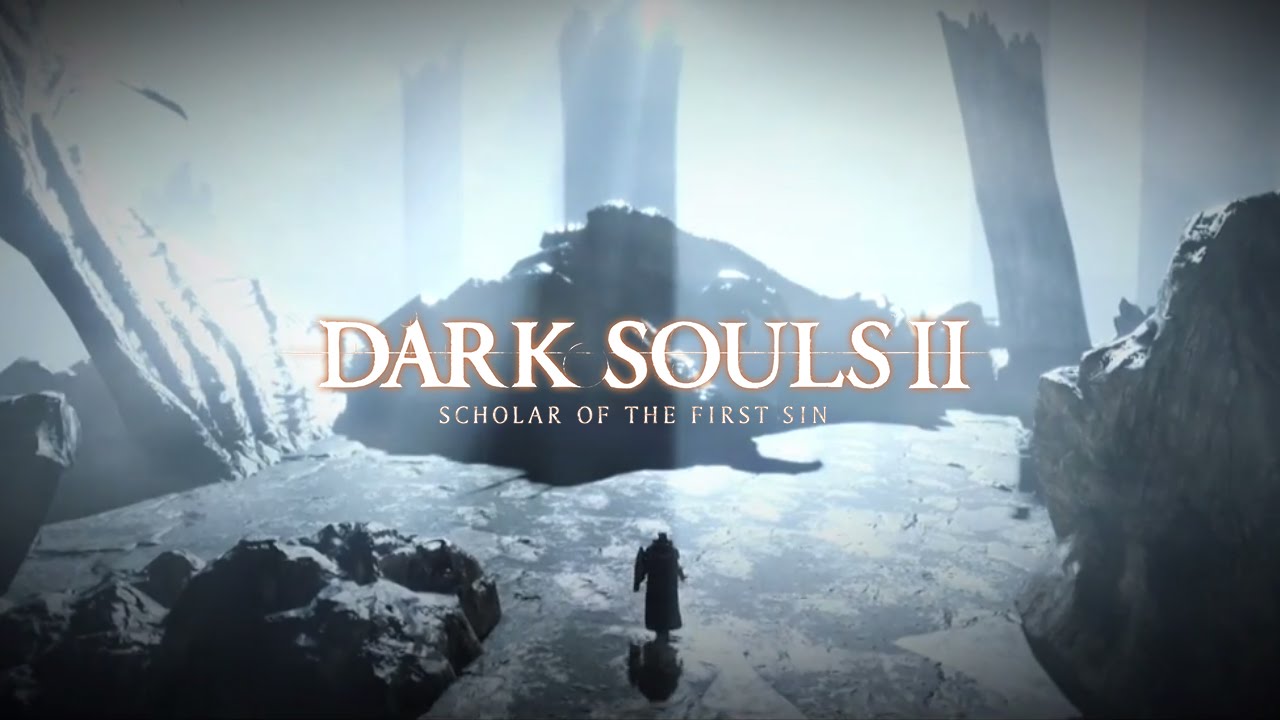
Scholar of the First Sin, the current patch rolled out this week for From Soft's punishing action/ RPG Dark Souls 2, is acting as both a free expansion to the current game and a lead up to a rerelease for current-gen consoles and beefier PCs in April. What the differences will be with what we all downloaded a few days ago versus any additional changes seems to be a little murky, but what we've already gotten seems to be one thing and on the thing only: an apology.
Pack your bags, we're heading into spoiler territory.
Dark Souls 2 was not a perfect game. While still definitely one of the absolute best of last year, the fan reaction From Soft's third Souls game had taken issue with a few of the game's finer points, mainly the lack of compelling NPC characters, a final boss worthy of the death march it takes to get fight it, and a proper ending befitting the nature of the rest of the series. In one fell swoop, From decided to try and rectify all three.
First, as you no doubt have seen, an amorphous blob of a character named only The Scholar was placed in key locations through the game: first in the Black Gulch after fighting The Rotten, next in the entrance to the Undead Crypt, then at the bonfire at in the Dragon Shrine, and finally after defeating Nashandra at the Throne of Want where he becomes the game's final boss. It's a fun scavenger hunt to track him down (unless someone ruins it for you like I just did), but more so compelling for his cryptic dialog. I have to be honest in that I've only just noodled around with the content patch with one character and there is an opportunity for multiple choice in some of his dialog, The Scholar reveals himself to he Aldia, brother to King Vendrick and an enigmatic figure to the game's larger lore.
Smarter people than me will do extensive research into every syllable of Aldia's new dialog, but we can surmise up to the point the patch was released is that Vendrick and Aldia had sniffed out the evil of Queen Nashandra, and that the two of them worked tirelessly to either cure or at least circumvent the curse that was turning humans into insane, zombie-like husks; a process called hollowing. Aldia's presence in the main game had been that of a shadow looming over what's actually going on in that he never appears, but is mentioned in NPC dialog and a few choice item descriptions. Aldia was known for strange experimentation (as evidence in all of the surrounding context clues in the Aldia's Keep area), and many have inferred that he had created Shanalotte The Emerald Herald basically in a test tube as part of his attempt to stem the curse.
After revealing his identity to you at the Dragon Shrine, the new dialog implies that disparities caused by both life and death and, more importantly, light and Dark (capitalization intentional) is a lie and the curse isn't as important as trying to find something else in between, or maybe completely outside of it. A nebulous concept, sure, but compelling enough for Reddit users to fall over themselves trying to decipher. It's still answering questions with questions, as far as the lore is concerned, but this is just the Dark Souls way, and while Aldia himself is compelling enough just for the sake of being there, he still doesn't have much of a character arc that we can puzzle out at this point. So, while his inclusion as an NPC exposition dump is a little suspect for right now, he gets a temporary pass for being nothing but just that.
As a boss, though, he's a little less forgivable. The first Dark Souls and Dark Souls 2 have both come under a little fire for having weak sauce final battles. While still difficult in their own right, compared to other enemies fought along the way (and, especially in Dark Souls 2's case, just beforehand) they're kind of a joke. Not to keep dumping on it, but over the course of its short life, Dark Souls 2 has done nothing but make the final conflict with Nashandra easier with items that can be obtained through the individual DLC expansions, and when all three DLCs are completed, gives you a massive safety net with the Crown of Vendrick item. Aldia as an enemy pops in just after this fight is complete following a brief bit of dialog. But it's a slog; Aldia retains his barely mobile blob-like form, essentially shooting things at you that can easily be avoided. While it takes a degree of patience to finish since he's usually wreathed in a shield of fire that will do more damage to you than you could to him, it's not a very satisfying battle, and when done with other players, is a bit of a joke.
If apologies have high points and crest like waves, though, it's in what happens after Aldia takes a dive. Another brief bit of dialog takes place, and a choice whether to sit on the Throne of Want or to leave it behind is clearly laid out to the player with two glowing beacons of light indicating which choice is which. While I think that how this is presented is a little too on-the-nose, the fact that you have a choice at all and the implications of which are fascinating. Not to sound lazy, but again, smarter folks than me will have much more to say on what these endings possible mean, but for a free patch, having an altered ending that nobody really expected to receive is certainly welcome.
I have my own theories in that some of this stuff may have been on the cutting room floor for the original release, but the fact that these three things are addressed after three DLC expansions (of which are seen as the best, most inventive parts of the game by many) is evidence that they probably weren't. There are still a lot of questions, too. First, I did this with a character that had already completed the game (but didn't start NG+) that had run through all three of the DLCs, so the path to the end with Aldia may be different without doing so. I haven't run into any replaced enemies in new locations, yet, either. I didn't take the Throne of Want at the end of the Aldia fight to see if it's any different than the original release, as well. But all of this stuff will probably be answered by the internet at large by the end of the day. What may be the best part of this patch is the re-written item descriptions, which the community is still parsing through. I noticed a significant change in Nashandra's Soul last night, and I can't wait to see what everybody else finds.
Plus, there's always the physical release for Scholar in April, and who knows what's going to be in that?
Subscribe to:
Posts (Atom)