You may be wondering (though probably not) about why there hasn't been another episode of our trip through the Last of Us. Well, part of that is that my wife and I just haven't had a lot of joint time to sit down and play it. The larger reason, though, has to do with one Sony Computer Entertainment.
Just after Christmas, I switched on my PS3 to see what was new on the putridly run PlayStation store for that week. Even though it was late and I had a few beers in me, I noticed a certain lack of hum from my little black supercomputer. After the requisite 45 years that it takes to boot the system up and log into the store, the PS3 gives me one of it's kindly warning messages that, hey, your system's about to cook itself, and it's shutting off now. Sorry for the trouble. This has happened before, so I was only mildly alarmed. It shut down, I waited a few minutes, and flipped it back on to make sure that everything was on the up and up. Not even five minutes in and it was back to overheating. My cooling fan, friends, has slipped its mortal coil, and lo, My PlayStation 3 is inoperable.
And this is the third time.
No, I'm not saying that this particular PS3 has ceased to bestow enjoyment upon me three times. I'm saying that this is the third effing PS3 that's died on me in the last several years. My first was a 60gig launch model (the kind that was fully backward compatible), and I loved it like a son. I don't get rid of anything anymore, and even though I don't play PSOne or PS2 games on the regular, I will pull a couple out a few times a year. The loss of this machine was a serious hit to my perverse need to make sure I can do whatever I want, whenever I want (which, I suppose, is a problem). So, I called Sony, and $150 later they swap one with me; another 60gig fat bastard of a PlayStation sent right to my door. That love didn't last, either. We were living on borrowed time, this backward compatible PS3 and I, and so I called them again when that one died, too. "That'll be another 150 clams," they said, much to my protest. I'm a very loyal Sony customer, and had even sent back a PS2 on the fritz about ten years ago. Can't you guys help me out with this? Mitigate the cost at all? Stupid, stupid broken-video-game-console-owner. We're Sony. We don't do that shit. I wasn't willing to spend another stack of money on a console that they basically assured me over the phone they'll never replace. The PS3 Fat is dead, and my one-fiddy would only be buying a refurbished Slim. Nuts to that. I convinced myself to get a brand new Super Slim, which was just about to launch the next week.
So, you can probably imagine my fury when all of this was going down a few weeks ago. If you've done a little research and a little math, you've determined that this PS3 Super Slim is only a year old, but just over a year, so the warranty is expired (of course). After waiting for their customer service staff to come back from whatever year-end break they were on, I called them yet again to complain about the fact that this thing they built don't work good or nuthin.' The guy on the phone did what he could, but it had to be sent back to them for repairs, and that was going to cost me $100. He begins his rote spiel about how this is quality service from Sony's own staff and that they'll replace the system if it can't be fixed and ahhhhhh BULLSHIT. Stop right there, friend; this is my third freaking PS3, and you need to help me with this, I tell him. What happens next is truly baffling.
"Yes, I absolutely get it," he says. "Let me connect you to one of the accounts people, but let me tell them what's going on with you, first." Fine. This happened during the end of the Second Era, but it was just an operator "asking her manager" if it was ok to help me with the repair fee. That didn't work then, so I had to prepare my response carefully for when it wasn't going to work now. About five minutes later, I find that I actually am talking to another person on the phone, a very sweet-natured woman whom wanted me to go through the whole thing again. As calmly as I could, I lay it out for her, and ask her if she would kindly help mitigate the cost of fixing this thing.
"Sure," she says without even letting me stop. "As a one-time show of good faith, we'll waive the cost of repairs for you. We're shipping you a box tomorrow." What happened after that was about 15 seconds of shock-fueled silence to the point that she thought that I accidentally hung up on her. I am back to being a happy Sony customer.
So what did we learn here? If you buy more than one stupidly expensive piece of entertainment hardware, the third one can be fixed for free. Less cynical than that, I guess, is that sometimes, the little guy gets his way. So there.
Your homework today is to check out Kat Bailey's preview of Castlevania: Lords of Shadow 2, a game that's dropping in about a month or so. Now, I do this with reservation for a few reasons, but mostly because this is the only preview of the game that I've seen that points out a key situation from the demo that she played and how unsettling it is for all of the wrong reasons, something nobody else seems to mention across the internet. The comments that follow the piece are some of the worst that the internet has to offer, but it's a unique perspective and calls to mind other debates that gaming has to start paying closer attention to from now on. Read the article with interest and the comments with caution.
Wednesday, January 15, 2014


Tuesday, January 7, 2014
So This is the New Year
Look, I knew for years that we were never going to have jet packs by now, but dammit, 2014 being here makes me feel that we should be further along or something. Just look at this, for God's sake. Where's my bio suit and seedy intergalactic watering holes? Where's my instant wall climbing wall-breaking laser blasts? Science is bullshit.
So it's been a while, right? Yes, internet, it has. Dry your eyes, though; a new year means new beginnings and other spastic lies that I'm prone to breaking. Still, now that certain months-long obligations are taken care of, it's time to get back to my fighting weight writing-wise. That was an absurd and stupid thing to say. Resolution 2: we'll keep that jive to a minimum.
So let's use this precious time that we have together at the moment for a bit of catch up. The last few weeks have been a typhoon of lousy weather, vacations from work, on and off illness, and mmmyes a few holidays. Now that my family has finally figured out that video games aren't something I'm going to eventually outgrow, they've succumbed to years of reminding that it's perfectly fine to bestow nerdy gifts for Christmas as opposed to a Christmas tree and nativity scene, monitor cables, and place mats.*
Since the whole month of December is typically written off as a gluttonous mess not unlike whatever goes down at Pizza the Hut's place, and I just mentioned that I wasn't exactly feeling tip top the whole time, gym hopping was kept to a minimum over the past several weeks. Typically, that drives me a little nuts, but you can't fight Mother Nature when she says, "you know, you should be throwing up right now. Go do that." Naturally, this left plenty of time for the interactive digital entertainments. A few of them were wacky or fun or stupid or smarmy enough that I wanted to write about them individually, but I thought I'd save you some eye strain and just run them down as a list.
Behold, then, what I've been doing for the past three weeks:
Batman: Arkham Origins
Full disclosure: I love Batman perhaps more than I love my parents (and they know). But, you know, I'm just not in to the open world Batman games. Akrham Assylum was totally my thing, though. It did the whole "metroidvania" schtick better than recent Castlevania games had done at that point, and it just felt like playing as Batman, which pretty much no other game starring the character had ever pulled off at that point since most of them were either platformers or brawlers. Arkham City was still a good game, but the explorability of the city seemed to step on what made the first game so good; the focus. So I wasn't really super psyched to play Arkham Origins, especially after some kind of middling reviews.
Annnnnd....I was kind of right. Still a good game, but I found that I was only interested in the story missions, which was basically a series of indoor levels that you simply had to traverse a large city to find. I suppose it's fine to have Gotham as a large backdrop for things to do between plot-driven adventures, but everything that I was given to do was just busy work. Blow up 40 of these. Find sixty of those. Beat up some guys and then disarm a bomb. Now do it over there and over there and over there. Snore.
The stuff that I wanted out of it was really good, though. The Joker stuff was great, and the inclusion of a couple of other irregular DC characters in the world of video games was handled pretty well (I'm talking specifically about Deathstroke). It was a fine looking game, too. The facial models were kind of lousy, but since pretty much everybody whose anybody wears masks in Gotham City, it wasn't really that distracting. There was a few things that pissed me off, though, but that's mostly due to common problems with free-running games and the unreliable combat.
Batman: Arkham Origins: Blackgate
The overuse of colons in the title should alarm you. Eff it, I'll just answer the question running around your head for you: Yes, Blackgate actually came from a man's colon. Ostensibly a more "true" metroidvania game, Blackgate did its best to cram all of the controls of it's console sibling into a 2.5D environment, which means that the player must have the finger dexterity of a concert pianist to play smoothly. Or it would, if anything actually worked according to plan. The control and button inputs were about as responsive as screaming at a deaf person at a Mastadon concert, and Batman would routinely take bullshit damage from randomly-placed strips of spikes in the ground when he should have rolled over them. The Dark Knight would recover his health after a second, though, so it was all good. Why were the spikes on the ground at all, then? You're not seeing this, but I'm shrugging my shoulders and making obscene hand gestures right now.
Structurally, the game was a total mess. Boss fights were less of a visceral feeling of accomplishment and more a series of trial and error stumbles until I figured out whatever puzzle-like nature the game all of a sudden decided to throw at me. Some of them were timing-based, so the lack of reliable control was sort of a thing. Others were riffs on previous environments and encounters so left field that if they weren't handled with surgical precision than it would spell instant Bat-cadaver. Let's not even talk about the least intuitive map in video game history, either. Jeeeeeebus.
Ni No Kuni
People that I like hate this game. People I don't like love it. If I didn't get it for a song, I would never had formed an opinion either way. As it stands it was actually alright. Pretty, but really kind of shallow, it was as close as I'll probably come to playing a Pokemon game since it's big draw was the monster taming and training (which I thought was handled weakly). It had been so long since I've played a console JRPG, though, that everything just felt comforting; the grinding, the dialog, the tiny mental benchmarks you make for when you know it's time to put it down and go to bed. It felt good to be immersed in something like that, even though most JRPGs make me feel totally detached anymore. If you had met me ten years ago, that last sentence would be kind of a shock.
Probably what helped me keep up with it to the end was the plot, though. Now, let's be clear here in that it in no way is good, but Ni No Kuni's biggest strength was it's noticeable lack of anime stupidity. You can probably hand that to developer Level 5's partnership with Studio Ghibli, but this could have fallen apart under a lot of weight, and it really didn't. To be honest, I'll never, ever play this game again. But for a modern console semi-real time menu-based RPG, I was as satisfied with it as almost any game in my PS2 library. That's a compliment, right?
Guacamelee!
People, you should be playing Guacamelee! Then you should finish it and play it again. Luchardors out to save El Presidente's daughter from the undead in an interconnected metroidvania game makes sense. Hell, even just simply that sentence just feels right. If there was an official winter jam, it would be Guacamelee! So let it be written.
Bravely Default demo
If Ni No Kuni was comforting, the now week-old Bravely Default demo for 3DS was warm post coital cuddling. I get that Square Enix, in it's weird Square Enix way, didn't want to name it a Final Fantasy game (but I'm a little baffled that it's not picking up the label now that it's coming West), but that's exactly what it is: job systems, Firaga, phoenix downs, the whole bit. If that tickles you the same way it does for me, than you've probably already played the demo or need to start paying better attention to release dates.
I played through the demo to its most ludicrous extent. All of my characters maxed their job levels, the social town-building mechanic had no place left to build, and no single creature in the game was any kind of threat when I finally closed the book on it. I don't really dig the fact that I had to wait hours (days, actually) for me to build a quasi-village to get strong enough gear to take on the demo's final boss, and I use that in the present tense because I'm hoping against hope that this doesn't surface in the full version of the game outside of optional boss fights. In no way does mean that I'm taking a pass on the game when it hits in February, but if there had to be a criticism, that would be it.
Street Fighter III: Third Strike
I'm playing this all the time. No, I'm not in front of it. You and are squaring off right now in my head. You just lost.
*All actual gifts. For real.
Friday, December 13, 2013
The Two of Us: Part 2: Killers
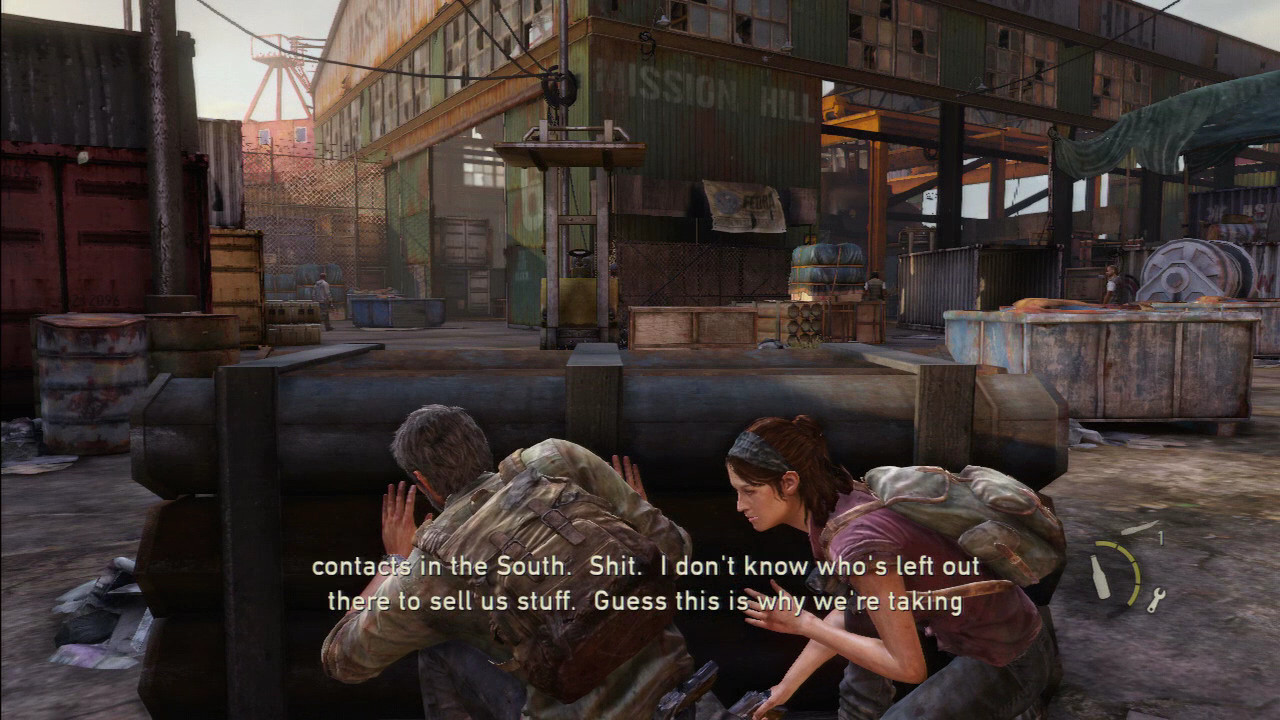
Let's talk about murder for a second.
Video games are well-tread territory for general kicking and screaming over violence in the media, and I'm not going to touch that. But I can see how the accusing side gets up in arms over it, especially as graphics have come to the point of photo realism. In fact, when we were playing Tomb Raider, my wife and I were both physically taken aback when Lara Croft gunned down her first cultist, just as she was onscreen. It looked every bit as brutal as a killing would be, and both our reaction and hers showed the weight of actively choosing to take another person's life. The Last of Us is a different kind of game, and doesn't pussyfoot around that. In Joel's bleak post-disaster future, violence is mandatory for survival, it seems, and the first few hours are making a clear implication that the rest of this story is going to be chock full of it, and it's going to be nasty. A man was killed in cold blood by someone I can only still assume is a NPC protagonist very early on, and Joel didn't flinch as other innocuously nice guys would (the Nathan Drakes and Lara Crofts of the world). I can also only assume that this person's execution is a sign that violence and its horrors are part of the point of this whole experience, especially since it's obvious that Joel doesn't exactly shit rainbows while figure skating. But that's not what's interesting about our first controllable moments after the intro.
There was lots of talking, and obligatory tough guy posturing. Joel and his female companion snuck out of whatever quarantined encampment in the beginning stages, which serves as a useful enough tutorial for the stealth and combat functions. Joel can crouch, aim, punch, switch on his flashlight, and "listen" (which is this game's term for his very video gamey sixth sense that lets the player know what's around the corner) without any sort of context. The triangle button does close to everything else when it pops up on the screen; it's the catch-all button for boosting your friend, sliding open a door, and picking up handily placed med kits to keep him healthy. All of these movements and more were dolled out a steady pace which wasn't overwhelming, but was certainly a lot file away, even for me. Typically when this happens, though, I feel reassured that the game will force me to use all of these tactics as it moves forward, so I don't spend a lot of time trying to practice and re-learn each individual technique. But this doesn't change the fact that The Last of Us is a complex beast, and definitely more convoluted than Tomb Raider's early hours.
At first, I was just fine with it. The Last of Us is a tough teacher; there's a lot to learn and seems cruel to the student if they don't pick up on it fairly quickly. Sort of like violence, there's plenty of talk in gaming circles that modern games over-train the player before setting them free, and I like that Joel was not treating me, the player, like an idiot. On the other side of the couch, though, was someone just a little bit baffled. Previous to this moment, my wife would dispatch her gaming nemeses by jumping on their mushroom-y heads. Eventually, she moved on to pumping them full of cultist-killing arrows. Joel, though, could punch, shoot, throw a brick at a guy, and strangle them if he was clever enough, and he could do all of this from the word "go." To me, it was an embarrassment of riches. To her, it was a tidal wave, and one that washed over her one doubt at at time. Do I shoot that dude? Do I punch him in the mouth? Should I pick up this bottle and break it over his head? Is it worth it to me to try to get around him? It was simply too much too soon. Killing by itself was no longer an issue. "Which way should I kill" had turned into the question.
This lead to the point of today's entry. Joel and his trigger happy friend had enemies, but they weren't stupid. Being outnumbered and out-gunned in this game was the last situation you wanted to find yourself in. Dialog between the two frequently prompted the player into sneaking around adversaries, and if the scarcity of ammunition and medical resources were any indication, then this was the preferred method of dealing with opposition. I found that it made perfect sense (especially since friends of mine had told me that it was more of a stealth game than a shooter), but not for my wife.
As she walked right up to a guard and clubbed his head into gooey mush with a wooden plank, I was nonplussed. We were just told to avoid these guys! What the hell are you doing?! I kept it to myself, but it didn't take long for two things to dawn on me: First, she was just given an arsenal of ways to kill an enemy. While she probably couldn't reliably toss a rock at a guy's head, she can sure as shit shoot him in the chest and finish the job with a baseball bat. I can only assume that this was empowering. Second, and more importantly, is that this is a matter of programming. Certainly not by Naughty Dog, but my wife's gaming vocabulary doesn't include Metal Gear, or Deus Ex, or Dishonored. An enlightened way of pacifism was never a concern before, only to throw the pickaxe, toss the fireball, and knock the bow. You can't blame her for such a binary response; she saw bad guys, and bad guys needed to see the business end of the stick. It was all against her earlier-set conditioning.
Joel was quickly, and unceremoniously, gunned down by these guys. Lesson learned. Even on the Easy difficulty, it's better to avoid than to engage, but that will take a little bit of unlearning for it to completely sink in. My wife, the butcher, received some early comeuppance, like trying to swipe honey from the hive, but I have a feeling it's going to take a little bit more reminding that you know, we should probably leave those dudes up ahead alone. Now that we've gotten a little girl to protect along for Joel's ride, it's probably going to be safer that way.
Thursday, December 12, 2013
The Two of Us: Part 1

Tomb Raider was an experience. Not the emotionally draining, perception-altering Experience that a developer or publisher would want you have with such a large budget major release (those few and far between), but a quiet, sometimes meditative, and often humbling experience shared between two people: myself, the practiced-hand "core gamer," and my wife, the silent observer and rare participant. I never truly understood her motivation for wanting to play the Tomb Raider reboot, really. I guess I never asked, now that I think about it. But what would have been a routine week or two controlling an English woman through a terrible coming-of-age ordeal (but a good one, the game was pretty great) became a study of, in my mind, game mechanics, accessibility, interactive storytelling, and in it's own way, marital politics. It was frustrating -on several levels- to watch my wife, a person unaccustomed to controlling both an onscreen avatar and the camera which dictates how that avatar operates, struggle to come to terms with modern game design.
There was an obvious cycle of development happening right in front of me not unlike a child's own evolution; mechanics were learned in a safe environment, were then tested, and consternation would set in right before abandonment, then followed by a noticeable mustering of drive to relearn and overcome the obstacles. My wife, in her own way not dissimilar to Lara Croft, didn't leave the Island of Misfit Cultists a pro, but there was certainly some self-discovery happening there from campfire to campfire. If there wasn't, she wouldn't have immediately requested to play The Last of Us.
So, it seems like she's into the more cinematic, big budget stuff out there. I'm chalking that up to being a gateway drug (I hope). Months had passed from completing Tomb Raider to now, but she was consistent in her interest in playing the game, which I found a little surprising. I honestly thought that it would be out of sight, out of mind and that if I didn't bring The Last of Us home, her interest would have waned. This wasn't the case, and now that it's close to the end of the year and every video game website on the planet is arbitrarily choosing what "their favorite game" of the last twelve months had been, we've finally started to play what will undoubtedly wind up being one of the contenders. The opening sequence did enough to show us why.
Yes, I suppose that in the spirit of full disclosure, this first entry does reflect our first time playing the game, but we've played it more since. It was a few weeks ago, late at night and ready for bed, when we decided that we would at least go through the intro to the game after I assured her that action games like this never have multi-hour opening sequences (like the dozens of JRPGs stacked around our apartment). We were not quite prepared by how hauntingly affective it was, though, which is something I choose not to spoil for you if you haven't played it yet.
These first 45 minutes or so did little to show us what the rest of the game would be like, though. Protagonist Joel could only mosey slowly through environments and interact with the occasional door or key item. For us, this was a good method for re-introducing my wife into using both thumbs in concert with what's happening in front of her. Occasionally, I could hear an exhale of exasperation until I would offer a gentle reminder that she should adjust the camera (we'll come back to this), but this fell by the wayside quickly enough in this first sequence. It was a fast 45 minutes with everything going on in the game, but it served its purpose, and the stage was set for what our next few weeks would become.
Like Tomb Raider, we're playing the game in short chunks of hour-long increments. Tomb Raider was, basically, a short season of Lost for us, and The Last of Us will probably be no different. It gives us a chance to play a little and regroup afterwords. During the day, we can send each other messages to parse through radical theories about the plots of the games and what the next sequence might be like, and this is a feeling I haven't had since, well, Lost left the air. It can make the wait agonizing for the next time we both have the opportunity and energy to play together, but the act of playing the game is all the more sweet because of it. That is, until you actually get into the game.
But let's talk about that tomorrow since this is getting long. Your homework is to read Playboy's interview with Rockstar co-founder and Grand Theft Auto mastermind Sam Houser. It's safe for work and fun read, if a little less illuminating than the first interview with a total recluse should be. Still worth it, though.
Wednesday, November 27, 2013
Your Homework Is...
When I sort of restarted this blog a few months ago, the plan was to not only give me the writing practice (you know, it's a blog), but also celebrate what I think are compelling or well-written stories from the internet. Many of them wound up being from similar sources because, well, I like specific writers and certain web sites do very good work (the features on Polygon, for example, are consistently good). Sometimes this slips away from me, and sometimes I just don't update for weeks at a time, but that just means that there should be plenty of stuff to look back on and point you toward. Typically, I would never include the location of today's homework.

Gametrailers.com is a website built initially for exactly what you'd expect; trailers for video games. Over the years, they've launched quite a variety of original content of what I can diplomatically call varying quality. Most of it really skews to taste; there's some fun industry stuff like Pach Attack and wacky talking head opinion-spewing like Final Bosman, and your interest in either example will depend on the kind of content you'd like to watch.
One of their "flagship" shows, though, is The Bonus Round hosted by games journo black belt/ lightning rod Goeff Keighley. Usually a panel discussion show (Wedbush Securities smartypants Michael Pachter is a regular guest), it's often filled with guests that range from industry analysts and insiders to camera-friendly seat fillers. It's usually a mishmash of softball questions, and while a lot of it is fun, it's rarely informative.
Not lately, though. In what I can only possibly think was the perfect storm of guests, Keighley tapped Pachter and also Naughty Dog co-founder and ex-THQ president Jason Rubin, as well as Seamus Blackley, a current mobile developer and one of the men instrumental for creating the original Xbox during his time at Microsoft. The first episode of the series (linked) takes place just as the PlayStation 4 was about to launch, and these three guys have an awful lot to say during it and subsequent chapters. The last of which will be on GT's site this weekend.
Again, it's all a matter of taste, but this particular panels is chock full of inside-baseball, and I love that shit. All three guests have very clear, yet often differing opinions about the nature of the big video game machine and the models that large companies need to adopt to be relevant in an increasingly gaming-diverse future. Keighley barely even speaks for most of the first episode. It's genius.
Happy Thanksgiving, my people.
Tuesday, November 26, 2013
I Don't Know Why You Say Goodbye
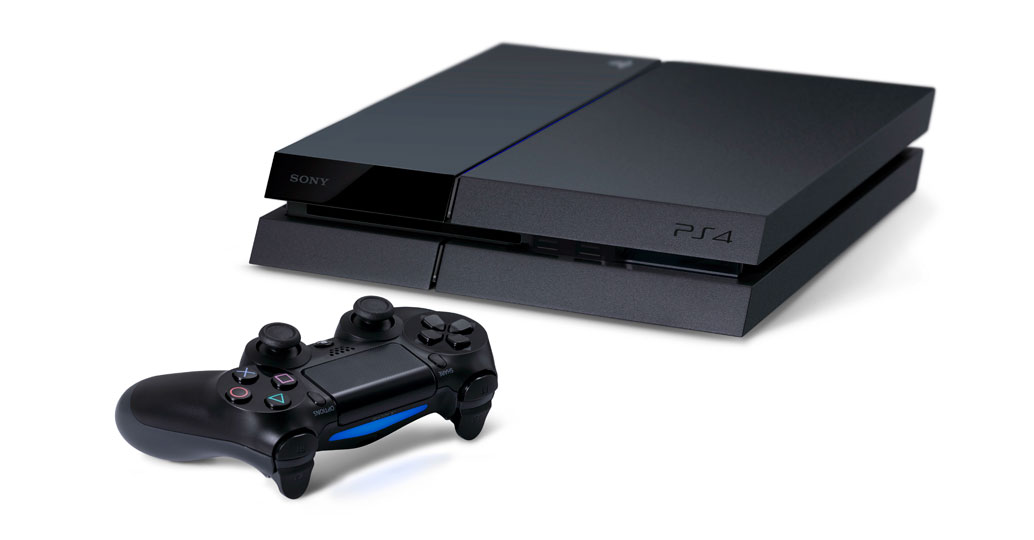
So after more than a week with my shiny new PlayStation 4 (it it certainly is shiny; I almost never want to touch it), I find that I have very little to say about it. Honestly, you can probably hit ever corner of the nerd internet over the last few weeks and find all of the opinions that confirm whatever stance you have about Sony's new console. None of what I could say would be particularly new or shocking, so I suppose we can just leave it at that.
But I pretty much never turn it on.
Weird, right? Not really, and it's mostly of my own volition. It's become common knowledge over the last several cycles that launch games are typically mediocre at best. Usually all of the good stuff can be had for older machines or wind up being elaborate tech demos banking on the promise of future fulfillment. Yes, the first Xbox had Halo, the Wii had Wii Sports, and we didn't even know any better when North America was blessed with Super Mario Bros. when the NES dropped in '85, but I call those singular examples. I have bought all of Sony's home consoles on (or close) to their launch, and every time I do, I find myself waiting about 6 months to buy something worthwhile. Neither the Sony gaming juggernaut nor me personally are alone here (it took me more than a year to buy a game for my 3DS, which I now play just about all the time). It's just the way these things sort of work.
But it's been a particularly long console cycle, and that makes the kick in the pants of so-so launch games more like a shove into traffic. No, I'm not exactly huffy over it, but I still find myself wishing that there was something really dazzling for me to take home and boot up after that midnight launch (which I arrived to drunk. The only way to do it). I'm certainly not looking the gift horse of Contrast, Warframe, DC Universe Online, or -especially- Resogun in the mouth, but none of those games have any real weeks-of-my-life-swallowed-whole meat to them. I finished Contrast, a better game than some of the reviews gave it credit, in less than a day. Warframe is fun, but awfully redundant. Resogun is wacky and beautiful, but it's five brief levels don't exactly make me want to call in sick to work and live on Chinese takeout. Next year certainly has some good stuff on the way, but like the rest of my early adopting brethren, I bought this new machine for the sake of promise, not instant gratification.
Ironically, in the days before the November 15 launch, I spent my free gaming time playing what I considered the high water mark of the previous generations, and completely independent of the fact that I knew I wasn't going to be blown away by the brand new stuff (ok, subconsciously, I probably did). I tore through the HD remake of Clover/ Capcom's Okami, which is still one of the best Zelda knockoffs you can find, if not the absolute king of them. Granted, it was the beautiful up-rezzed rerelease, but it's in my top 10 PlayStation 2 games, and was on sale a few weeks ago for a song. I loved playing it again so much that I even went through the rigamarole of obtaining the platinum trophy, too, which is something I think I've only done a few times, and I think it says something to its staying power.

But not nearly as much as Demon's Souls; unquestionably my favorite game of the last eight years. I'll concede that Dark Souls is a much better constructed game with it's interlocking environments, but DeS spoke to me on so many more levels than all of the other games that I claimed to enjoy over the last console cycle that I've gone through it close to 10 times, if not more (I've lost a few PS3s along the way). It's funny how the game has changed for me within that time. Originally, I slaved over 75+ hours of it, observing every crack in the wall and conversation with an NPC to help me through all of its punishment. It wasn't so much the need to finish as it was the will to win, which are two totally different things. When I finally hit the summit, I retired the game with my head held high, but weary. I've said this before, but going through this game the first time makes you feel like you've gone through some shit and came out the other end of it a different person. Repeat trips are different, though. The second trip became a matter of experimentation: How radical are the differences in play style? Will it make X location more easily traversed under Y conditions? How will I adapt under weaker or stronger scenarios? It was shorter, but I was smarter. Now, after so many runs through the game (with only one small section routinely giving me problems), I can successfully bum rush it in 8 hours or less depending on circumstances and a few very minor variables. It's become less of an exhaustive challenge and more like an elaborate puzzle. Almost Nietzschean, really. Since I know where the real dangers lie, the difficulty and joy is in figuring out the best way to become stronger faster. Last week, I took the grunt-level Royal and turned him into room-clearing warlock in no time flat. In comparison to the Wanderer that struggled through those first hours of my initial time with DeS and evolved into a walking wrecking ball after what felt like years of growth and learning, this new Royal was like third grader that could split atoms. Now that he's successfully helped to lull the Old One back to sleep, any further plays with him would simply exist to push his stats toward the ubermensch that brings that earlier, shakier metaphor home.
But that was over a week ago, and even after requisite weekly time with my old flame Third Strike, I needed something else. Last night, then, I convinced myself that it was time to go back to Skyrim, if only briefly (for now). See, I liked Fallout 3 an awful lot, but in general, I wasn't so much a Bethesda believer until my time with the Elder Scrolls V. Everything in their games seemed just undercooked enough that while the worlds were huge and fun to explore, they just seemed like empty husks populated by talking heads. Skyrim, to be fair, isn't that much different, but enough care went into making it that I'm still in awe of the majesty of its scope. Hundreds of hours drifted away while my High Elf Garbanzo Bean and I explored its frozen tundra, and it's always intimidated me to go back into it knowing how easily the time can slip by while I skin a freshly shot bear or dive into yet another spider-infested mine. But after yet another character build in Demon's Souls, I felt I'd try the same approach with Skyrim, so last night's Wood Elf will, hopefully, become next week's stealthy Robin Hood.

Of course, this could all change. I'm at the mercy of my patience at this point, and with holidays coming and family/ friends willing to give me the gift of interactive entertainment, there's every possibility that I'll be knee deep (or putting up) with Assassin's Creed IV or Need for Speed Rivals. Do I really want to play those games? Not especially, but I sure would like to put this new supercomputer sitting under my television through its paces.
Friday, November 8, 2013
Step 2: Inks Complete
So here it is with finished inks:
 The picture robs you of some of the minute details, but I think you get the idea.
As usual, all of the tighter stuff pencil-wise wound up looking pretty good like the upper arm and the face. I pretty much wing it when it comes to cloth with a lot of black (as in the cape of this wizard/ ghost/ thing), but I think it looks fine here. I might go in with a whiteout pen and place in some cracks or little details in there, but I'm trying to let go and just let it live on its own. The ink I was using is pretty old, though so you can spot a lot of inconsistencies with the value of the blacks, but whatever.
I guess the only thing that really bugs me is that the swirling vortex of evil- sort of background wound up being a little bit busy and takes away from the foreground a little bit, but that's all because I decided to live on the edge and do that on the fly, too. Originally, it was just going to be blank back there with some detail lines and some sweat/ blood spurts to make it look like they were really going at it, but I thought that might be sort of chickening out. Not that this is the most elaborate background, but having nothing there at all seemed kind of weak.
Still, for the first pinup kind of thing I've done in a couple of years I think it wound up being ok. Now I have to decide if I'm going to color it, and I'm not so hot at that stuff. I can probably lay down some watercolor or marker and make it look ok, but I just don't have a lot of skill any more and I'm too afraid to blow it this far in.
Subscribe to:
Posts (Atom)